

Published: 2026-07-30 | Author: Karl Huang
A good when to visit Xinjiang guide needs to start with one honest fact: this region is larger than many countries, and the best time changes completely depending on which corner you mean. I learned this the hard way in 2019, when I flew into Urumqi in late March expecting spring and stepped off the plane into a snow squall with the thermometer reading minus 6 Celsius. My driver, an Urumqi local named Ablet, laughed and said the south was already blooming. He was right. By the time we reached Turpan two days later, the apricot trees along the Grape Valley were white with blossom and it was 21 degrees.
That trip taught me more about timing than any guidebook. Over eight seasons guiding groups from Kashgar to Kanas, I have stood in a blizzard above Hemu Village in October and sweated through a 43-degree afternoon at the Flaming Mountains in July. This article pulls those trips together into a practical calendar you can actually use. At Xinjiang Itinerary we update these notes after every season on the road.
Quick Reference
| Region | Location | Typical entry fee | Best time | Role / elevation |
|---|---|---|---|---|
| Northern Xinjiang (Kanas, Hemu) | Far north, Altai Prefecture | ¥100–185 (Kanas combo ticket) | Sep 20–Oct 10; Jun–Aug | Lakes and taiga, 1,300 m |
| Ili grasslands (Nalati, Karajun) | Northwest, Ili Kazakh Prefecture | ¥48–95 per park | May–Aug | Alpine pasture, 1,500–2,200 m |
| Turpan basin (Flaming Mountains) | East | ¥40–70 | Apr–May, Sep–Oct | Lowest basin in China, below sea level |
| Kashgar & Pamir Plateau | Southwest, Kizilsu | Free–¥45 (Stone City) | May–Oct | High plateau, 3,000–4,500 m |
| Taklamakan & Hotan | South, Tarim basin | ¥20–40 (desert parks) | Oct–Nov | Desert edge, 1,000–1,400 m |
When to Visit Xinjiang Guide: My Season-by-Season Journey
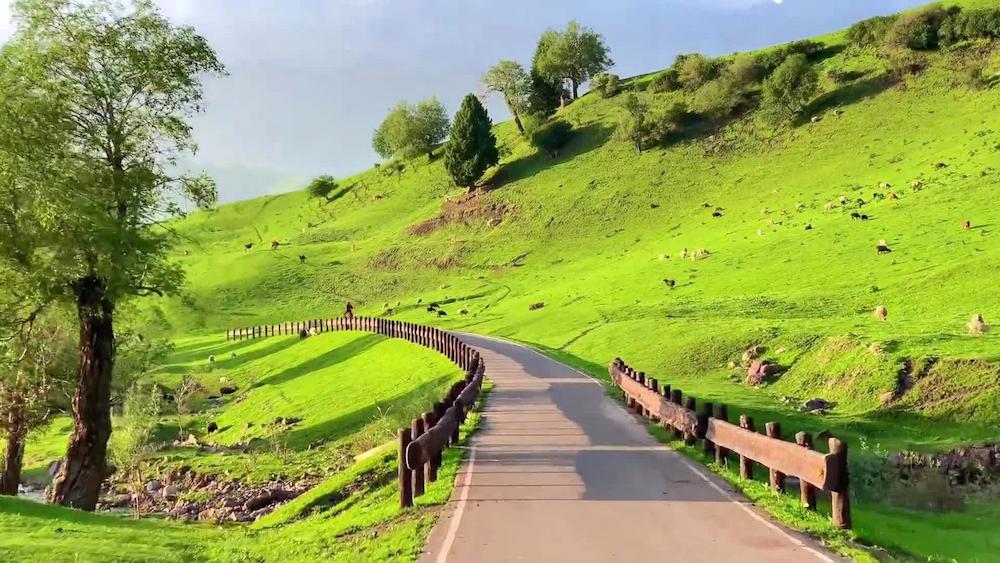
I will never forget my first April in the Ili Valley. We left Yining at 7 a.m. in a rented Mitsubishi Delica, and within 40 minutes the highway opened onto rolling green slopes dotted with white yurts. A herder named Beksultan invited us for salted milk tea at his summer camp; he charged nothing, though I left 50 yuan under the bowl. The grasslands that week were the greenest I have seen anywhere, with wild tulips pushing through the soil.
Summer is when the north fills with domestic tourists. In July 2022 I guided a family of five from Shanghai through Kanas, and the boardwalk at the lake was crowded enough that we shifted our walks to 6:30 a.m. to have the misty water to ourselves. The trade-off was the weather: warm days, cool nights, and very little rain. For photography, that soft morning light was worth the early alarm.
Autumn is my personal favorite, and not only for the color. In late September 2023 I drove the Duku Highway two days after it reopened for the season. The poplar trees near Baisha Lake had turned gold, and the temperature swung from 18 degrees at noon to 2 degrees after dark. We paid 230 yuan for a basic guesthouse in Hemu and woke to a riverside village wrapped in thin frost.
Winter scares many visitors off, which is exactly why I like it. In January 2024 the train from Urumqi to Altay cost me 198 yuan, and the ski fields above Jiangbulake were nearly empty. Yes, it was minus 24 at the pass. But the snow was deep, the light was clean, and the hotels were half price.
How to Get There
Most international visitors arrive via Urumqi Diwopu International Airport (URC), which has direct flights from Beijing, Shanghai, Guangzhou, and a handful of Central Asian capitals. A one-way economy ticket from Beijing runs about 1,400–2,200 yuan depending on season. From Urumqi you have three real options.
By air: regional airports at Kashgar (KHG), Ili (YIN), Altay (AAT), and Hotan (HTN) cut long drives short. A Urumqi–Kashgar flight costs roughly 600–900 yuan and saves you 24 hours of train or road.
By rail: the fast train from Urumqi to Kashgar takes about 14 hours and a hard-sleeper berth costs 320 yuan. I took it in May 2023 and slept most of the way, waking to the oasis towns of Aksu slipping past the window.
By road: this is where Xinjiang shines. The Duku Highway (open roughly June 1 to September 30) connects Urumqi’s north with the south in a single 561 km day of driving, crossing snowfields and red canyons. A private driver for the full route runs 1,200–1,800 yuan per day including fuel.
Best Time to Visit Xinjiang
If you want a single answer from this when to visit Xinjiang guide, here it is: September is the safest bet for the whole region. The summer crowds have gone, the north is in full autumn color, the south stays warm, and every road is open. I send most first-time clients in the first three weeks of September.
That said, the region is big enough that you can travel well in almost any month if you pick your zone:
Spring (April–May). Best for the Ili grasslands, Turpan apricot blossom, and low crowds. The far north is still cold and some mountain passes stay closed.
Summer (June–August). Best for Kanas and the high pastures. Expect higher prices and busy boardwalks; start sightseeing before 8 a.m. Daytime heat in Turpan regularly passes 40 degrees.
Autumn (September–October). The all-round winner. Golden poplars, clear roads, comfortable temperatures, and good light for photography. Book hotels in Kanas and Hemu two months ahead, because this window is short.
Winter (November–March). Best for skiing, snow scenery, and low budgets. Many northern attractions run on reduced schedules, and the Duku Highway is closed. Dress for minus 20 and you will have a great time.
For a deeper regional breakdown, see our Best Time to Visit Xinjiang Guide, which maps each prefecture month by month. It pairs well with the itineraries we publish across the site.
Where to Stay
Budget. Hostels and basic guesthouses near the main stations run 80–150 yuan a night. In Kashgar I often stay at the Old City guesthouses, where a clean double with a shared bath costs about 120 yuan and the rooftop view of the mosque is free.
Mid-range. National-chain hotels (Home Inn, Jinjiang, Vienna) sit around 250–450 yuan. In Urumqi the business-district properties near the Grand Bazaar are convenient and quiet enough for a good night’s sleep.
Upper. For a splurge, the lake-view lodges in Kanas and Hemu charge 900–1,800 yuan in peak autumn. They sell out first, so reserve through a Xinjiang travel guide planner at least two months early. I paid 1,400 yuan for a timber cabin in Hemu in 2023 and the sunrise over the river was worth every yuan.
Food
Xinjiang food is hearty and cheap. A plate of da pan ji (big plate chicken) feeds two and costs 68–98 yuan. Hand-pulled laghman noodles run 18–28 yuan, and the midnight lamb skewers at any night market are 3–5 yuan each. In Kashgar I spent 45 yuan on a full nang-bread and kebab breakfast that kept me full until dinner.
Do not miss the fruit. Turpan grapes sell for 6–10 yuan a kilo in season, and Hami melons in July cost about 2 yuan a kilo on the roadside. At the autumn harvest the apricot and walnut stalls in Hotan are the best bargain in the region.
Practical Tips
- Carry two forms of ID. Police checkpoints are common on remote roads, and your passport must match your travel permit.
- Book the Kanas and Hemu shuttle buses online before you arrive; same-day tickets often sell out in October.
- Pack for two seasons in one bag. A September day can be 20 degrees at noon and near freezing at night.
- Download offline maps. Signal drops to nothing on the Duku Highway and across the Pamir Plateau.
- Get a Border Travel Permit in Kashgar if you plan to reach Tashkurgan or the Khunjerab Pass. The office opens at 10 a.m. and the free permit takes about 30 minutes.
- Bring cash. Small guesthouses and roadside stalls in the south often do not take foreign cards. Check the Xinjiang Weather Guide before you pack, since mountain passes can close on short notice.
Sample Itinerary
This 10-day loop catches the best of two seasons and works from early September:
- Day 1. Fly into Urumqi, rest, walk the Grand Bazaar (free entry).
- Day 2. Drive the Duku Highway south, overnight in Bayinbuluke (grassland guesthouse, 180 yuan).
- Day 3. Continue to Kashgar, explore the Old City at dusk.
- Day 4. Kashgar Old City and the Sunday livestock market; apply for the Border Permit.
- Day 5. Day trip to the Pamir Plateau and Karakul Lake, back to Kashgar.
- Day 6. Fly to Ili, drive to Nalati grassland, stay in a yurt (150 yuan).
- Day 7. Karajun grassland and Tekes, the eight-trigram town.
- Day 8. Fly or drive to Urumqi, train north toward Altay.
- Day 9. Kanas Lake and the boardwalk at first light.
- Day 10. Hemu Village sunrise, then return to Urumqi for departure.
FAQ
Is September really the best month? For a first visit covering both north and south, yes. The weather is stable, the roads are open, and the crowds have thinned after the summer holidays.
Can I visit in winter? You can, and it is cheap. Just accept that the Duku Highway and some mountain parks close, and that daytime temperatures in the north drop well below zero.
How many days do I need? A single region takes 5–7 days. To see the north and south together, plan at least 10–14 days. I cover costs in more detail in our Xinjiang travel budget guide.
Do I need a permit? Only for border zones like Tashkurgan and the Khunjerab Pass. The rest of Xinjiang is open with just your passport and a standard Chinese visa.
What should I pack for the temperature swings? Layers. A light shirt, a fleece, and a windproof jacket covered every trip I have led, even in summer.
Disclaimer
Prices, permits, flight schedules, and park opening dates change often. The figures above reflect what I paid or was quoted between 2019 and 2024 and are shared as planning estimates, not guarantees. Always confirm current costs and entry rules with official sources such as the Xinjiang tourism bureau or your embassy before you travel.