

Published: 2026-07-22 | Author: Karl Huang
The first thing foreign travellers underestimate about Xinjiang is its size. At roughly 1.6 million square kilometres — about the area of Western Europe — the region holds four climate zones, so the month that gives you green alpine meadows in the north can be a furnace in the Turpan basin to the south. I have driven the Duku Highway within days of its seasonal opening in June and watched snow return to the same passes by early October. There is no single ‘best’ month here; there is only the window that matches the corner of Xinjiang you came to see. This guide breaks the year down by region so you can time your trip to the landscape, not the calendar.
The Cheat Sheet
| Item | Detail |
|---|---|
| Location | Xinjiang Uyghur Autonomous Region, northwest China |
| Peak-season fees | Kanas scenic area 185 yuan (May–Oct); Heavenly Lake 95 yuan; several sites free off-season |
| Best time (north) | June to early October; September for autumn color |
| Best time (south) | March–May and September–October; skip June–August heat |
| Elevation range | ~150 m (Turpan basin) to ~4,500 m (Pamir passes) |
What I Saw Across the Seasons
I keep a habit of returning to the same places at different times of year. In Turpan during July 2022 the afternoon air touched 46°C and the Flaming Mountains looked like a furnace wall; I drank three bottles of water walking from the Grape Valley entrance to the karez exhibit. Two years earlier, in late March, the same town was mild at 18°C and the apricot trees were just opening. The contrast taught me that no single month works for the whole region.
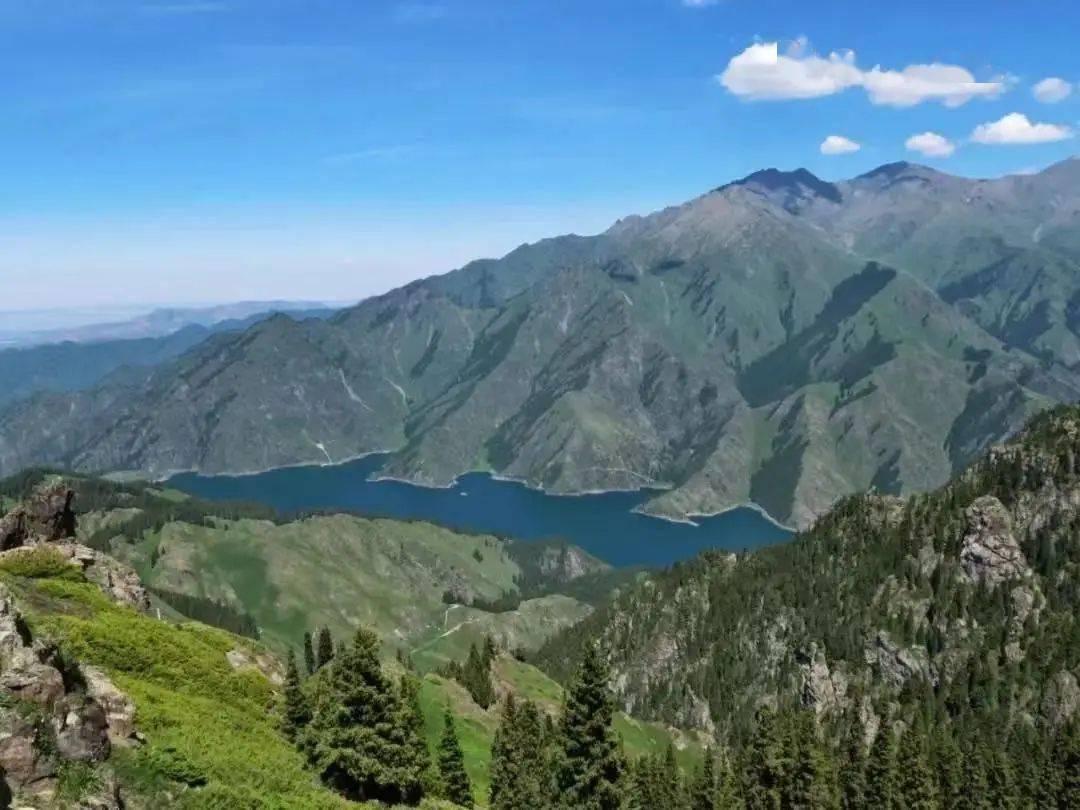
The north behaves differently. Around Kanas and Hemu, September is the headline season. I was there on September 21, 2021, and the birch forest burned gold while the wooden cabins smoked from breakfast fires. A guesthouse owner in Hemu told me the busiest ten days sell out six months ahead. That is the trade-off: perfect light, but crowds and prices up by roughly 40 percent.
How to Get There
Most travelers land at Urumqi Diwopu International Airport (URC). From Beijing the flight runs about 4 hours and costs 1,600–2,400 yuan depending on season. From Shanghai it is closer to 5 hours. Trains are slower but scenic; the Lanzhou–Xinjiang high-speed line puts you in Urumqi from Lanzhou in under 12 hours.
Once inside the region, the road network does the heavy lifting. The Duku Highway (560 km, opened 1983) cuts from Dushanzi to Kuqa and stays closed from roughly late October to early June because of snow. I timed my 2023 crossing for the first week of July and still hit a 20-minute hold for falling rock near the Tianshan pass. Plan the big drives for mid-summer.
For the south, flying into Kashgar (KHG) saves days. My Kashgar–Tashkurgan hop on a small China Southern prop plane cost 540 yuan and took 50 minutes, versus a 6-hour mountain drive. Regional airports at Yining, Altay, and Hotan also help.
Best Time to Visit Xinjiang Guide: Season by Season
Spring (March–May). Southern Xinjiang is at its kindest. Kashgar’s old city is comfortable, the desert warms fast, and the Khunjerab Pass usually opens by late April. Northern areas stay cool and some high passes remain shut. This is the window I suggest for culture and photography without summer crowds.
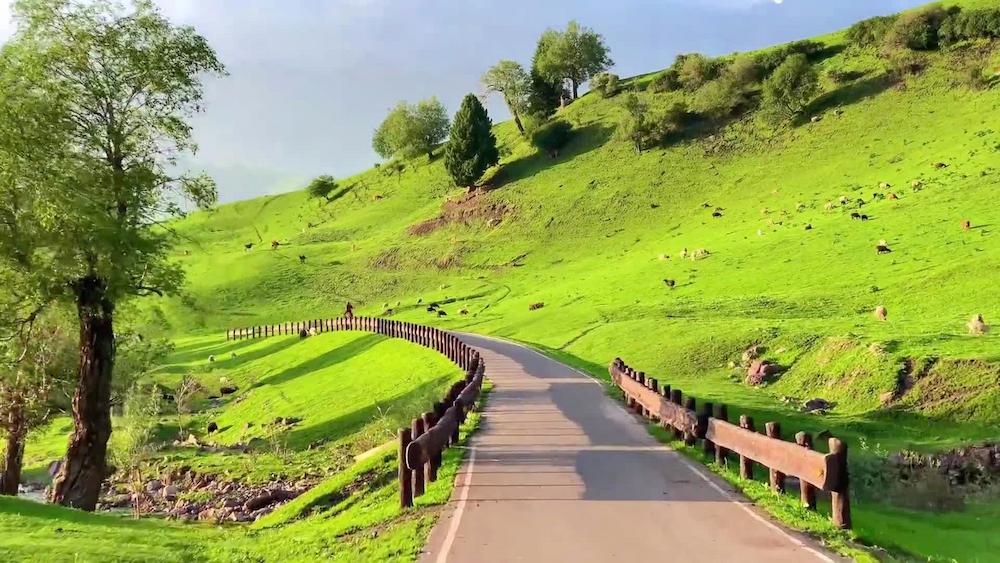
Summer (June–August). The north hits its peak. Pastures in Nalati and Bayinbuluke are full green, and the Duku Highway is open. The downside is heat in the Tarim basin and the highest prices of the year. I paid 420 yuan a night for a basic hotel in Turpan in August 2023; the same room was 180 yuan in April.
Autumn (September–October). My favorite overall. Kanas, Hemu, and the Populus Euphratica forests near Luntai turn gold. Days are cool and clear. Book accommodation early for the National Day week at the start of October, when everything is packed.
Winter (November–February). Quiet and cheap. Ski resorts around Urumqi and the Silk Road Ski Resort run from December. Many northern scenic areas close, but the Ice and Snow Festival and the frozen Sayram Lake are worth the cold if you dress for it. See the Xinjiang Winter Travel Guide for the season’s specifics.
If you take one line from this Best Time to Visit Xinjiang Guide, make it September 10–30. That window gives autumn color in the north and tolerable heat in the south, with fewer crowds than the October holiday.
Lodging Notes
Budget. Hostels and train-side hotels in Urumqi and Kashgar run 120–200 yuan a night. I stayed at a family guesthouse in Kashgar’s old city for 150 yuan with a rooftop view of the Id Kah Mosque.
Mid-range. Chain hotels (Hilton Garden Inn, Vienna) in city centers cost 300–500 yuan. In Kanas village during September, expect 500–700 yuan for a wooden cabin with breakfast.
Upper. The luxury end means a yurt camp with a heater and a private bath near Bayinbuluke (900–1,400 yuan) or a five-star in Urumqi around 1,000 yuan. I booked the Xinjiang Grand Hotel once for a client at 1,150 yuan and the heating was the only thing that mattered at minus 18°C.
Local Flavours
Xinjiang food is the part travelers remember longest. In Urumqi’s International Grand Bazaar I paid 45 yuan for a plate of laghman (hand-pulled noodles) loaded with lamb and peppers. A whole roasted lamb at a Turpan yard feast ran 1,200 yuan and fed eight of us. Street samsa (baked pastries) cost 5–8 yuan each from the carts near the Id Kah Mosque.
Do not skip the fruit. Turpan grapes sell for 6 yuan a kilo in August, and the dried apricots from Kucha markets are 30–50 yuan a bag. Tea houses in Kashgar serve a pot of black tea for 10 yuan and refill it all afternoon while you watch the craftsmen.
Small Things That Matter
- Carry your passport or ID at all times. Police checks are normal, and the border permit office in Kashgar issues permits for the Khunjerab and Tashkurgan areas in about one working day.
- Book the Duku Highway for a weekday in July or August to dodge the weekend rush that can stretch the drive to 10 hours.
- Pack for two seasons. At Hemu in September mornings sat near 2°C while afternoons climbed to 22°C.
- Download offline maps and read the Xinjiang Visa and Permit Guide before you lose signal in the mountains.
- Buy train and flight tickets two weeks out; the Lanzhou–Urumqi line sells out around holidays.
- Respect Friday prayers in the south. Shops near mosques close for about an hour around midday.
How to Structure Your Days
A 7-day loop that uses the September window:
- Day 1: Fly into Urumqi, rest, walk the Grand Bazaar in the evening.
- Day 2: Drive to Heavenly Lake (1.5 hours), return, then a short flight to Altay.
- Day 3: Transfer to Kanas Lake, hike the lakeside boardwalk.
- Day 4: Sunrise at Hemu Village, then drive the fairyland bend.
- Day 5: Fly to Yining, visit Sayram Lake.
- Day 6: Follow part of the Xinjiang Self-Driving Guide route toward Kuqa if the Duku is open.
- Day 7: Fly out from Urumqi or Kashgar with a buffer day for delays.
For Photographers
Across the region the light is best in the first and last two hours — the dry air gives hard, clear mornings and long golden evenings.
Some History & Geography
Xinjiang is one-sixth of China by area and spans two deserts, three mountain systems and a dozen distinct oasis cultures. The single most useful planning fact is the sheer scale: a ‘short hop’ is often a full day on the road.
Your Questions Answered
Is September really better than October? For crowds, yes. The first three weeks of September give you the same gold forests as October but without the National Day holiday crush and the doubled hotel rates.
Can I visit in winter? You can, and it is cheap, but many northern scenic areas close and some passes stay snowed in. Aim for the ski season or the frozen-lake views if winter is your only window.
Do I need a permit for the best-time trips? The standard September loop inside the north does not need a special permit. If you add Tashkurgan or the Khunjerab Pass in the south, get the border permit in Kashgar first. The Xinjiang Visa and Permit Guide walks through the steps.
How many days do I need? A fair minimum is 7 days for the north alone and 10–14 if you want both regions. The 7-Day Xinjiang Itinerary covers the north; add a week for the south. Build the rest of your Xinjiang itinerary around these windows.
What should I wear in shoulder season? Layers. A morning in Hemu and an afternoon in Turpan can differ by 25°C, so a packable down jacket plus a light shirt covers most September days.
Building a Longer Itinerary
The stops around Xinjiang work best as a chain, not a checklist. Here is the order I’d use and the guides that cover each leg.
- best time to visit Xinjiang
- Xinjiang travel guide
- Xinjiang Travel Budget Tips
- Best Time for Xinjiang Travel Budget
A Note on Accuracy
Prices, permit rules, park fees, and road-opening dates change from year to year. The figures above reflect my own trips between 2019 and 2023 and are shared as planning references, not guarantees. Always confirm current fees and entry rules with the official park offices or a licensed operator before you buy tickets, and check the weather forecast close to your departure.
Your Questions Answered
When is the overall best time to visit Xinjiang?
There is no single best month — the region spans four climate zones. For the north (Kanas, Ili, Sayram), June to early October works, with September for autumn colour. For the south (Turpan, Kashgar, the Pamir), March–May and September–October are kindest; skip the June–August heat. Pick your region first, then the month.
How do north and south Xinjiang differ in timing?
The north turns cold and snowbound from November to April, closing high roads like the Duku Highway. The south stays drier and milder, though Turpan becomes extreme in summer. A September trip can give you autumn colour in the north and comfortable desert days in the south — often the easiest month to cover both.
What should I pack for a Xinjiang trip?
Layers are essential: a warm jacket even in summer for high passes, plus sun protection, a hat, and lip balm for the dry climate. Comfortable shoes, a refillable water bottle, and a light rain shell cover most situations. In winter add serious cold-weather gear, and self-drivers need winter tyres in the north.
Plan Your Xinjiang Trip
Build the route, timing, and logistics around Best Time to Visit Xinjiang Guide with these related guides from Xinjiang Itinerary:
- Xinjiang Itinerary Routes: 7, 10 & 14-Day Plans
- Xinjiang for American Travelers: Flights, Visas, Budget & Safety
- Northern Xinjiang Travel Guide: Kanas, Ili, Sayram & the Grasslands
- Southern Xinjiang Travel Guide: Kashgar, Pamir, Turpan & the Silk Road
Keeping It Honest
Last reviewed 2026-11-04 by Karl Huang, Xinjiang Travel Specialist & founder of Xinjiang Itinerary. I keep a running list of what changed since the last season — new shuttle routes, shifted gate fees, closed passes — and fold it in here.
For a second, non-commercial source, these are the sources I cross-check against when I refresh these notes: