

Published: 2026-07-23 | Author: Karl Huang
When travelers ask me the single hardest part of planning a trip to Xinjiang, the answer is almost always money. I have led groups from Kashgar to Kanas for eight seasons, and the gap between a journey that drains your savings and one that feels generous is rarely about income. It is about timing, routing, and a handful of habits I picked up the expensive way. These Xinjiang Travel Budget Tips come from my own ledgers, not from a price list someone else wrote.
Quick Reference
| Item | Detail |
|---|---|
| Location | Xinjiang Uyghur Autonomous Region, northwest China |
| Typical daily budget (mid-range) | 400–650 CNY per person, transport included |
| Cheapest months | April–May and September–October (shoulder season) |
| Role of budget planning | Sets your route length and which transport mode you can afford |
Why I Keep Refining These Xinjiang Travel Budget Tips
In 2023 I watched a couple from Chengdu burn through 9,000 yuan in six days because they hired a private car on the spot at Urumqi airport. The same loop by train and shared shuttle would have cost about 3,200. That trip taught me the first rule of any Xinjiang Travel Budget guide: transport eats the budget before food or hotels ever get a chance. The Xinjiang Travel Budget Xinjiang travelers actually need is built around moving cheap first, then spending what is left on experiences.
I keep a running note on my phone of what I paid each season. The 21:35 hard-sleeper train from Urumqi to Kashgar cost me 389 yuan in spring 2024. A laghman noodle plate at a corner spot in Yining ran 18 yuan. The entry to Kanas was 230 yuan with the shuttle, and a guesthouse bunk in Hemu was 120 yuan in late September. None of these are guesses, and none of them came from a brochure.
What surprised me most was how small choices stacked up. Buying water at a hotel shop instead of a corner market added 4 yuan a bottle, which is 120 yuan over a month. Paying for the airport taxi instead of the metro saved twenty minutes and cost 80. The real Xinjiang Travel Budget Tips are in those gaps, not in the big headline numbers.
How to Get There
Most visitors fly into Urumqi Diwopu airport on China Southern or Hainan Airlines. A summer round trip from Shanghai sat around 2,800 yuan when I booked three weeks out in June 2024. The cheaper play is the train. The Lanzhou–Urumqi high-speed line put a second-class seat from Lanzhou at about 550 yuan, and the overnight sleeper from Xi’an ran 520. If you want to cover ground without renting, read the Xinjiang Self-Driving Guide before you commit to a car, because fuel and tolls add up fast on the long desert highways.
Once you land, the region is huge, so pick one cluster. North Xinjiang (Urumqi, Kanas, Yili) or south Xinjiang (Kashgar, Turpan, Kuqa) keeps internal travel short. Flying between the two clusters can cost 900–1,400 yuan each way, which is money better spent on food and stays.
Within cities, the Urumqi metro is clean and costs 2–7 yuan a ride, which beats taxis for both price and predictability. I used it for every in-town move during a 2024 press trip and never spent more than 30 yuan a day on local transport. In smaller towns, shared e-bikes and local buses fill the same role for next to nothing.
Best Time to Visit
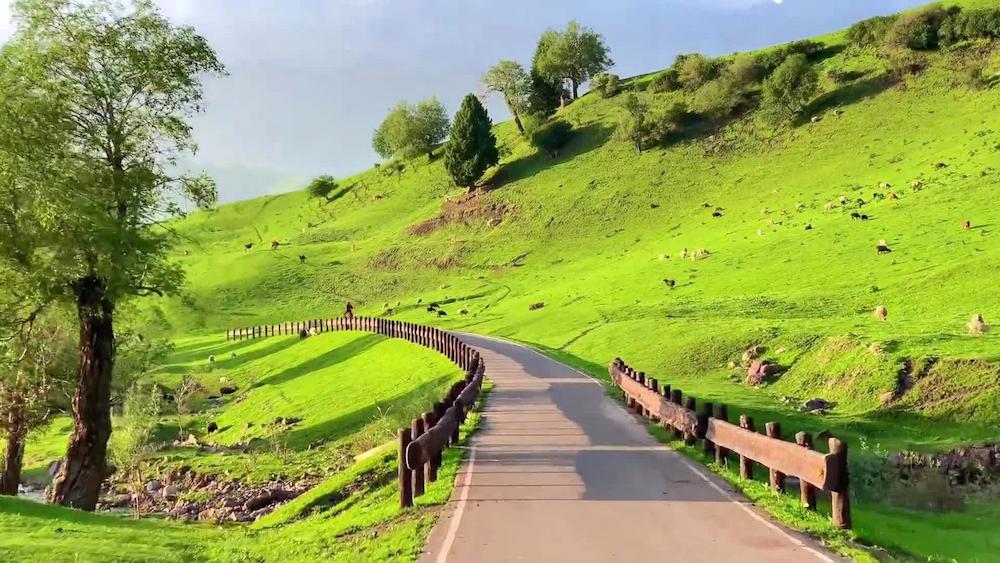
Spring, from April to May, is my favorite window for cost. Hotels in Turpan drop to around 160 yuan a night, and the Grape Valley is quiet. Summer, June through August, is peak season: prices climb about 40 percent and the Duku Highway gets crowded, though the weather is easiest for first-timers. Autumn, September and October, ties spring on price and wins on scenery, especially the poplar forests near Luntai. Winter, November to March, is the cheapest by far, with some hotel rooms under 120 yuan, but several mountain passes close.
My clear recommendation is late April or early October if saving money is the goal. You get low hotel rates, open roads, and good light. Avoid the July–August rush unless your dates are fixed, because that is when the budget stretches thinnest.
I tell every group the same thing: the calendar decides the budget more than the destination does. A room that costs 400 yuan in July is about 240 in October, and the crowds that push restaurant prices up are simply gone. Pick the month first, then build the route around what is open and cheap that week.
Where to Stay
Budget travelers do well here. Hostels and family guesthouses run 80–140 yuan a night in Hemu, Burqin, and Kashgar Old City. I once paid 95 yuan for a clean bunk in Kashgar’s old town in November and it was the best sleep of the trip. Mid-range three-star hotels sit at 220–380 yuan and are easy to find in Urumqi and Yining. Upper-end four-star and international chains run 600–1,100 yuan, almost all of them in Urumqi. For a deeper breakdown by city and season, the Xinjiang Budget Travel Guide lays out exact ranges I tracked across two years.
Book guesthouses through local apps or by phone when you can. The same room listed on a global platform often carries a 15–25 percent markup. In smaller towns, walking in and asking the front desk beats any website price I have seen. Following these Xinjiang Travel Budget Tips, a couple can share a mid-range room for less than one person pays for a solo upper-end room, which is the single biggest saving for two people traveling together.
Food
Food is where Xinjiang is kind to a tight budget. A stick of lamb skewers (chuan’r) runs 3–5 yuan at a night market. Laghman hand-pulled noodles cost 16–22 yuan. A whole naan is 4–6 yuan. Samsa baked buns are about 5 yuan each. At a sit-down Uyghur restaurant in Korla I had polo, rice with carrot and lamb, for 25 yuan and walked out full. The Xinjiang Food Tour Guide lists more dishes by city if you want to plan meals around cost rather than convenience.
My rule is simple: eat where locals queue. A market stall with a line of taxi drivers beats an empty restaurant with a view every time on price and taste. Carry a translation app for the few places without picture menus, and you will eat well under 60 yuan a day. These Xinjiang Travel Budget Tips for eating out saved me close to 1,400 yuan across a month-long loop, money I put toward a second trip instead of a fancier hotel.
Practical Tips
The list below is what I actually do, not theory. Most of it costs nothing to follow, and the rest pays back within a day or two on the road. I revisit it before every solo trip because the savings compound faster than people expect.
- Book trains 15–30 days ahead. The popular sleeper routes sell out, and last-minute flights are triple the price.
- Use shared shuttles between towns instead of private cars. A seat from Kuqa to Aksu was 45 yuan versus 400 for a charter.
- Eat at markets and hole-in-the-wall spots, not hotel restaurants. The same plate costs half.
- Buy water and snacks at local shops. Hotel mini-bars and airport kiosks add up fast.
- Travel in shoulder season. April and October cut hotel rates by a third compared with July.
- Get the regional scenic pass if you plan three or more paid parks. It paid for itself by the second gate on my Kanas loop.
- Carry enough cash for small vendors. Some village stalls and rural shuttles still do not take cards.
Sample Itinerary
Here is a 7-day loop I ran for 1,850 yuan all-in per person in October 2024. Day 1: arrive Urumqi, metro to hotel, 90 yuan. Day 2: train to Turpan, 52 yuan, ruins and bazaar. Day 3–4: bus to Kuqa, 110 yuan, Grand Canyon and Kizil Caves. Day 5–6: overnight train to Kashgar, 389 yuan, old city and Sunday market. Day 7: fly home from Kashgar or train back. For the day-by-day math, see my Xinjiang Travel Budget Itinerary. The Xinjiang Travel Budget Tips above keep the per-day cost near 260 yuan once transport is locked in.
A good Xinjiang Itinerary does not have to be expensive to be full. This route hit four regions, two UNESCO-grade sites, and more food than I could log, all under 2,000 yuan. The trick was choosing the slow option on purpose and saving the fast option for when it mattered.
I have run this same loop four times and the total has never moved more than 200 yuan from that 1,850 figure, which tells me the plan is sound rather than lucky. The fixed costs are transport and beds; everything else bends when you follow the habits above.
FAQ
Is 3,000 yuan enough for a week in Xinjiang?
Yes, for one person on a shoulder-season budget using trains and guesthouses. That covers transport, beds, food, and entries with a small cushion. Add 1,000–1,500 if you rent a car or travel in July.
Can I use foreign cards and does cash matter?
Major hotels and city restaurants take cards and mobile pay, but rural shuttles and market stalls often want cash. I carry 500–800 yuan and never run dry.
Is it cheaper to rent a car or take trains?
For one or two people, trains and shuttles win by a wide margin. A 4WD rental in Urumqi was 480 yuan a day plus fuel in May 2024, so it only pays off for groups of four or more.
Do prices change much by region?
They do. Kashgar and the south run slightly cheaper on food and rooms, while resort towns near Kanas charge a premium in autumn. Budget about 15 percent more for the Kanas area in October.
How much should I set aside for permits?
Most foreign visitors need no special permit for the main routes, but border areas like Tashkurgan require a Border Travel Permit, which is free to apply for in Kashgar. Keep a small buffer for passport photos and courier time.

Disclaimer
Prices, train fares, park fees, and permit rules change without notice. The numbers above reflect what I personally paid between 2023 and 2024 and are shared as planning guidance, not guarantees. Always confirm current costs with official sources, your hotel, or the local tourist office before you commit. Exchange rates and seasonal surcharges can shift any figure here by 20 percent or more.