

Published: 2026-07-28 | Author: Karl Huang
I first mapped out a Xinjiang Halal Food Itinerary in the autumn of 2019, when a friend from Istanbul asked me to show him real halal cooking far from any tourist buffet. We landed in Urumqi on a Tuesday, paid 38 RMB for a plate of polu at a corner canteen on Jiefang South Road, and from that first meal the route wrote itself. If you want a practical plan rather than a list of restaurants, this guide walks you through what I ate, what it cost, and how to string it into a route across the north and south of the region.
Quick Reference
| Stop | Typical daily food spend | Best time to visit | Role on the route |
|---|---|---|---|
| Urumqi | 80 to 140 RMB | Year-round | Gateway and polu school |
| Kashgar | 70 to 120 RMB | September to October | Old City kebabs and cup meat |
| Turpan | 60 to 110 RMB | August to September | Grape corridor and naan |
| Hotan | 60 to 100 RMB | October | Pigeon soup and jade-market snacks |
| Yining | 70 to 120 RMB | May to June | Ili river valley barbecue |
How the Route Took Shape
The single thing that surprised my friend was how normal halal food is here. Xinjiang is home to Uyghur, Kazakh, Hui, Kyrgyz and Tajik communities, and in most towns the default kitchen is halal. The Uyghur word is helal, written the same way as the Arabic term, and you will see it on shopfronts next to the Chinese characters for qingzhen. On the Xinjiang food tour guide I built later, the first lesson was that you rarely have to hunt for halal. You have to hunt for the good halal.
My own line started in Urumqi because that is where the flights land. From there I took an overnight train south to Kashgar, a separate flight east to Turpan, then a morning bus to Hotan before looping back through Yining. That order was not planned for scenery. It was planned around markets. Each city opens its big bazaar on a fixed day, and the food is best on bazaar day when the pits are fired up by mid-morning.
In Kashgar I paid 6 RMB for a samsa straight out of a tandoor, then walked to the livestreaming square where old men sell cup meat for 28 RMB a clay mug. In Turpan I bought a whole Hami melon for 9 RMB and ate it standing in the shade of a grape trellis. None of these meals needed a reservation. They needed timing, and a willingness to sit where the locals sit.
How to Get There
Most international and domestic travelers enter through Urumqi Diwopu International Airport (URC). From Beijing the non-stop flight runs about 4 hours and costs 1,400 to 2,200 RMB depending on season. The train is slower but cheaper: the Beijing to Urumqi sleeper takes roughly 30 hours and a bunk runs 600 to 900 RMB. I cover the schedules and booking in the Xinjiang by train travel guide because the rail network is the backbone of any food route here.
Within the region, domestic flights connect Urumqi to Kashgar (KHG, 2 hours, 700 to 1,300 RMB), Hotan (HTN, 2.5 hours) and Yining (YIN, 1 hour). The high-speed line to Turpan North cuts the trip to 1 hour and costs 51 RMB in second class. For a halal food route, I recommend flying into Urumqi, then using the train for the long hauls so you can eat in the dining car, which is halal by default.
Best Time to Visit
The short answer for the best time to visit xinjiang halal food itinerary is late September through October. Fruit is at its peak, the melon and grape harvest fills every market, and the heat of summer has gone. Here is the season-by-season breakdown.
Spring (April to May). Apricot blossoms open across the Tarim basin and night markets reopen after the cold months. Prices are low and crowds are thin. The downside is that some high passes near the Pamirs are still closed by snow.
Summer (June to August). This is the busy season. Watermelon and cantaloupe are cheap, the Ili valley grills every evening, and festivals bring street food to the squares. It is hot in Turpan, which regularly tops 40 degrees, so midday eating moves indoors.
Autumn (September to October). My favorite window. Grapes are dried on the rooftops of Turpan, pomegranates ripen in Hotan, and the light in Kashgar is soft enough for long outdoor meals. Hotel rates ease after the National Day holiday in early October.
Winter (November to March). Quiet and cold, with some southern bazaars running reduced days. You will have whole kebab rows to yourself, and prices drop further, but pack for minus 15 in the north.
My recommendation: plan the route for the last two weeks of September into early October. You get the harvest, the milder weather, and the food markets at full strength.
Where to Stay
Staying close to the night market saves you the late-night taxi. These are the three tiers I used, detailed further in the Xinjiang accommodation guide.
Budget. Hostels and mosque-adjacent guesthouses in the old districts run 80 to 150 RMB a night. In Kashgar I stayed inside the Old City itself for 120 RMB and stepped out to samsa within two minutes.
Mid-range. Three-star and branded hotels near the city centers cost 250 to 450 RMB. They give you a clean base, reliable hot water, and a front desk that can point you to the nearest halal canteen.
Upper. Four and five-star properties in Urumqi and Kashgar run 600 to 1,200 RMB. Their restaurants are certified halal and useful if you are traveling with family who want a familiar breakfast spread.
Food
The dishes below are the spine of the route. Prices are what I paid between 2019 and 2025; treat them as a range, not a quote. For a deeper menu map, see the Xinjiang food guide.
Polu (hand-pulled lamb rice). The national dish of the route. A full plate with carrots, raisins and a lamb shank costs 25 to 38 RMB. In Urumqi I found the best version at a no-name canteen where the cook flips the rice in a wok the size of a truck tire.
Dapanji (big plate chicken). Chicken, potatoes and wide noodles in a spicy sauce, served on a platter meant for two. Expect 60 to 88 RMB. The leftovers are tossed with hand-pulled noodles and that second pass is the best part.
Kawap (skewers). Lamb shoulder rubbed with salt, cumin and chili, grilled over coal. Three to five RMB a stick. In Kashgar the rows near the Id Kah Mosque run until midnight.
Samsa (baked buns). Lamb and onion sealed in pastry, baked against the wall of a tandoor. Five to eight RMB each. Buy two, they go cold fast.
Nan (flatbread). The daily bread, scored and sesame-topped, two to five RMB. It is the wrapper for every meal and keeps for two days in a backpack.
Gangzi rou (cup meat). A mug of bone-in lamb simmered with tomato and potato, 25 to 35 RMB. A Hotan specialty you will not find outside the south.
Fresh fruit. Hami melon three to six RMB a kilo, seedless grapes four to eight RMB, pomegranates six to ten RMB. Eat it at the stall; the market versions are sweeter than anything shipped out.
Practical Tips
- Look for the qingzhen sign and the Arabic script. If both are present, the kitchen is halal and alcohol will not be on the menu.
- Uyghur and Hui restaurants are halal by default. The places to check are Han-run hotpot or hot-bar chains, where broth may contain pork stock.
- Carry cash in rural bazaars. Many pit masters and melon sellers do not take cards or foreign phone pay.
- Eat on bazaar day. Each town has a fixed market day and the food quality jumps when the whole town shows up.
- Learn one word: helal. Said at the counter, it tells the cook you care, and you will get the fresh tray instead of the warmed one.
- Pack light layers even in summer. The Xinjiang packing list guide covers the desert day-to-night swing that catches first-time visitors off guard.
Sample Itinerary
This is the seven-day version I ran with my friend. It is tight but doable, and it maps onto the longer plan in the 14-day Xinjiang itinerary guide if you want to extend.
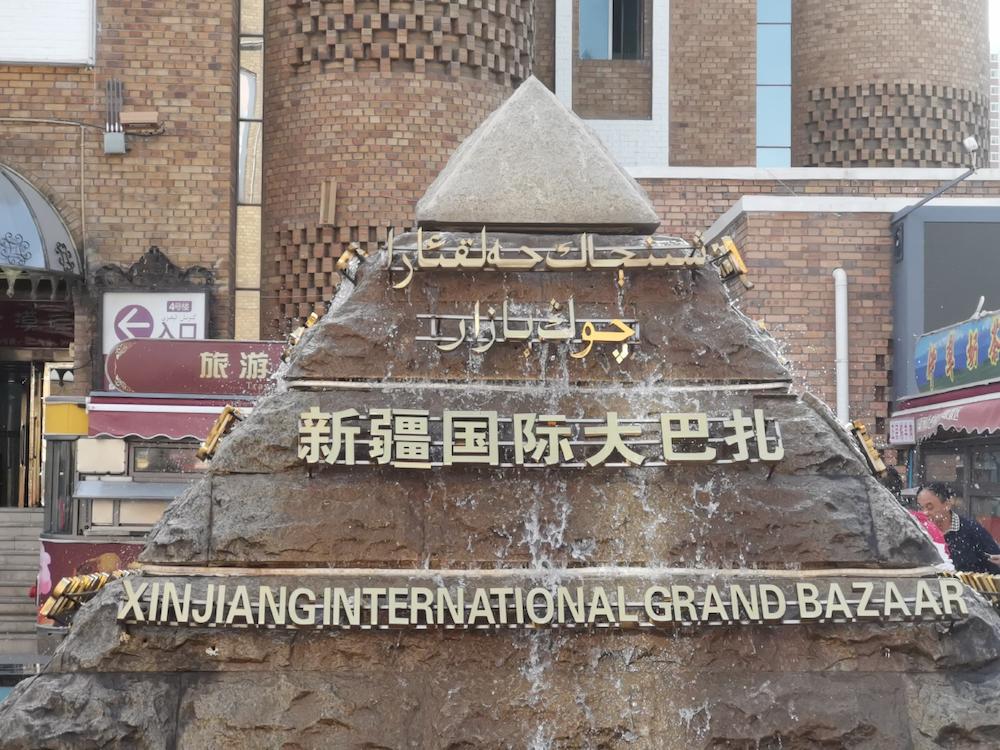
Day 1, Urumqi. Land, drop bags, walk to the International Grand Bazaar for polu and kawap. Dinner at a Hui noodle house, 45 RMB.
Day 2, Urumqi to Turpan. High-speed train, 51 RMB. Spend the afternoon in the grape corridor eating fresh fruit, then naan and kebabs for dinner, 60 RMB.
Day 3, Turpan. Morning at the ruins, afternoon melon market, evening hand-pulled noodles, 55 RMB.
Day 4, fly to Kashgar. Settle in the Old City, dinner at the kebab rows, 70 RMB.
Day 5, Kashgar. Id Kah square for samsa and cup meat, walk the alleyways, 65 RMB.
Day 6, Kashgar to Hotan. Morning train or bus, pigeon soup and jade-market snacks, 60 RMB.
Day 7, Hotan and fly out. Last market run, buy dried fruit for the road, fly to Urumqi and connect home.
FAQ
Is all food in Xinjiang halal? Most of it is, because the majority population in the south and west is Muslim. Han-run establishments in big cities may serve pork, so check the qingzhen sign before you order.
Can vegetarians follow this route? Yes, with care. Naan, noodles, yogurt, fruit and vegetable laghman are widely available, but broths and fried items often use lamb fat, so ask the cook directly.
Do I need a permit for the food cities? Urumqi, Kashgar, Turpan and Hotan are open to foreign visitors with a standard visa. The border areas near the Pamirs need extra paperwork, which the Xinjiang visa and permit guide explains step by step.
How much should I budget for food per day? Plan 60 to 140 RMB a day if you eat local. That covers street skewers, a polu lunch and a dapanji dinner with room for fruit.
Is tipping expected? No. Counter service and small restaurants do not take tips, and leaving coins can confuse the staff more than please them.
Disclaimer
Prices, permits, train schedules and market days change. The figures above reflect what I paid on trips between 2019 and 2025 and are shared as a planning range, not a guarantee. Before you travel, confirm current costs, visa rules and any restricted zones with official sources such as the Xinjiang tourism board and your embassy. This article describes personal experience and is not formal legal or travel advice.