

Published: 2026-07-21 | Author: Karl Huang
My first 14-Day Xinjiang Itinerary Guide came together after a June trip I led for a group of eight. We landed at Urumqi Diwopu International Airport (URC) at 9:40 am, met our driver Ablimit by the arrivals board, and agreed on 600 RMB a day for a Toyota Land Cruiser with a roof rack. That single loop carried us from the Tianchi boardwalk to the Karakul Lake shore at 3,600 m, and it taught me more about trip pacing than any book I had read.
Most visitors try to cover both north and south Xinjiang in two weeks and spend ten hours a day in the car. I do not recommend that. This guide keeps the focus on the south, with a Urumqi start, so the daily driving stays reasonable and the best sights land on the right days.
Quick Reference
| Stop | Entry fee | Best time | Elevation |
|---|---|---|---|
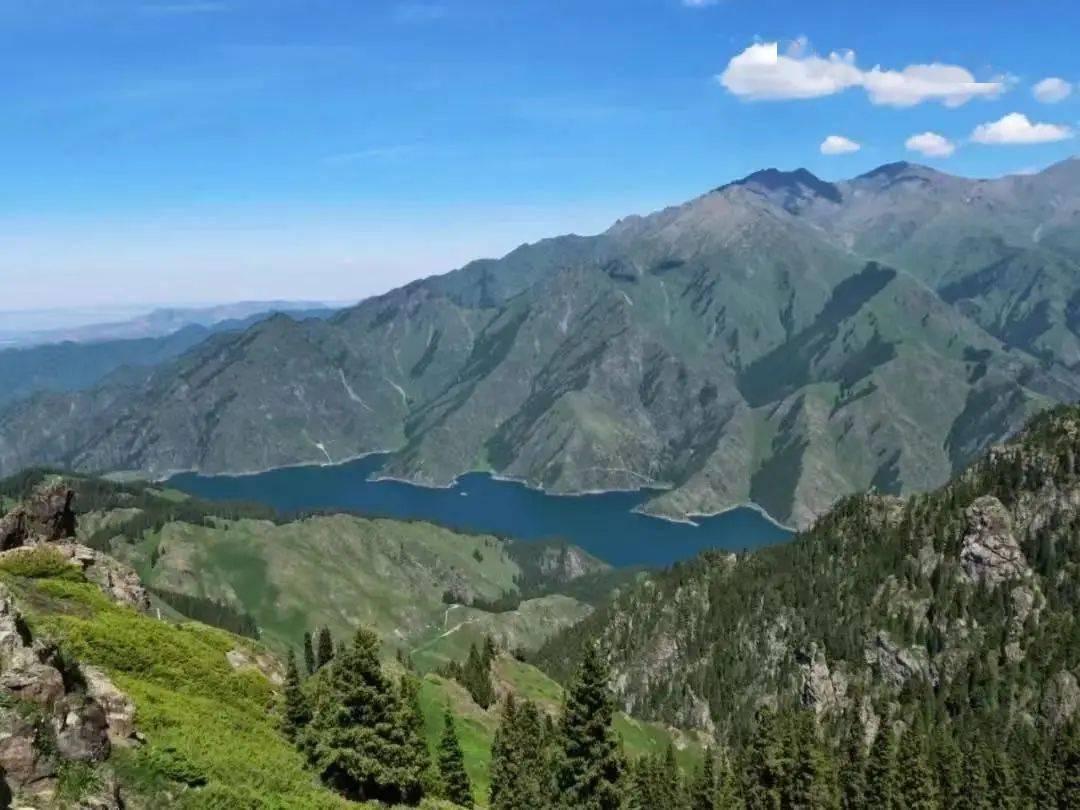
| Heavenly Lake (Tianchi) | 215 RMB (incl. shuttle) | Jun–Sep | 1,910 m |
| Flaming Mountains | 40 RMB | Apr–Oct | ~300 m |
| Kashgar Old City | Free | Year-round | 1,289 m |
| Karakul Lake | 50 RMB | May–Oct | 3,600 m |
| Kuqa Grand Canyon | 45 RMB | May–Sep | 1,600 m |
Why This 14-Day Xinjiang Itinerary Guide Works
The first version of this plan was a mess. I had copied a forum post that squeezed Kanas, Ili, and the Pamir Plateau into fourteen days. On day four our group was tired of the highway and one traveler got altitude sickness near the plateau. We cut north Xinjiang entirely and rebuilt the loop around the Tarim Basin instead.
What worked was slower mornings and a fixed hotel rhythm. We booked the same mid-range chain in Urumqi, Turpan, Korla, and Kashgar, which meant clean rooms and a known breakfast. The 10-Day Xinjiang Itinerary I published earlier is a tighter cut of this same region, but fourteen days lets you add Hotan and the desert crossing without rushing.
By the end of the trip our group had eaten hand-pulled noodles in five cities, crossed a 3,700 m pass, and still had energy for the Sunday livestock market in Kashgar. That balance is the whole point of a 14-Day Xinjiang Itinerary Guide.
How to Get There
Urumqi is the gateway. Direct flights arrive from Beijing (about 4 hours), Shanghai (5 hours), Guangzhou (5.5 hours), and most provincial capitals. International travelers usually connect through Beijing or a Central Asian hub.
From Urumqi you have three ways south. The fast option is the high-speed train to Turpan (roughly 1 hour, 51 RMB in second class), then a mix of trains and a hired car. The scenic option is to drive the Duku Highway, but that road opens only from early June to late September and is not reliable for a fixed schedule. Most of my groups take the train to Turpan, then hire a car for the southern loop. This 14-Day Xinjiang Itinerary guide assumes you hire a car for that southern stretch rather than rely on buses.
Within the south, distances are long. Turpan to Korla is about 450 km. Korla to Kuqa is 270 km. Kuqa to Kashgar is 720 km, best split with an overnight in Aksu. The Xinjiang Self-Driving Guide covers the permit and road rules if you want to drive yourself rather than hire.
Best Time to Visit
Spring (April to May) is quiet and cheap. The Flaming Mountains are bearable, and Turpan’s apricot bloom draws few crowds. Nights are still cold in the mountains, so pack a warm layer.
Summer (June to August) is the standard window. The Pamir Plateau clears of snow, the grasslands turn green, and every site is open. Daytime heat in Turpan can hit 40°C, so we started drives at 7:30 am.
Autumn (September to early October) is my favorite. The Populus Euphratica forests near Luntai go gold, the air is dry, and the crowds thin after the National Day holiday ends. Prices drop by roughly 20 percent compared with July.
Winter (November to March) is harsh. The Duku Highway and most plateau roads close. I only send keen photographers then, for the snow scenes around Hemu.
My clear recommendation: travel between the last week of May and the second week of October. That is the window where every stop on this 14-Day Xinjiang Itinerary Guide is open and safe to reach.
Where to Stay
Budget: Hostels and guesthouses run 90 to 150 RMB a night. In Kashgar the Old City homestays start around 120 RMB and put you steps from the morning bread ovens. They are basic but clean.
Mid-range: National chains like Jinjiang or Home Inn cost 260 to 420 RMB. We used them in Urumqi, Turpan, Korla, and Kashgar for consistency. Breakfast is included and the hot water is reliable, which matters after a long drive.
Upper: Five-star properties in Urumqi (the Hilton or similar) run 700 to 1,100 RMB. On the Pamir Plateau, the Karakul Lake yurt camps cost 300 to 500 RMB a night and are the only option near the water. Book those a week ahead in peak season.
Food
Xinjiang food is built around meat, noodles, and flatbread. In Urumqi we ate da pan ji (big plate chicken) for 68 RMB, enough for two. The International Grand Bazaar has a noodle stall where a bowl of laghman was 18 RMB.
In Turpan, try the seedless grapes in season (about 10 RMB a kilo) and the grilled mutton skewers at 3 to 5 RMB each. Kashgar’s night market sells nan bread for 4 RMB and samsa (meat pastries) from a clay oven for 6 RMB.
On the Pamir Plateau, options thin out. The guesthouses serve mutton soup and fried rice for 35 to 45 RMB a plate. Carry snacks and water because the stretch between Kashgar and Tashkurgan has few stops.
For permit and border questions around the plateau, the Xinjiang Visa and Permit Guide explains the paperwork you need before heading toward Khunjerab.
Practical Tips
- Get your border permit for the Pamir Plateau in Kashgar before 1:00 pm, since the office closes early and you cannot enter Tashkurgan without it.
- Carry cash. Small roadside stalls and remote gas stations often do not take cards or foreign apps.
- Start long drives at 7:30 am. The light is good and you beat both the heat and the afternoon wind on open desert roads.
- Pack for two climates. A 40°C afternoon in Turpan and a 5°C night at Karakul Lake can happen in the same week.
- Download offline maps. Signal drops for long stretches on the desert highway and around the plateau.
- Keep your passport on you. Hotels and the border checkpoint will ask for it, and scans are not always accepted.
Sample Itinerary
Day 1 : Arrive Urumqi, walk the International Grand Bazaar, overnight Urumqi.
Day 2 : Heavenly Lake (Tianchi) day trip, cable car at 60 RMB, back to Urumqi.
Day 3 : Morning train to Turpan, visit Jiaohe Ruins (40 RMB) and the Flaming Mountains.
Day 4 : Turpan Grape Valley and Karez System, then drive to Korla, stop at Bosten Lake.
Day 5 : Korla to Kuqa, see the Kuqa Grand Canyon and the Kizil Caves.
Day 6 : Kuqa to Aksu, short stop at Wensu Grand Canyon, overnight Aksu.
Day 7 : Aksu to Kashgar, settle in, evening at the Old City.
Day 8 : Kashgar Old City, Id Kah Mosque, Sunday livestock market if timing allows.
Day 9 : Kashgar to Karakul Lake on the Pamir Plateau, stay in a lakeside yurt.
Day 10 : Karakul to Tashkurgan (Stone City), then return to Kashgar.
Day 11 : Kashgar to Yarkand, then on to Hotan, visit the jade market.
Day 12 : Hotan across the Taklamakan desert highway to Kuqa (long drive, ~10 hours).
Day 13 : Fly Kuqa or Hotan back to Urumqi, free afternoon for shopping.
Day 14 : Departure from Urumqi.
If your budget is tight, the Xinjiang Budget Travel Guide shows how to run this loop on trains and hostels for under 6,000 RMB.
The 14-Day Xinjiang Itinerary Xinjiang route above avoids the far north on purpose. Skipping Kanas keeps the driving sane and leaves room for Hotan and the desert crossing.
FAQ
Is fourteen days enough for Xinjiang?
Yes for the south, which is what this plan covers. North Xinjiang (Kanas, Ili) needs its own separate trip of at least eight days.
Do I need a guide for the Pamir Plateau?
You need a border permit, not a guide. Pick it up in Kashgar with your passport. A driver helps because public transport is sparse.
How much does the full loop cost?
Mid-range groups spend about 9,000 to 12,000 RMB per person, including the car, hotels, food, and entry fees, but not international flights.
Can I do this by public transport?
Partly. Trains cover Urumqi to Turpan to Korla. The plateau and desert sections are hard without a car, so most travelers hire one.
What should I pack that I might forget?
A power bank, offline maps, and a warm layer. Signal and cold nights catch many first-time visitors off guard.
Is the food safe for sensitive stomachs?
Generally yes. Stick to cooked dishes and bottled water. The mutton is rich, so ease in if you are not used to it.
Disclaimer
Prices, permits, opening dates, and road conditions change often. The fees and schedules listed here reflect a typical season and may differ when you travel. Always confirm border permit rules, park hours, and transport times with official sources and your hotel before you set out. This article shares personal travel experience and is not official advice.