

Published: 2026-07-28 | Author: Karl Huang
My first Xinjiang Cycling Itinerary started in Dushanzi on a cold June morning in 2019. I had rented a steel-frame touring bike for 120 yuan a day from a shop near Urumqi South railway station, loaded two panniers, and pointed south. Nine days later I rolled into Kuqa with burning legs, having climbed over the 3,400 m Hashiligen Pass. That first Xinjiang Cycling Itinerary taught me more about route planning than any guidebook, mostly because of the mistakes I made along the way.
Quick Reference
| Item | Detail |
|---|---|
| Location | Dushanzi (north foot of Tian Shan) to Kuqa (Tarim Basin) |
| Route length | 561 km one way along the Duku Highway (G217) |
| Fee | Free to ride; bike rental 80-150 yuan/day; no toll for cyclists |
| Best time | June 10 – September 25 (winter closure every year) |
| Highest elevation | Hashiligen Pass, 3,400 m |
Why I Keep Coming Back to the Saddle
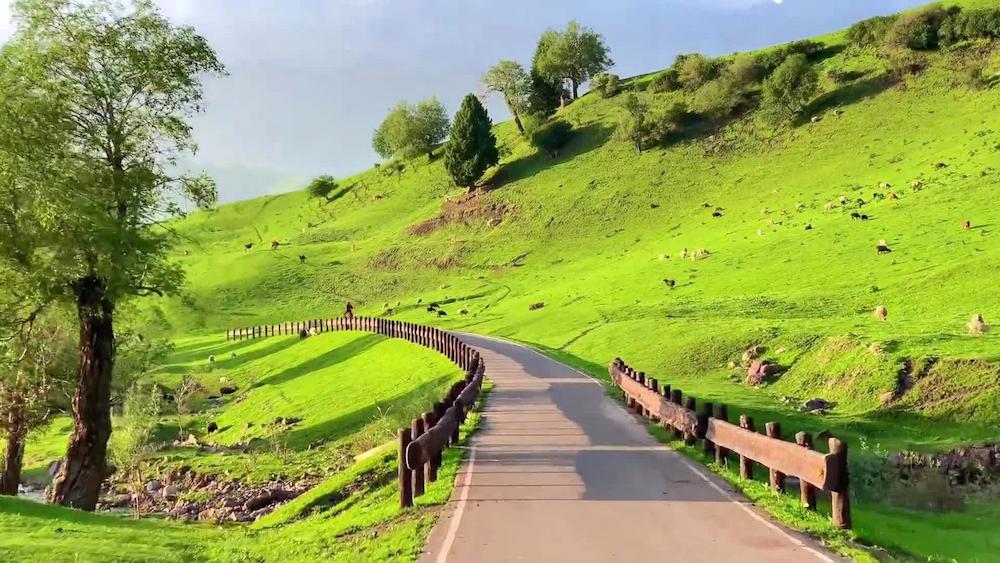
I have now crossed Xinjiang by bike three times. The 2019 Duku run was followed by a 420 km loop through the Yili valley in 2021, where I pedaled past lavender fields near Huocheng and paid 30 yuan a night to pitch a tent beside Sayram Lake. In 2023 I rode the Pamir Highway south from Kashgar to Tashkurgan, a 320 km stretch that required a border travel permit I picked up at the Kashgar Public Security Bureau for free in about 20 minutes.
Each Xinjiang Cycling Itinerary I planned afterward got simpler. On the first ride I carried 8 liters of water and still ran dry on a 90 km stretch with no villages. On the second I learned that county hotels fill up fast during the July school holidays, so I now book the next night’s room by late afternoon. The Pamir ride showed me that altitude above 3,000 m cuts my daily distance by almost half. None of that is in the brochures. It is the kind of detail a real Xinjiang Road Trip Duku Highway Guide only surfaces after you have actually pushed a loaded bike up a switchback in the rain.
How to Get There
Before any Xinjiang Cycling Itinerary, most riders fly or take the train into Urumqi, the regional hub. Direct flights run from Beijing (about 4 hours), Shanghai (5.5 hours), and Xi’an (3 hours). The train is slower but lets you bring your own bike in a bag for free if you remove the front wheel. I traveled from Beijing on the Z69 sleeper, a 31-hour ride, and the bike box rode in the luggage van without charge.
From Urumqi you need to reach the northern start of your route. For the Duku Highway, take a long-distance coach from Urumqi South bus station to Dushanzi; the trip takes about 3 hours and costs 55 yuan. Bikes go in the luggage hold for an extra 20 yuan. If you would rather ride out of the city, a quieter option is to follow the G312 west toward Shihezi and then turn south, adding roughly 150 km of warm-up riding before the climb begins.
For the Pamir route, fly or train to Kashgar, then ride southwest on the G314. A bike box can be checked on the Urumqi-Kashgar flight for about 80 yuan. I prefer the train because the carriage is less stressful for a fully built bike if you deflate the tires and turn the handlebars.
Best Time to Visit
The single best window for a xinjiang cycling itinerary depends on which route you pick, but the Duku Highway sets the calendar for most plans. It is closed by snow from roughly late September through early June, so your riding season is short.
When riders ask about the best time to visit xinjiang cycling itinerary, my answer does not change much year to year: late June or early September. The road opens around June 10 once the snowpatch near the pass is cleared, and it usually closes again in the last week of September. The broader region is covered in our Xinjiang travel guide archive, but the cycling season is tighter than the general tourist season.
Spring (April to mid-June). The lowlands green up, but the high passes stay buried. Do not plan a Duku crossing before June 10; in 2019 the road opened exactly on that date.
Summer (mid-June to August). This is the reliable window. June offers cool air and open roads with few crowds. July and August bring school-holiday traffic and real heat in the Tarim Basin, where Kuqa can hit 38 C. I rode the full Duku in late June and met maybe a dozen other cyclists the whole way.
Autumn (early September to late September). The poplar trees turn gold and the crowds thin out. This is my favorite time. The risk is the closing date, which moved from September 20 to September 28 in the years I tracked it, so build in a buffer.
Winter. Closed. The passes are under meters of snow and there is no cycling option.
My clear recommendation: ride in the last two weeks of June, or in the first ten days of September. You get open roads, manageable temperatures, and views that are not blocked by tour buses. For the full seasonal breakdown, see the Best Time to Visit Xinjiang Guide.
Where to Stay
On a long Xinjiang Cycling Itinerary I book the next room by late afternoon during peak season, because county hotels fill without warning.
Budget. County hostels and yurt camps cost 60 to 100 yuan a night. Near Sayram Lake I paid 80 yuan for a yurt bed in 2021. In Dushanzi and Kuqa, basic guesthouses run 90 to 120 yuan.
Mid-range. County hotels in places like Yining, Korla, and Aksu charge 200 to 350 yuan for a clean double with heating. I book these through Chinese apps a day ahead during peak season.
Upper. Urumqi has solid four-star hotels from 500 yuan up, useful as a rest-and-recover stop before or after a long ride. After the Pamir trip I spent two nights at a 600 yuan hotel in Kashgar to rest my knees.
Food
Xinjiang is a strong place to ride partly because the food is cheap and calorie-dense. A plate of banmian (hand-pulled noodles with toppings) runs 18 to 25 yuan and is enough for a riding lunch. Zhua fan (lamb and rice pilaf) is 25 yuan with a free refill of rice at many spots. Mutton skewers cost 3 to 5 yuan each; I ate eight after the Hashiligen descent in 2019 and still wanted more.
Bread is everywhere: a round naan is 3 to 5 yuan and keeps for days in a pannier, which makes it perfect riding food. Milk tea with salt costs about 5 yuan and helped me on cold mornings above 2,500 m. In Kashgar the night market has grilled fish from Karakul Lake for 40 yuan a portion. Prices shift with the season, so treat these as a planning baseline rather than a fixed menu.
Practical Tips
- Pick the right bike. A steel or aluminum touring frame with 32 mm tires handles the mixed pavement and gravel better than a racing bike. I regret taking a 25 mm road bike in 2019.
- Respect altitude. Above 3,000 m your speed drops. Plan shorter days and sleep low when you can.
- Carry more water than feels reasonable. Some Duku segments have no supply for 80 km. I now carry 6 liters minimum.
- Watch the weather. A pass can be 15 C colder than the valley floor. Pack a rain shell and a warm layer even in July.
- Sort permits early. The Pamir route needs a border travel permit from the Kashgar PSB; it is free but only issued on working days.
- Bring offline maps. Signal vanishes for long stretches. I download the route on two devices before leaving Urumqi.
For a full gear checklist, the Xinjiang Packing List Guide covers what I pack for a multi-day ride.
Sample Itinerary: Your Xinjiang Cycling Itinerary Day by Day
This nine-day Xinjiang Cycling Itinerary is the one I rode in 2019, with realistic daily distances for a loaded bike:
- Day 1: Urumqi to Dushanzi by coach; build the bike, stay overnight.
- Day 2: Dushanzi to Jiasheng Pasture, 95 km, first climbs begin.
- Day 3: Jiasheng to the northern Tian Shan forest zone, 80 km.
- Day 4: Cross Hashiligen Pass (3,400 m), descend to a lakeside camp, 70 km.
- Day 5: Lake spur and rest, short 40 km with a swim.
- Day 6: Through the canyon section to a county town, 100 km.
- Day 7: County town to the southern foothills, 90 km.
- Day 8: Foothills to near Kuqa, 85 km.
- Day 9: Arrive Kuqa, 30 km, then coach back to Urumqi.
If you want a longer northern loop, the 14-Day Xinjiang Itinerary Guide shows how to add Yili and Sayram Lake before the Duku climb.
FAQ
Do I need a special visa to cycle in Xinjiang?
A standard China tourist visa (L) is enough for most routes. Only the border zones like the Pamir Highway need the free local travel permit mentioned above.
Can I rent a bike there instead of flying mine in?
Yes. Urumqi and a few larger cities have rental shops with touring bikes at 80 to 150 yuan a day. Quality varies, so inspect the brakes and gears before paying.
Is the Duku Highway safe for solo riders?
The road is paved and patrolled, but it is remote. I rode parts alone and felt safe, yet I carried a satellite messenger and told my hotel the day’s plan each morning.
How fit do I need to be?
You should be comfortable riding 80 to 100 km a day with luggage for several days. The altitude makes it harder than the distance suggests. Train with a loaded bike before you fly out.
What about the wind?
The Gobi sections near Kuqa can hit 40 km/h crosswinds in summer. I plan those miles for early morning when the air is calmer.
Disclaimer
Prices, permit rules, road opening dates, and lodging availability change year to year and can differ by season or by county. The figures here come from my own trips between 2019 and 2023 and are meant as planning estimates, not guarantees. Always confirm current conditions with official sources such as the Xinjiang transport and public security bureaus before you travel, and check the latest park and road notices close to your departure date.