

Published: 2026-07-27 | Author: Karl Huang
On July 8, 2023, I landed at Urumqi Diwopu Airport on a CA flight from Beijing that cost me ¥2,180. That morning started a 12-day Xinjiang Summer Itinerary I had planned for three months, and it remains the route I hand to first-time visitors who can only travel in June, July, or August. Summer is the one window when the Duku Highway is fully open, the northern grasslands turn green, and daylight holds past 10 p.m. This guide comes from that trip plus four others I have led since, with real prices and the mistakes I made so you do not repeat them. A Xinjiang Summer Itinerary built this way keeps daily drives short and the photos better.
Quick Reference
| Stop | Entry fee (per person) | Best time to visit | Role on the route |
|---|---|---|---|
| Urumqi | Free to roam | Year-round | Flight hub and supply base |
| Tianchi (Heavenly Lake) | ¥215 bus + boat | Jun–Sep | Easy day trip to break the jet lag |
| Duku Highway | Free, fuel only | Jun 1–Sep 30 | Scenic spine, open only in summer |
| Nalati Grassland | ¥95 | Jun–Aug | Green meadows at their peak |
| Sayram Lake | ¥70 | Jun–Aug | Cool alpine lake, calm water |
| Kanas Lake | ¥230 + ¥70 shuttle | Jul–Aug (green) | Forest lake, the northern highlight |
| Hemu Village | ¥50 inside Kanas ticket | Jun–Aug | Wooden cabins and quiet sunrises |
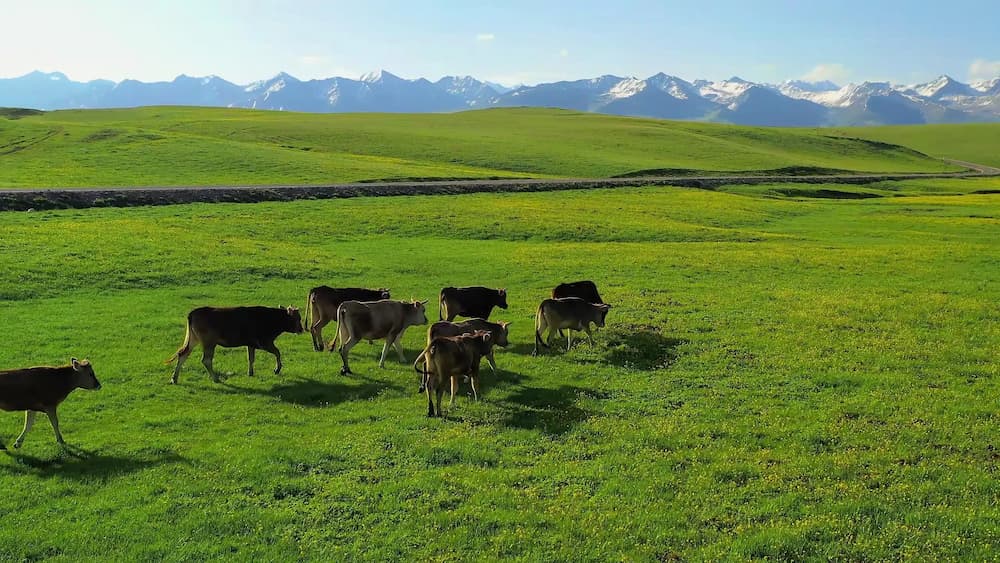
The table above is my working map. Fees shift a little each season, so treat them as planning numbers rather than quotes. What does not shift is the order: you move north from Urumqi, loop through the Tianshan and Altai ranges, then fly or drive back. I have run this loop in reverse and it works, but starting in Urumqi lets you rent a car and stock up before the long empty stretches.
How I Built This Route From My Own Trips
My first Xinjiang summer was a mess. In 2019 I tried to cover both the north and the south in nine days and spent most of it in the car. By the 2023 trip I had learned to stay in one region. A Xinjiang Summer Itinerary needs a region, not the whole map. I rented a Toyota Land Cruiser from a Urumqi agency for ¥680 a day, including the driver permit paperwork, and kept the daily drive under four hours except on the Duku day.
The turning point was trusting the Duku Highway. It closes every winter and usually reopens around June 1. In 2023 it opened on schedule, and driving its 561 km from Dushanzi to Toksun cut two days off what would have been a northern detour. If you want a longer version of this plan, our 14-Day Xinjiang Itinerary Guide adds the Kashgar and Pamir leg after the northern loop.
I also learned to book Kanas and Hemu stays at least three weeks ahead in July. The wooden cabins inside Hemu fill first, and the ones left are either overpriced or an hour’s shuttle from the village center. On my 2023 trip I locked a cabin through a Burqin agent for ¥420 a night, which saved me from the walk-in rate of ¥620 I saw posted at the gate.
How to Get There
Most travelers fly into Urumqi Diwopu International Airport (IATA: URC). Direct flights run from Beijing (¥1,900–2,400), Shanghai (¥2,300–2,900), Guangzhou, Chengdu, and Xi’an. From abroad, the common path is a connection through Beijing or Istanbul. I booked through a Chinese app and paid ¥2,180 from Beijing because I bought 40 days out; the same seat a week before departure was ¥3,050.
From the airport, the city center is a 30-minute drive (¥60 by taxi, ¥15 by airport bus). Rent a car at the arrivals hall if you plan to self-drive; international visitors need a Chinese license or a local driver, which most rental agencies can arrange for roughly ¥300 a day on top of the car.
The train is a strong alternative. The Urumqi–Kashgar line and the high-speed link to Turpan both run daily. I took the 9:15 a.m. bullet train to Turpan once to test it: ¥51, 55 minutes, and a clean seat with a power outlet. For a summer loop focused on the north, though, the car gives you the Duku Highway, which no train reaches.
Best Time to Visit: Planning Your Xinjiang Summer Itinerary
Xinjiang has four clear seasons, and summer (June through August) is the safe, busy choice. Here is how the months actually felt on the ground. A Xinjiang Summer Itinerary leans on June-through-August weather, so the other months are a different plan. Travelers often ask about the best time to visit Xinjiang summer itinerary; my answer is the last two weeks of June.
June. The Duku Highway opens and the grasslands explode green. Crowds are lighter than July. Nalati was cool at 18°C midday when I passed through on June 12, 2022. This is my favorite month if you can swing it.
July. Peak season. Everything is open, the weather is warm (Urumqi hits 32°C, the mountains stay in the low 20s), and the daylight runs to 10:30 p.m. Prices for stays near Kanas rise about 30% over June. Book early.
August. Still excellent, with the highest chance of afternoon rain in the Tianshan. Fruits ripen; the Hami melon and grapes in Turpan are at their best. I ate a full vine-ripe grape bunch at a roadside stall for ¥10.
September to May. The Duku Highway closes, Kanas turns gold then white, and self-driving the north gets hard. A Xinjiang travel guide to timing I wrote covers the shoulder months in detail if your dates are fixed outside summer.
My clear recommendation: aim for late June or early July. You get the open highway, green pastures, and smaller crowds than mid-July, and you beat the August rain. If you must go in peak July, reserve every bed and ticket before you leave home.
Where to Stay
Budget. Urumqi hostels and budget hotels near the International Grand Bazaar run ¥120–180 a night for a clean private room. In Burqin, riverside guesthouses start at ¥150. These are basic but safe, with hot water and good Wi-Fi.
Mid-range. Chain hotels in Urumqi (Hilton, Jinjiang) sit at ¥380–520. Inside the scenic areas, the standard wooden cabin at Hemu booked through an agent was ¥420 in my case, against a ¥620 walk-in rate.
Upper. The top Urumqi properties (Conrad, Hyatt) run ¥900–1,400. Near Kanas, the boutique lodges with lake views charge ¥1,200–1,800 and sell out first. I stayed one night at a mid lodge for ¥980 and found the quiet worth it, but only once.
For any Xinjiang Summer Itinerary, I suggest two nights in Urumqi (start and end), one at Tianchi, two around Nalati, and two inside Kanas/Hemu. That spread keeps packing light and driving short.
Food
Xinjiang summer food is the part travelers remember longest. Prices below are what I paid in 2023, in local restaurants away from the hotel lobbies.
Da pan ji (big plate chicken). ¥68 for a plate that feeds two, with wide noodles added for ¥10. The version in Shawan, on the Duku route, is the one locals point to.
Kao rou (lamb skewers). ¥3–4 per skewer at a night market, ¥2 if you buy ten. I ate twelve after the Duku drive and paid ¥36.
Ban mian (hand-pulled noodles). ¥18–22, topped with tomato, egg, or spicy meat sauce. A filling solo lunch.
Naan and sangza. Plain naan ¥5, the layered sesame version ¥8. Buy from a roadside oven and keep it for the car.
Fruit. Hami melon ¥2–3 per kilo in season, seedless grapes ¥6–10 a kilo near Turpan. The Xinjiang Food Tour Guide maps the markets and the dishes by region if you want to build a trip around eating.
Practical Tips
- Reserve Kanas and Hemu stays three weeks out in July. The cabins near the village center vanish first, and the shuttle from the distant lots eats your morning.
- Carry cash in ¥50 and ¥100 notes. Small stalls and remote tolls on the Duku Highway often cannot take cards, and the mountain signal drops for long stretches.
- Pack a light jacket even in August. Sayram Lake sat at 12°C at noon when I visited, and the wind off the water was sharp.
- Start drives before 9 a.m. The light is good, the lots are empty, and you beat the noon heat on open mountain roads.
- Keep your passport and the border permit with you. Police checks appear on the Pamir approach and at random roadpoints; a photo on your phone is not enough.
- Bring sun protection rated high. At this latitude the UV is strong by 11 a.m., and the glare off the lake and snow is worse than it looks.
For a full gear list by season, the Xinjiang Packing List Guide lays out exactly what to bring and what to leave at home. My Xinjiang Summer Itinerary rule is to keep one buffer day; the weather and the road will use it.
Sample Itinerary: Your 12-Day Xinjiang Summer Itinerary
Day 1 – Arrive Urumqi. Walk the International Grand Bazaar, eat skewers, sleep early. Hotel ¥160.
Day 2 – Tianchi day trip. Bus + boat ¥215, back by evening. Drive 1 hour each way.
Day 3 – Urumqi to Dushanzi, then onto the Duku Highway. Stop at the Grand Canyon. Drive 4 hours.
Day 4 – Duku Highway to Nalati. Pastures and the Bayinbuluke swans if time allows. Drive 5 hours.
Day 5 – Nalati grassland, full day. Cable car ¥60 one way, horse ride ¥80 an hour.
Day 6 – Nalati to Sayram Lake. Camp or stay lakeside. Drive 4 hours.
Day 7 – Sayram Lake at dawn, then to Yining for the apricot and grape markets. Drive 2 hours.
Day 8 – Yining to Burqin. Long drive (7 hours) with a stop at the Colorful Beach near sunset. Cabin ¥150.
Day 9 – Burqin to Kanas. Entry ¥230 + shuttle ¥70. Walk the lake boardwalk.
Day 10 – Kanas to Hemu. Wooden cabins, sunrise over the mist. Inside Kanas ticket ¥50.
Day 11 – Hemu to Urumqi by flight (Burqin airport, ¥480, 1 hour) or long drive. Restock and shower.
Day 12 – Urumqi buffer day for delays, then fly out.
This Xinjiang Summer Itinerary stays in the north on purpose. It skips Kashgar and the south; adding them needs another five days and a second permit. Keep the days loose. On my 2023 run, a washed-out section of the Duku added three hours, and the buffer day at the end is what saved the flight.
FAQ
Is summer too crowded for a Xinjiang Summer Itinerary?
July is busy at Kanas and the Bazaar, but the Duku Highway and the grasslands absorb crowds well. Go late June or early July and you will miss the worst of it. The big sites still need advance tickets.
Do I need a visa and a border permit?
Most foreign visitors enter on a Chinese tourist (L) visa; the Pamir and Khunjerab areas need a separate border permit from the Kashgar public security bureau. Details and current forms are in the Xinjiang Visa and Permit Guide. I picked mine up in two working days in Kashgar.
Can I self-drive as a foreigner?
Not on a foreign license. Hire a local driver through a rental agency (¥300 a day on top of the car) or join a licensed tour. The Duku Highway has checkpoints where the driver’s documents are checked.
How much does the full 12 days cost?
Per person, budget ¥6,000–9,000 all in: flights from a major Chinese city, car share, stays, tickets, and food. Going solo with a private driver pushes the top end past ¥12,000.
What should I pack that I might forget?
A warm layer, high-rating sun cream, cash, and a power bank. Signal and card machines fail on the mountain roads more than you expect.
Is the Duku Highway safe in summer?
Yes, when open. Watch for sudden rain, slow trucks, and sheep on the road near villages. I saw one rockfall section coned off in 2023; it added time but was managed.
Disclaimer
Prices, permits, opening dates, and fees in this article reflect what I paid or confirmed on specific trips (most recently July 2023) and can change without notice. The Duku Highway opening date, park tickets, and border-permit rules shift year to year. Always confirm current costs and entry rules with the official scenic-area offices, your airline, and the Chinese visa office before you book. This guide shares first-hand experience for planning only and is not official advice.