

Published: 2026-07-26 | Author: Karl Huang
Flying from Beijing to Xinjiang is a four-hour leap from China’s political centre to its far northwest — roughly the same as crossing a continent. I have made the trip in every season, by air and by the long rail line, and the month you choose changes the journey as much as the destination. Urumqi, the usual landing point, sits at about 800 metres and opens onto four very different climate zones within a day’s drive. May through October is the dependable window; the grasslands and high roads are open and the weather behaves. Winter is cheaper and quiet, but the north turns hard and cold. The mistake I see most is treating Xinjiang like a Beijing weekend — the season you land in decides what you can actually reach.
What to Know Up Front
| Item | Detail |
|---|---|
| Route | Beijing (Daxing or Capital) to Urumqi Diwopu International |
| Typical fare | ¥1,000–1,800 round trip by air; ¥1,150 hard sleeper by train |
| Best time | May through October, with June to September the most reliable window |
| Elevation | Beijing ~44 m; Urumqi ~800 m; far west climbs past 3,000 m |
I still remember the first time I got the timing wrong. In February 2021 I flew out expecting a winter wonderland and found Urumqi buried under grey slush that closed half the mountain roads. The lesson stuck: the route is easy, but the destination’s weather is the real boss. Since then I treat the calendar as the main planning tool, not the flight schedule.
The Approach
Most travelers fly. Direct flights from Beijing to Urumqi run every day on Air China, China Southern, and Hainan Airlines, with a block time of around four hours. I prefer the early morning departure because it leaves the whole afternoon free to reach the city or head straight to Tianchi. Booking Tuesday or Wednesday tends to shave ¥200 off the fare.
The train is slower but rewarding. The Z179 sleeper leaves Beijing West in the evening and arrives in Urumqi roughly 31 hours later, a hard sleeper around ¥1,150 and a soft sleeper near ¥1,800. If you want the full Beijing to Xinjiang Guide treatment with transfers and stopovers, the rail option lets you break the trip in Lanzhou or Xi’an. I did that once and it turned a transfer into a second trip entirely.
Landing in Urumqi, the airport bus to the center costs ¥15 and leaves every 30 minutes; a taxi runs about ¥60 and takes 40 minutes in light traffic. Metro line 1 now links the airport to the South Gate, which is where I usually base myself. Show the driver the hotel name in Chinese characters on your phone to avoid any mix-up.
Best Time for Beijing to Xinjiang: Which Months Work
Spring (April to May) is my quiet favorite. The snow melts off the northern grasslands and apricot trees bloom around Turpan, while flight prices sit at their yearly low. Daytime in Urumqi reaches 18 to 24°C. I once caught the Turpan apricot festival on April 12 and the orchards were the best part of that week. The catch is wind: the Dabancheng corridor can gust hard, and some plateau roads stay closed until mid May.
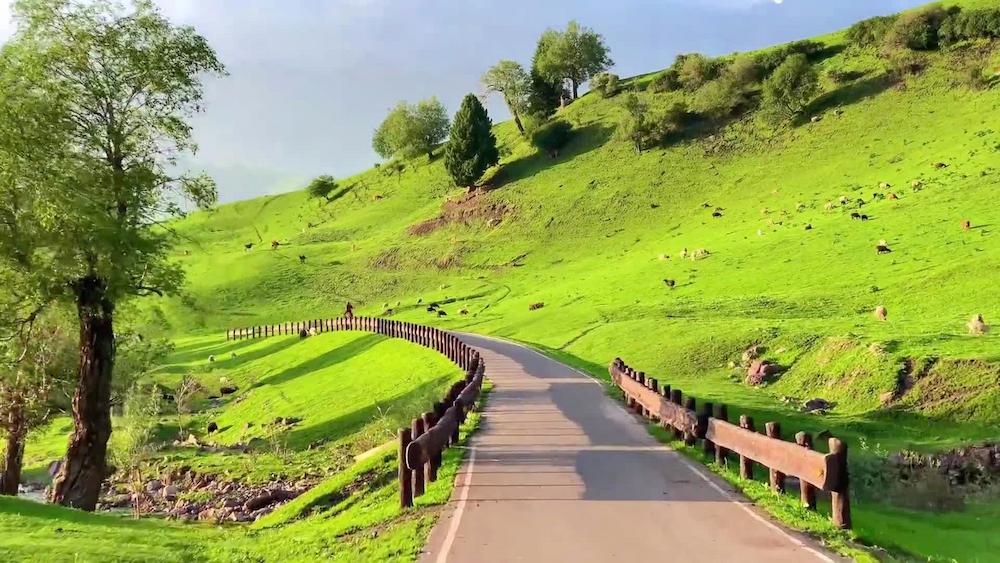
Summer (June to August) is the safe, crowded peak. Kanas and Nalati turn green and Sayram Lake stays calm, which makes the open roads a pleasure. Expect daytime highs of 28 to 33°C in the basins and cool nights up north. This is when I send first-time visitors, because the weather almost never ruins a plan. The one drawback beyond price is the occasional afternoon thunderstorm up north, which can delay the mountain roads for an hour.
Autumn (September to October) may be the single best stretch. The Populus euphratica forests near Lop Nur turn gold in early October, and with the air dry and clear the summer crowds have thinned out. I caught the 2023 autumn loop from Kashgar to Hotan and had whole sections of the desert highway to myself. Bring a warm layer; nights drop to 5°C by late October.
Winter (November to March) is for specialists. Snow covers the north, ski resorts near Urumqi open, and fares can fall under ¥900. But the Duku Highway closes, many grassland sites shut, and daylight runs short. I only recommend it if you came for the skiing or the Silk Road festival circuit. For the regional pattern, my Best Time to Visit Xinjiang Guide breaks down each prefecture month by month.
My clear recommendation: aim for the last two weeks of September. You get autumn color, open roads, and prices that have not yet hit the National Day holiday spike that starts October 1. If a friend asks the best time to visit Beijing to Xinjiang, I give one date: September 20. That window has delivered the smoothest Best Time for Beijing to Xinjiang runs I have planned.
Where to Sleep
Budget stays in Urumqi start around ¥150 a night for a clean hostel or a budget chain like Home Inn near the South Gate. Mid-range hotels such as the Hoi Tak or local four-stars run ¥350 to ¥550 and put you within walking distance of the bazaar. Upper-end options, the Hilton or the Kunlun, land at ¥700 to ¥1,100 and include the breakfast spread worth waking up for. In smaller towns like Kashgar or Yining, the same brackets drop about 20 percent.
Book through the hotel’s own WeChat mini-program rather than a foreign aggregator; I have saved ¥40 a night that way in Yining. In Kashgar, the converted courtyard houses inside the old city are the stays I remember, usually ¥280 to ¥450, though the Wi-Fi can be patchy. Reserve those a month ahead in September, because the good courtyards fill first.
What I Order
Xinjiang food is the part of the trip I plan around. In Urumqi a plate of laghman (hand-pulled noodles) costs ¥22 to ¥35, a whole grilled mutton skewer meal runs ¥45 to ¥70, and the naan straight from the tandoor is ¥3 to ¥5. My standard move is the morning market by the International Grand Bazaar: fresh yogurt with nuts at ¥10, a samsa pastry at ¥6, and endless cups of milk tea. In Kashgar the pigeon noodle soup is a ¥25 ritual I repeat every visit. Don’t skip the roasted whole lamb at a banquet, about ¥60 a head when split four ways, or the cold fen (mung bean noodles) at ¥12. None of these prices are fixed forever, but they have held steady across my last three trips.
Before You Go
- Book flights 21 to 30 days out. The ¥1,000 fares vanish inside two weeks of departure.
- Carry your passport. Border permits for the Pamir Plateau and some northern forests are checked on the spot, and the Xinjiang Visa and Permit Guide lists which counties need one.
- Pack one warm layer even in summer. The gap between a Urumqi afternoon and a mountain morning is real.
- Skip the National Day week (Oct 1 to 7) if you can. Trains sell out and sites jam.
- Download offline maps. Signal drops on the desert and mountain stretches.
- Learn a few Uyghur greetings. A “yakhshimusiz” at a stall goes further than you would expect.
Suggested Route
This is the timeline I used on my September 2024 run, flying out of Beijing:
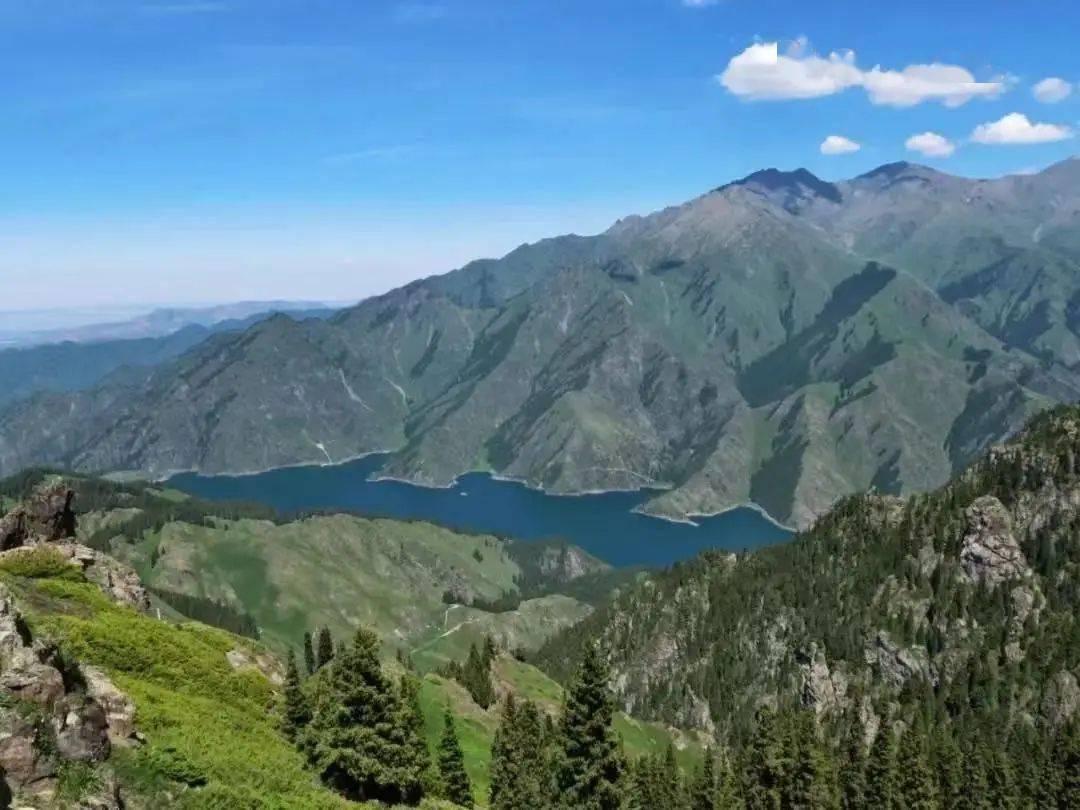
Day 1: Early flight to Urumqi, afternoon at Tianchi. Night in Urumqi (¥400 hotel).
Day 2: Drive the Duku Highway south, overnight in Bayinbuluke (¥320 guesthouse).
Day 3: Nalati grassland, continue to Yining (¥350 hotel).
Day 4: Sayram Lake loop, return to Urumqi by evening.
Day 5: Morning bazaar, afternoon flight home to Beijing.
The same shell works in reverse if you would rather land in Kashgar first. For the full Beijing to Xinjiang Itinerary with hotel bookings and train legs, see my longer write-up. That plan grew out of the Best Time for Beijing to Xinjiang notes above.
Things People Ask
Is spring or autumn better for the Beijing to Xinjiang route?
Autumn, narrowly. September gives you open roads and lower prices than summer, while April can still have closed high passes. Both beat winter for a first trip.
How far ahead should I book the flight?
Three to four weeks. I have watched the same China Southern routing go from ¥1,050 to ¥1,650 in the final ten days before departure.
Can I take the train instead of flying?
Yes. The Z179 sleeper is about 31 hours and costs less than a peak summer flight. It suits travelers who want to see the Gobi roll by instead of clouds.
What about the National Day holiday?
Avoid it for this route. The mix of domestic crowds and sold-out rail makes late September a smarter choice by a wide margin.
Do I need a permit leaving from Beijing?
Your Beijing departure needs no special permit, but reaching the Pamir Plateau or certain northern forest zones from Urumqi does. Sort it in Urumqi on arrival.
Planning the Wider Trip
The stops around Beijing to Xinjiang work best as a chain, not a checklist. Here is the order I’d use and the guides that cover each leg.
- best time to visit Xinjiang
- Xinjiang travel guide
- Xinjiang in December: Winter Travel Guide 2026
- Xinjiang with Young Kids Travel Guide 2026: What to See, Do & Plan
Before You Rely on This
Prices, train numbers, and permit rules change. The fares and schedules above reflect my own trips through 2024 and 2025 and may shift with season or policy. Always confirm flight times, border permits, and park fees on the official airline and government sites before you book. This article shares first-hand experience, not guaranteed fact.
Things People Ask
What is the best month to travel from Beijing to Xinjiang?
May through October is the dependable window, with June to September the most reliable for weather and open roads. The grasslands are green, the high passes run, and Urumqi is comfortable. Winter is cheaper and empty but cold in the north. Avoid assuming any single month suits every corner — Xinjiang spans four climate zones.
How long is the trip from Beijing to Xinjiang?
A flight from Beijing to Urumqi takes about four hours. The train is far longer — a direct service runs well over a full day, with sleepers available — and is best treated as part of the trip rather than just transport. Many travellers fly one way and use the train for the experience or the lower cost.
Do flight prices from Beijing to Xinjiang change by season?
They do. Summer and the October National Day holiday are the most expensive and sell out earliest; the shoulder months of May and September, and the deep winter, are usually cheaper. Book several weeks ahead for peak periods, and compare Daxing and Capital airport departures, as fares and schedules differ.
Plan Your Xinjiang Trip
Build the route, timing, and logistics around Best Time for Beijing to Xinjiang with these related guides from Xinjiang Itinerary:
- Xinjiang Itinerary Routes: 7, 10 & 14-Day Plans
- Xinjiang for American Travelers: Flights, Visas, Budget & Safety
- Northern Xinjiang Travel Guide: Kanas, Ili, Sayram & the Grasslands
- Southern Xinjiang Travel Guide: Kashgar, Pamir, Turpan & the Silk Road
How Beijing to Xinjiang Fits the Region
Xinjiang is one-sixth of China by area and spans two deserts, three mountain systems and a dozen distinct oasis cultures. The single most useful planning fact is the sheer scale: a ‘short hop’ is often a full day on the road.
One Thing to Get Right
The mistake I see most is underestimating transfer time and trying to cover north and south in one week. Fly the long legs and give each region real days.
Keeping It Honest
Last reviewed 2026-11-04 by Karl Huang, Xinjiang Travel Specialist & founder of Xinjiang Itinerary. I keep a running list of what changed since the last season — new shuttle routes, shifted gate fees, closed passes — and fold it in here.
For a second, non-commercial source, these are the sources I cross-check against when I refresh these notes: