
Published: 2026-07-23 | Author: Karl Huang
I drove from Kashgar to Tashkurgan in April 2023, then flew to Lhasa the following month to test the two regions back to back. On the Xinjiang leg I paid 45 yuan for the Tashkurgan border permit and 220 yuan to enter Karakul Lake. In Tibet that same season I handed over 100 yuan for the Ali border pass and 200 yuan for the Potala Palace ticket. Those numbers are a good starting point for anyone weighing Xinjiang vs Tibet Tips, because the regions feel completely different once you are on the ground. This piece collects the lessons I wish I had before that double trip, and it should save you a few expensive mistakes.
Quick Reference
| Point of Comparison | Xinjiang | Tibet |
|---|---|---|
| Location | Northwest China, borders eight countries | Southwest plateau, the Tibet Autonomous Region |
| Permit / Entry Fee | Border permit 0–45 yuan; most areas open to foreigners | Tibet Travel Permit ~100 yuan plus a licensed guide |
| Best Time | May–October in the north, April–October in the south | May–October; winter roads and passes close |
| Elevation / Role | Mostly 500–2,500 m, easy to breathe | Usually 3,500–5,000 m, altitude is the main hurdle |
Xinjiang vs Tibet Tips From My Own Trips
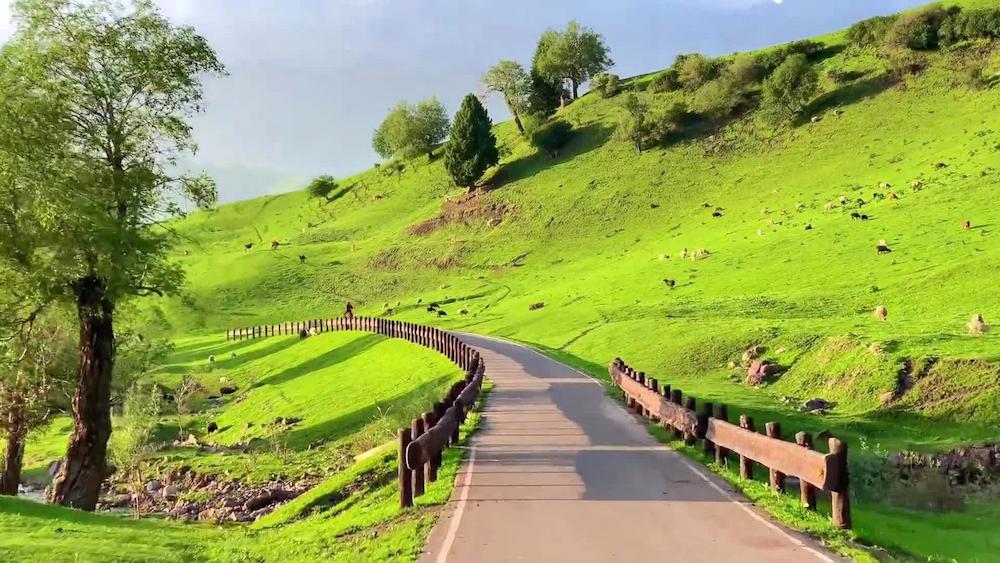
The single biggest surprise was how little altitude bothered me in Xinjiang. I drove the Duku Highway at 3,400 meters and still slept fine in Bayinbuluke. Tibet hit differently. After landing in Lhasa at 3,650 meters I needed two slow days before a walk to the Jokhang felt comfortable. If your body reacts to thin air, that alone should shape the plan.
Logistics also diverged. In Xinjiang I rented a car in Urumqi and explored on my own schedule. Tibet required a registered agency, a guide in the vehicle, and a permit processed through that agency before I could leave Lhasa for the west. The freedom difference is real, and it changes how spontaneous your days can be. For travelers comparing the two, Xinjiang vs Tibet Xinjiang comes out ahead on independent travel because you are not tied to a guide.
Food was the other eye-opener. Xinjiang gave me lamb skewers, hand-pulled laghman noodles, and melons at every stop. Tibet offered momos and butter tea, hearty but repetitive after a week. These Xinjiang vs Tibet Tips hold true across seasons: the north eats better and cheaper. I enjoyed both, yet the variety in our Xinjiang vs Tibet guide tilts clearly toward Xinjiang for everyday eating.
How to Get There
For Xinjiang, international travelers usually fly into Urumqi Diwopu Airport (URC) from Beijing, Shanghai, or Chengdu, with one connection. Trains from Xi’an and Lanzhou also reach Urumqi in a long but scenic ride, and I took the overnight soft-sleeper from Xi’an for about 650 yuan. From there, self-driving opens the north-south routes.
For Tibet, almost everyone flies into Lhasa Gonggar Airport (LXA). The train from Xining is famous for the gradual climb that helps with acclimatization, though it books out weeks ahead in summer and costs 700–1,100 yuan depending on class. Foreigners cannot board just any Tibet train; the permit must clear first through your agency. One of my Xinjiang vs Tibet Tips is to fly in only if you have past altitude experience, since the sudden jump to Lhasa is harder than the train’s slow rise.
Connecting the two directly is uncommon. Most travelers pick one region per trip, or fly Lhasa to Urumqi as a separate leg. I did the split trip with a week of rest in Chengdu between, which I would repeat without hesitation.
Best Time to Visit
Spring (April–May) is strong in southern Xinjiang, when the desert warms but crowds stay thin. I found Kashgar calm and the Karakoram Highway open by mid-April. Tibet in spring is still cold and many passes stay snowed in, so it ranks low on my Xinjiang vs Tibet Tips for that window.
Summer (June–August) is peak for both. Xinjiang’s grasslands turn green and the Duku Highway runs fully. Tibet’s weather is mildest, but Lhasa and Shigatse fill with tourists and prices creep up. Book permits and hotels a month out if you go in July.
Autumn (September–October) is my favorite window. Xinjiang’s poplar forests near Luntai glow gold, and Tibet’s skies stay clear with fewer people. This is when I would send most first-timers, and it sits at the top of my Xinjiang vs Tibet Tips for comfortable weather.
Winter (November–March) rewards patient travelers with empty sites and low costs, yet Tibet’s western routes close and Xinjiang’s north gets bitter. Choose it only if you accept limited movement.
My clear recommendation: travel in September or early October, and choose Xinjiang if altitude worries you or Tibet if high plateau landscapes top your list.
Where to Stay
Budget: In Xinjiang, hostels and guesthouses in Kashgar’s old town run 80–150 yuan a night. In Lhasa, a basic guesthouse near the Barkhor is similar, 90–160 yuan, though permits sometimes push you toward agency-listed hotels.
Mid-range: Three- and four-star hotels in Urumqi or Lhasa cost 300–600 yuan. I stayed at a 350 yuan place in Yining with reliable heating and good breakfast, a solid middle option, and a comparable 420 yuan hotel in Lhasa came with the humidifier I needed against the dry air.
Upper: Luxury bookings in Urumqi or Lhasa reach 1,000–1,800 yuan, with proper humidifiers that help against the dry air. In remote Tibet counties, even mid options shrink, so book the best available early. One of my Xinjiang vs Tibet Tips for lodging is to lock your Tibet stays before the permit application, because the agency needs addresses on file.
Food
In Xinjiang, expect samsa (baked meat pies) at 6–10 yuan, a plate of laghman noodles for 25–35 yuan, and lamb skewers at 3–5 yuan each. A full naan-and-tea breakfast costs under 20 yuan. The Xinjiang vs Tibet itinerary I built leans on these cheap, filling stops, and you can eat well on 80–120 yuan a day.
In Tibet, momos (dumplings) run 15–25 yuan for a basket, thenthuk (noodle soup) about 20–30 yuan, and butter tea around 10 yuan a pot. Restaurant variety is thinner outside Lhasa, so costs stay flat rather than dropping. One of my Xinjiang vs Tibet Tips is to budget more for food in Tibet if you tire of repeated menus and want the occasional Chinese restaurant in Lhasa.
A practical note for both: these regions lean Muslim or Buddhist, so pork is scarce and alcohol limited. Vegetarians do fine on noodles and breads but should pack snacks for remote stretches.
Practical Tips
- Sort the Tibet Travel Permit at least three weeks ahead through a licensed agency; Xinjiang’s border permits you can often get locally in a day.
- Build an acclimatization buffer of two days in Lhasa before any high pass, something Xinjiang rarely demands.
- Carry cash in 50 and 100 yuan notes; small county guesthouses and desert stalls in both regions still skip cards.
- Download offline maps before leaving Urumqi or Lhasa, since signal dies on the western plateaus and desert highways.
- Match your season to your goal: green pastures in Xinjiang’s June, clear peaks in Tibet’s October.
- Read the visa and permit guide before booking flights, because entry rules shift and a wrong assumption costs real days.
Sample Itinerary
Day 1: Fly into Urumqi, rest, walk the International Grand Bazaar, dinner of skewers and naan.
Day 2: Train or drive to Turpan, visit the Jiaohe ruins and Karez system, overnight in a 300 yuan hotel.
Day 3: Drive the Duku Highway toward Bayinbuluke, stop at the grasslands, sleep at 2,400 meters.
Day 4: Fly to Kashgar, wander the old city, arrange the Tashkurgan border permit.
Day 5: Day trip to Karakul Lake and back, photograph Muztagh Ata, return to Kashgar.
Day 6: Rest day in Kashgar, then fly out or continue south if your permits allow.
This six-day loop keeps altitude low and shows the range of the region without a guide mandate. If you later want the Tibet half, swap the last two days for a Lhasa arrival and a slow acclimatization walk, which is the safest way to test both sides.
FAQ
Do I need different permits for Xinjiang and Tibet?
Yes. Xinjiang needs a local border permit only for sensitive zones like Tashkurgan, often free or 45 yuan. Tibet requires the Tibet Travel Permit plus a guide for nearly all non-Lhasa travel, processed through an agency.
Which is better for a first China trip?
Xinjiang is gentler on the body and easier to plan independently. Tibet rewards those ready for altitude and agency bookings. Pick Xinjiang if you want freedom, Tibet if plateau scenery is the goal.
How do daily costs compare?
Both run 300–600 yuan mid-range per day with food. Tibet adds permit and guide fees that can add 200–400 yuan daily on western routes, so it often ends up pricier.
Can I visit both in one trip?
You can, but plan them as two legs with a rest city like Chengdu between. Flying Lhasa to Urumqi is the common link, and the altitude change needs care.
Which has the stronger food scene?
Xinjiang wins on variety and low prices, with skewers, noodles, and fruit at every stop. Tibet is hearty but repetitive, mostly momos and noodle soups.
Is one safer for solo travelers?
Both are safe in the usual sense. Xinjiang lets you move alone by car; Tibet requires a guide once you leave Lhasa, which actually adds a layer of support for solo visitors.
Disclaimer
Prices, permit rules, and opening dates change without notice. The figures above reflect my own trips in 2023 and are not guarantees. Border zones, plateau passes, and entry policies can shift with little warning. Always confirm current requirements with official Chinese tourism offices, your embassy, and licensed agencies before you book. Use this advice as a planning aid, not as a substitute for verified, up-to-date information.