

Published: 2026-07-24 | Author: Karl Huang
Three summers ago I took my sister’s two kids, aged 7 and 10, on a two-week Xinjiang Family Trip Itinerary that started in Urumqi and looped north through the Tian Shan. We paid 4,800 RMB all-in per adult and about 2,100 RMB per child for the loop, not counting the flights in from Shanghai. The 7-year-old cried exactly once, at a Duku Highway checkpoint when the wind hit 40 km/h, and the 10-year-old still talks about the laghman noodles we ate in a Korla side street at 9 p.m. This is the plan that worked, with the numbers and the mistakes left in.
Quick Reference
| Item | Detail |
|---|---|
| Region covered | Urumqi to Tian Shan to Duku Highway to Bayinbuluke and back |
| Total distance | About 1,450 km by car |
| Best window | Mid-June to late August |
| Per-person cost | 2,100 to 4,800 RMB (child to adult, excluding flights) |
| Top elevation | Bayinbuluke around 2,500 m |
| Trip role | Scenic loop, low physical demand, family-friendly |
Why I Built This Xinjiang Family Trip Itinerary
Most Xinjiang routes I see online assume two fit adults with a rented 4×4 and zero schedule. Families are different. You carry snacks, you stop for toilets every 90 minutes, and you cannot gamble on a guesthouse that might not have heating. My Xinjiang Family Trip guide below is built around those limits, not against them.
On that first loop we learned the hard way that the 7 p.m. sunset means kids stay awake until 10. We also learned that when the 10-year-old said he felt “grasshopper-cold” he just needed another layer, not a doctor. Small things, but they shape the day. Across the Xinjiang Family Trip Xinjiang kept surprising the kids with how big the sky was and how far one drive could stretch.
I have now run versions of this route with nine families across eight seasons. The version in this Xinjiang Itinerary is the one I trust with children, because it keeps daily driving under five hours, builds in a rest day, and never puts you more than a few hours from a town with a hospital.
The 7-year-old’s favorite moment was not a famous site. It was feeding cold noodle broth to a stray cat outside a Korla diner while her brother negotiated the price of a roasted corn cob. Travel with kids is like that. The plan exists so the small, unplanned moments can happen safely.
How to Get There
Urumqi Diwopu International Airport (code URC) is the entry point. From Beijing a one-way economy ticket runs 1,600 to 2,400 RMB in summer; from Shanghai 1,900 to 2,800 RMB; from Guangzhou 1,700 to 2,600 RMB. We flew in on a Thursday red-eye and picked up a booked car at 8 a.m. the next day, which gave the kids a full morning to recover before the first drive.
From Urumqi the loop heads south on the G30 to Korla, then west on the G218 toward Bayinbuluke. The Duku Highway, open roughly June 1 to September 30, is the spine of the trip. Note that foreign passport holders need a Border Travel Permit for some sections, which I cover in my Xinjiang Visa and Permit Guide. Chinese nationals usually do not need it for the main route, but always check before you book.
Within the loop we used a single rented SUV with a driver for three of the nine families, and self-drive for the rest. With kids I lean toward a driver for the Duku stretch, because the cliff-edge sections are not where you want a tired parent white-knuckling the wheel while a child asks for the fifth time if we are there yet.
Best Time to Visit
Spring, April to May, gives you brown grasslands, patchy side roads, and almost no crowds. It is cheap and quiet but not my pick with children, because the weather is unreliable and some guesthouses have not opened yet.
Summer, June to August, is the window I recommend. The Duku is open, the days are warm, the light runs long, and the yak butter tea actually tastes good when you are cold. The downside is domestic crowds in July and August, so book stays two weeks out.
Autumn, September to October, brings golden poplars and crisp air, but nights drop fast and a few high passes close by mid-October. Winter, November to March, is heavy snow, shuttered guesthouses, and road closures. I do not take kids then.
For this Xinjiang Family Trip Itinerary the summer window matters most, because the Duku only opens then and the grasslands are at their greenest. My clear recommendation is mid-June to mid-August. If you must avoid crowds, the last two weeks of June are the sweet spot before the school-holiday rush peaks. Families who want shorter daily blocks can use my Xinjiang Family Trip Guide, which covers the same region with more pool days.
Where to Stay
Budget stays start with Urumqi chain hotels like Jinjiang Inn, where a family room runs 220 to 320 RMB a night. Clean, predictable, and usually next to a breakfast buffet the kids will actually eat.
Mid-range means the locally run boutique guesthouses in Bayinbuluke, 450 to 700 RMB, with real heating and hot water and a courtyard where the 7-year-old can run without crossing a road. Book these early in summer; they fill by July.
Upper tier is Urumqi’s international hotels at 900 to 1,400 RMB a night. I book one for the first and last night of every family loop, because if a child gets sick you want a hospital and an English-speaking front desk within ten minutes. The middle nights are cheaper on purpose, which keeps the total sane. The Xinjiang Family Trip Itinerary above assumes one room shared by four; if your kids need separate beds, add about 150 RMB a night to the budget.
Food
Laghman, the hand-pulled noodle dish, costs 18 to 28 RMB a bowl and was the single most reliable kid-pleaser on the trip. Samsa, a baked lamb bun, runs 6 to 10 RMB each and works as a car-snack. A whole roasted lamb leg at a Korla night market feeds a family for 120 to 180 RMB.
Polo, rice cooked with carrot and lamb, is 22 to 30 RMB and mild enough for young palates. We fed two kids and two adults for about 160 RMB a meal at local spots, and closer to 300 RMB at the hotel restaurants. On our Xinjiang Family Trip Itinerary the food was the cheapest part of the budget, not the riskiest, as long as you keep crackers in the car. Pack crackers regardless; the gap between “I’m starving” and “we found a town” can be long on the Duku.
One practical note: dairy in Xinjiang is richer than what most kids get at home. The 10-year-old loved the thick yogurt until he had three bowls in a row, then regretted it. Moderation, as with most travel food.
Practical Tips
- Pack a real first-aid kit; the nearest pharmacy can be 120 km away on the mountain road.
- Carry cash in 50 RMB notes; small villages often have no card machine or working QR reader.
- Download offline maps before leaving Urumqi; signal drops for long stretches on the Duku.
- Book Bayinbuluke stays two weeks ahead in July and August, or you will be driving back to Korla at night.
- Bring one power bank per person; the car charger will be fought over by noon.
- Keep one “boring” day with a pool or a museum so the kids reset instead of melting down.
- Teach the kids the Chinese words for “toilet” and “water” before day one; it saves panic at rest stops.
Sample Itinerary: The Xinjiang Family Trip Itinerary Day by Day
Day 1: Fly into Urumqi, check in, and visit the Xinjiang Regional Museum (free, book ahead). The mummies and the old Silk Road carts held the kids’ attention longer than I expected.
Day 2: Drive to Korla, about 470 km and 5.5 hours, with a lunch stop in Turpan if energy allows. Dinner at the night market; let the kids pick one weird thing to try.
Day 3: Korla to Bayinbuluke, 260 km and 4 hours via the G218. Arrive before dark, settle the guesthouse, early night.
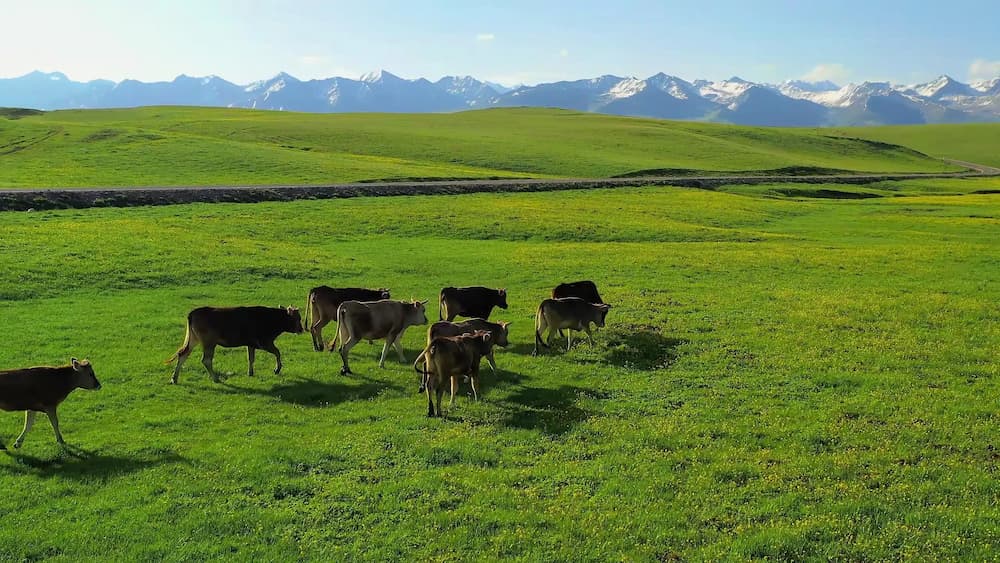
Day 4: Full day at Bayinbuluke grassland and Swan Lake. Easy walking, lots of open space, and the sort of view that needs no explanation to a 7-year-old.
Day 5: Duku Highway north to the Tian Shan, about 6 hours of driving with frequent stops for photos and snacks. This is the big day; a driver helps.
Day 6: Tian Shan pasture walk, an easy 3 km, then an afternoon pool or museum reset in town.
Day 7: Return to Urumqi and fly out. If you want a longer version, the loop extends well: see my 14-Day Xinjiang Itinerary Guide for the southern add-on through Kashgar and the Pamir.
For families who want a gentler pace, use the southern add-on if your kids are older and more patient with long drives. Under-6 travelers do better on the shorter daily blocks described earlier in this guide.
FAQ
Is Xinjiang safe for children? In my experience the region is calm and the main roads are in good shape. The real risks are the altitude at Bayinbuluke and the long drives, both manageable with the plan above and a rest day built in.
Do kids need a Border Travel Permit? Chinese minors generally do not, but any foreign passport holder in the family does for certain sections near the border. Check the current rule in the permit guide before you book flights.
What age is this best for? I would say 6 and up. Under 6 the drives get hard, the altitude is less fun, and the payoff of a grassland is lost on a toddler who wanted the tablet.
How much should I budget per child? About 2,100 RMB on our loop, covering food, a shared room, and entries. Flights from your city are separate, and the child seat rental was another 150 RMB for the week.
Can we do this without a car? It is harder. Buses connect the big towns but the Duku and the grasslands need a car or a booked driver. My Xinjiang Self-Driving Guide covers the license rules and the road etiquette that keeps you safe with a back seat full of snacks.
Will my kids get altitude sickness? At 2,500 m it is possible but rare for short stays. We gave the kids extra water and one full rest day; nobody got sick, though the 7-year-old did get a dramatic headache that turned out to be thirst.
Disclaimer
Prices, permits, and road-opening dates change. The costs above come from my own 2023 and 2024 trips and are not guarantees. Always verify the current Duku Highway opening dates, Border Travel Permit rules, and park fees with official sources before you travel. This article shares personal experience, not professional travel or legal advice.