

Published: 2026-07-28 | Author: Karl Huang
Three years ago I stood on the shore of Karakul Lake at 11 p.m., watching the Milky Way spill over Muztagh Ata. The air was so dry and clear that I could count individual stars without trying. That night convinced me to build a proper Xinjiang itinerary around wild camping rather than hotels. A Xinjiang camping itinerary is different from anything you will plan in Europe or North America. Distances are huge, fuel stops are far apart, and the weather can flip from 28°C sunshine to a frost warning in the same valley. This guide is built from my own trips, the mistakes I made, and the campsites I would return to without hesitation. Every Xinjiang camping itinerary I now build follows one simple rule: plan one long drive, then one calm camp, never the other way around. Rushing the miles and pitching a tent after dark is how people end up sleeping in a roadside ditch.
Quick Reference
| Item | Detail |
|---|---|
| Main regions | Karakul Lake (Pamir), Kanas & Hemu (Altay), Bayinbuluke grasslands, Duku Highway pull-offs |
| Permit / fee | Scenic-area camping often 50–100 RMB/night; border camps near Tashkurgan need a Border Travel Permit (free, 1–2 days) |
| Best time | June to mid-September for most routes; late September for Kanas autumn color |
| Elevation | 1,600 m (Kanas) to 3,600 m (Karakul lakeshore) |
| Typical duration | 7–12 days for a north-or-south loop |
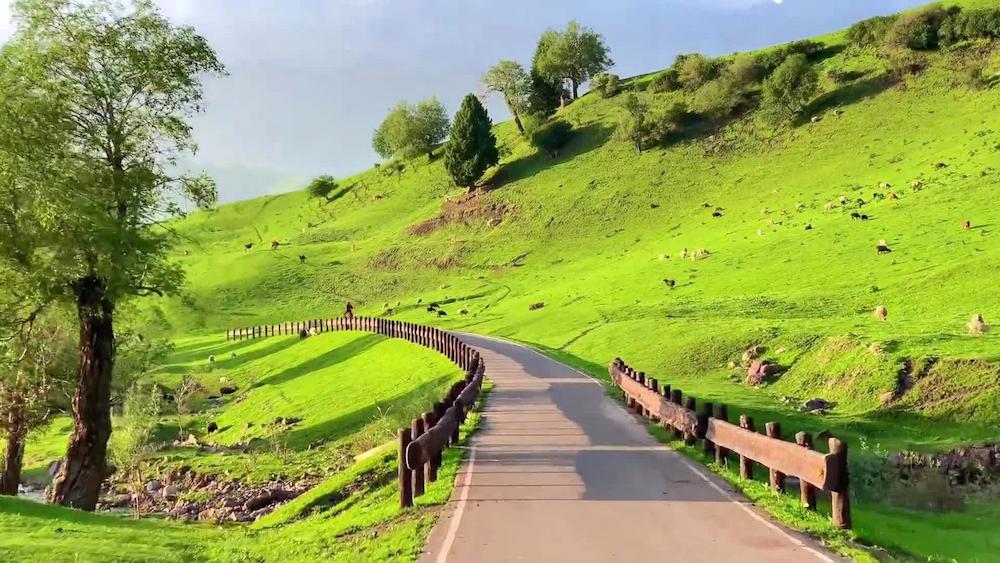
On my first real camping run I drove a rented SUV from Urumqi toward the Pamir Plateau with two friends and a roof box we barely knew how to pack. We reached Karakul Lake after nine hours of driving and set up a tent at 3,600 meters. I woke up at 2 a.m. with a headache from the altitude and a tent flap that would not zip because the zipper had frozen. We laughed about it the next morning, but that night taught me more about gear choices than any blog post had.
What I learned the hard way is that a Xinjiang camping itinerary lives or dies on two things: water planning and wind. The wind on the Pamir and on the Duku Highway ridgeline can flatten a cheap tent in minutes. I now carry four extra tent pegs and a 10-meter length of paracord on every trip, and I have never regretted the weight.
How to Get There
Most campers fly into Urumqi (URC) and rent a 4×4 or SUV. I used a Toyota Land Cruiser from a local rental desk near the airport for about 600 RMB per day in 2023, plus roughly 1,200 RMB of fuel for a 1,400 km loop. From Urumqi you have two main spurs. North takes you via the Duku Highway (open roughly June 1 to September 30, weather permitting) toward Kucha and then up to the Kanas region. South runs down the G314 through Korla, Aksu, and Kashgar before climbing to the Pamir Plateau and Karakul Lake.
If you would rather not drive the long stretches yourself, the Xinjiang self-driving guide covers road conditions, checkpoint documents, and which rental companies actually allow cross-region drop-offs. I have leaned on that guide when a client asked me to plan a trip they would drive themselves.
Best Time to Visit
A good Xinjiang travel guide will tell you the region is huge, and that is exactly why timing matters so much for camping. The phrase best time to visit Xinjiang camping itinerary usually points people to three windows.
June to early July. Grasslands are green, lakes are full from snowmelt, and tourist numbers are still moderate. This is my favorite window for Bayinbuluke and the Duku Highway. Nights drop to 8–12°C at elevation, which is manageable.
Mid-August to mid-September. The north turns golden. Kanas and Hemu in late September are the single most beautiful camping setting I have found in China, but the popular boardwalk campsites fill fast and the cold can hit −5°C before dawn.
October onward. Most high routes close. The Duku Highway shuts with the first snow, often in early October. Karakul stays open but nights are brutal without a four-season bag.
My clear recommendation: plan a Xinjiang camping itinerary for the last two weeks of September if you want autumn color, or the first three weeks of July if you want empty grasslands and mild nights. Avoid the July–August national holiday spike (around October 1) when every site is packed.
Where to Stay
Budget campers sleep in their own tent at designated lakeside or grassland pull-offs. I paid 60 RMB per tent at a Karakul Lake site in 2023, which included a toilet block and a cold-water sink. Mid-range travelers often book a yurt next to the campsite for 150–250 RMB and still cook outside; this gives you a solid wall against the wind and a real bed.
Upper-budget options include the wooden lodges at Hemu Village (from 500 RMB in shoulder season) where you can park the tent and use the lodge for showers and meals. On the Pamir, the stay near Karakul at the shepherd-run guesthouses runs 200–300 RMB with hot food and a warm room if the altitude gets to you. I switch to a room whenever I feel a headache climbing past 3,000 meters. On the Pamir I once traded my tent for a guesthouse bunk when the wind hit 60 km/h, and the 80 RMB difference bought me a full night of sleep instead of a cold, sleepless one.
Food
Camp cooking in Xinjiang is a joy because the markets are excellent. In Kashgar’s Sunday bazaar I bought a whole lamb leg for 90 RMB per kilo and grilled it over coals at the campsite. Naan from any roadside bakery costs 3–5 RMB and stays good for three days. A plate of laghman noodles in a small town diner is 18–25 RMB, and fresh tomatoes and cucumbers for salad run under 10 RMB a kilo in summer.
Bring a gas stove and at least two canisters; I ran out once near Bayinbuluke and ate cold naan for two days. Samsa (meat pastries) are 6–8 RMB each and make a fast breakfast. Keep all food in a sealed barrel, because foxes at Karakul are bold and will drag a backpack away if you leave it out. I also bring a small folding grill; the charcoal from any Kashgar market costs 4 RMB a bag and turns a plain lamb leg into the best meal of the trip. Wash dishes at least 50 meters from the lake shore so you do not draw animals into the camp at night.
Practical Tips
- Carry 8–10 liters of water per person per day on the Pamir. Refills are rare above 3,000 m.
- Use a four-season sleeping bag rated to at least −10°C if you camp north of Urumqi after August.
- Download offline maps before you leave Urumqi. Signal disappears for hours on the Duku and the G314.
- Get the Border Travel Permit in Kashgar if your route touches Tashkurgan. The office opens at 10 a.m. and processing took me 90 minutes.
- Anchor the tent with extra pegs and paracord. The wind is the real threat, not the cold.
- Pack out every scrap. Mountain sites have no bins, and the herders remember who left trash.
The Xinjiang packing list guide has the full gear breakdown I hand to first-time campers, including the exact stove and battery setup that worked on my last two trips.
Sample Itinerary
This 9-day loop covers the Pamir side and suits a confident driver. Adjust the nights to your stamina.
- Day 1: Fly into Urumqi, rent SUV, shop for gear and water, drive to Korla (6 h).
- Day 2: Korla to Aksu to Kashgar (8 h). Pick up Border Permit. Sleep in a Kashgar hotel to rest before altitude.
- Day 3: Kashgar to Karakul Lake (4 h). Set up lakeside camp at 3,600 m. Light walk, early night.
- Day 4: Sunrise at Karakul, drive to Tashkurgan (2 h), visit Stone City, camp near town.
- Day 5: Return to Kashgar, overnight train or hotel recovery from altitude.
- Day 6: Fly or drive to Urumqi, restock, then drive toward Bayinbuluke (7 h).
- Day 7: Bayinbuluke grasslands camp. Swan Lake walk, open sky at night.
- Day 8: Duku Highway northbound to Kucha (6 h) with roadside pull-off camping.
- Day 9: Kucha to Urumqi (7 h), return rental, fly out.
For a longer north-bound plan, the 14-day Xinjiang itinerary guide shows how to add Kanas and Hemu without rushing the drives.
FAQ
Do I need special permits to camp in Xinjiang?
Camping inside scenic areas is allowed at marked sites and usually costs a small fee. If your Xinjiang camping itinerary reaches Tashkurgan or the Khunjerab road, you need a Border Travel Permit from the Kashgar office. I cover the documents in the Xinjiang visa and permit guide.
Is wild camping safe?
Yes, in marked areas. I avoid random roadside stops near military zones and stick to known lakeside and grassland sites where herders pass by daily.
Can I rent gear locally?
Tents and stoves are hard to rent outside Urumqi. Buy a basic setup at a Urumqi outdoor shop (200–400 RMB for a tent) or bring your own. Do not count on rentals in small towns.
What about toilets?
Scenic campsites have pit toilets. Elsewhere, plan for nature and pack out toilet paper. I carry a small spade and a sealable bag.
How cold does it get at night?
At Karakul in September I measured −3°C before dawn. At Bayinbuluke in July it dropped to 9°C. A four-season bag is not optional.
Disclaimer
Prices, permit rules, campsite fees, and road opening dates in this article reflect my trips through 2023–2025 and change often. The Duku Highway closure date, Border Permit requirements, and scenic-area camping charges can shift with weather and local policy. Always confirm current details with the official Xinjiang tourism board, the Kashgar public security office, and your rental company before you travel. Treat every figure here as a planning estimate, not a guarantee.