

Published: 2026-07-26 | Author: Karl Huang
My favorite Xinjiang Autumn Kanas Itinerary started on September 28, 2024, when I rolled into Jiadengyu at 6:40 p.m. after an eleven-hour drive from Urumqi. The larch forests along the Kanas River had already turned the color of old brass, and a cold front was moving in. Over the next five days I paid 230 yuan for the combined Kanas-Hemu entry pass, 180 yuan for the shuttle bus, and 460 yuan a night for a wooden cabin in Hemu. This guide is built from that trip, plus three earlier autumn runs, so you can copy the route without learning the expensive lessons I did.
Quick Reference
| Item | Detail |
|---|---|
| Location | Altay Prefecture, northern Xinjiang, about 800 km from Urumqi |
| Entry fee | Combined Kanas + Hemu + Baihaba pass 195-230 yuan; shuttle bus 180 yuan (2024 rates) |
| Best time | September 25 to October 8 for peak golden larches |
| Elevation | Kanas Lake 1,374 m; Hemu village 1,400 m; surrounding peaks over 3,000 m |
| Role | Core loop of any north-Xinjiang autumn route; pairs with Hemu and Baihaba |
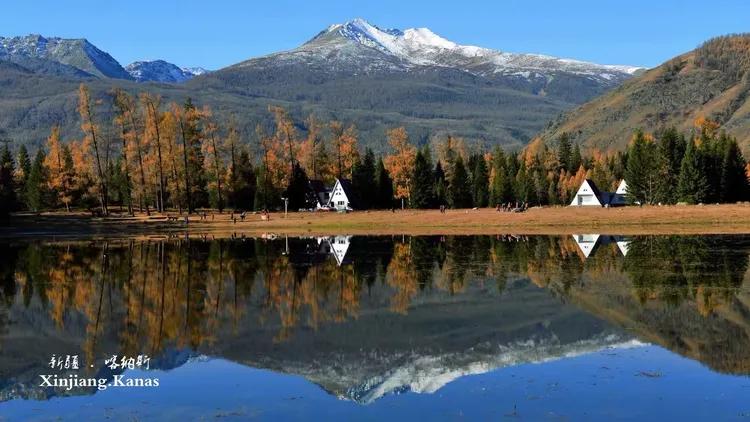
I planned this route after my first messy attempt in 2019, when I arrived October 12 and found most larches already bare. The window is short and the crowds are real, so the order of your days matters more than the destinations themselves. A Xinjiang Autumn Kanas Guide I wrote earlier covers the scenery in more depth; this one is strictly the day-by-day plan and the logistics that keep it affordable.
My Experience on the Ground
We left Urumqi at 7:15 a.m. in a rented BYD Song. The G216 and S232 were in good shape, and we stopped once at Fuhai for laghman noodles (28 yuan) and a bathroom break. By late afternoon the road climbed into birch and larch stands, and the light went copper. At Jiadengyu I bought the combined ticket at window 3, where the clerk told me the morning shuttle to Hemu fills by 9:30, a fact that shaped the whole schedule.
Hemu was colder than I expected. At 7 a.m. the temperature read minus 4 Celsius on my phone, and the wooden watchtower above the village gave a clean view of smoke rising from Tuva cabins. I paid 80 yuan for the tower ticket and spent an hour there before the tour buses arrived. That quiet window is the single best part of the trip, and almost nobody plans for it because they sleep in.
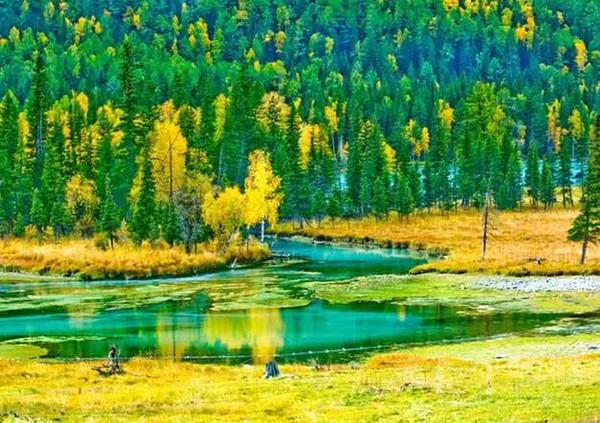
Kanas Lake itself rewarded patience. The famous viewing platform at Guanyu Pavilion gets packed by 11 a.m., so I hiked the lakeside boardwalk toward the confluence of the Kanas and Hemu rivers instead. Fewer people, and the water color shifted from teal to deep green as clouds passed. A local ferry operator, named Ahe, charged 120 yuan for the 30-minute crossing to the far shore, where the color photography is better.
How to Get There
From Urumqi, the most flexible option is to self-drive or hire a car. The 800 km to Jiadengyu takes about 11 hours with stops, so most people split it with a night in Beitun or Buerjin. A private car with driver runs roughly 1,200-1,600 yuan per day including fuel.
Flying saves time if you book early. Urumqi airport (URC) has seasonal flights to Kanas Airport (KNS) from late June to early October, with fares from 700 yuan one way in peak autumn. From Kanas Airport it is a 90-minute transfer to Jiadengyu. Trains run from Urumqi to Beitun (about 11 hours on the night train, soft sleeper 420 yuan), then a two-hour bus to the scenic area gate.
Whichever way you arrive, you must park outside the reserve. Private cars are not allowed past Jiadengyu. The internal shuttle is the only way in, which is why the 180 yuan bus fee is unavoidable and why your daily timing has to match the shuttle board.
Best Time to Visit
Late September through early October is the only window that matters for this itinerary. Here is how the season breaks down.
Early September. Larches are still green at the lower elevations. Prices are lower and crowds thin, but you miss the signature gold. Good for photographers who prefer empty trails over color.
September 25 to October 8. This is peak. The larches turn amber, mornings bring ground mist in Hemu, and the light is soft. Expect full guesthouses and shuttle lines. Book cabins two to three weeks ahead.
Mid to late October. Leaves drop fast after the first hard freeze. By October 15 most slopes are bare, though the birches hold on a little longer. Roads can close after snow.
My clear recommendation: target the first week of October. You get the color, the mist, and you still beat the National Day holiday crush that peaks around October 1 to 5. This Xinjiang Autumn Kanas Itinerary works best in that first week, before the holiday crowds arrive. The Best Time to Visit Kanas Lake guide has the month-by-month weather table if you want the exact temperature bands.
Where to Stay
Budget. For this Xinjiang Autumn Kanas Itinerary, Jiadengyu has the cheapest beds outside the reserve. Hostel dorms run 90-130 yuan, and basic hotels start around 220 yuan a night. You lose the sunrise-in-the-village experience but save money and avoid the early shuttle scramble from inside.
Mid-range. Wooden cabins in Hemu village cost 380-520 yuan in peak autumn. They are basic, heated by a stove or electric radiator, and the walls are thin. The trade-off is waking up inside the scenery and reaching the watchtower before the buses.
Upper. The Kanas village lakeside lodges and a few newer Hemu boutique cabins run 900-1,500 yuan a night in October. They include better heating, private bathrooms with reliable hot water, and breakfast. Book through the official platform, not street touts at the gate who quoted me 2,000 yuan for the same room.
Food
The Altay region eats hearty. In Hemu I had Tuva smoked horse sausage (熏马肠) with flatbread for 45 yuan, and a bowl of milk tea for 10 yuan at a family guesthouse. Buerjin, on the drive in, has a famous night market along the river where grilled 狗鱼 (pike) goes for 25-35 yuan a skewer and lamb ribs (烤羊排) run 60 yuan a plate.
Inside the reserve, prices climb. A plate of stir-fried laghman at the Kanas visitor area was 38 yuan, and a simple noodle soup 28 yuan. Carry snacks and a thermos; the only supermarket inside Hemu had water at 8 yuan a bottle versus 2 yuan outside. The roast whole lamb (烤全羊) is a group affair at 1,600-2,000 yuan per animal, worth it if you travel with six or more.
Practical Tips
- Book your cabin before you leave home. Peak-week Hemu rooms sell out, and gate touts inflate prices.
- Pack for two seasons. Days reach 15 Celsius, nights drop below freezing. Bring a real down jacket, not a fashion one.
- Catch the 8 a.m. shuttle to Hemu watchtower. The mist and empty lanes vanish by 10.
- Carry cash. Some cabin hosts and the ferry operator take only WeChat or cash, and signal is weak.
- Acclimatize slowly if you fly in. Altay sits high, and the first day of hiking can wind you more than expected.
- Shoot golden hour at both ends. Sunrise lights the east ridge; 5 p.m. warms the larch on the west side of the lake. The Xinjiang Photography Guide covers the lens and filter choices I used.
Sample Xinjiang Autumn Kanas Itinerary, Day by Day
This is the exact shape of my five-day Xinjiang Autumn Kanas Itinerary, tuned so you are always one step ahead of the crowds.
Day 1 (Urumqi to Jiadengyu). Leave 7 a.m., drive 800 km, stop in Fuhai for lunch. Arrive Jiadengyu by 6 p.m., buy combined ticket, sleep budget.
Day 2 (Hemu sunrise). 8 a.m. shuttle to Hemu, drop bags at cabin, walk to watchtower at 4 p.m. for warm light. Early night.
Day 3 (Hemu mist morning). Up at 6:30, watchtower by 7 for the smoke-and-mist shot, then lakeside boardwalk hike. Afternoon shuttle to Kanas village, sleep mid-range.
Day 4 (Kanas Lake). 8 a.m. boardwalk to the river confluence, 11 a.m. ferry across with Ahe, afternoon Guanyu Pavilion if energy holds. Sleep Kanas.
Day 5 (Baihaba and out). Morning shuttle to Baihaba (border pass needed, see below), back to Jiadengyu by 2 p.m., drive to Buerjin for the night market, then on to Urumqi or your next stop.
FAQ
Do I need a border permit for Baihaba? Yes. Baihaba sits near the frontier, and you apply at the Jiadengyu police station with your passport. It is free and takes about 20 minutes, but you must do it before you board the Baihaba shuttle. Foreign travelers should also review the Xinjiang Visa and Permit Guide before the trip.
Can I drive my own car inside the reserve? No. Private vehicles stop at Jiadengyu. The shuttle bus is mandatory, which is why the 180 yuan fee appears on every ticket.
Is early October too cold for kids? It is manageable with proper layers. The bigger issue is altitude and early starts. Most families do fine if they skip the 6 a.m. tower and take the 9 a.m. shuttle.
How many days minimum? Three days covers Kanas and Hemu at a rush. Five days, as above, lets you add Baihaba and actually enjoy the mist without sprinting.
Will the larches still be gold in mid-October? Usually not at the lake. The first hard freeze around October 10 drops the needles fast. Aim for the first week of the month.
Disclaimer
All prices, fees, and schedules above reflect my trips in 2019, 2022, and 2024 and are shared as planning guidance, not guarantees. Xinjiang entry fees, shuttle rates, flight schedules, and border-permit rules change from season to season, and the National Day holiday shifts crowd levels year to year. Always confirm current costs and permit requirements on the official Kanas scenic-area channels and your embassy travel pages before you book. Roads and ferries can close without notice after early snow.