

Published: 2026-07-25 | Author: Karl Huang
My first big Xinjiang loop almost fell apart over a mattress. In 2019 I rolled into Nalati at 9 p.m. during the July peak, found every hotel full, and slept in the back of a borrowed van. The Xinjiang Accommodation Guide Itinerary below is the system I built, as part of a broader Xinjiang Itinerary I have refined over eight seasons, so that never happens to you. It lays out exactly where I slept on a 14-day north-to-south drive, with the prices I actually paid, the booking windows that matter, and the nights where a yurt beats a hotel.
Quick Reference
| Stop | Typical nightly fee (double) | Best time to book | Role on the route |
|---|---|---|---|
| Urumqi | ¥280-¥520 | 3-5 days ahead | Arrival hub, first night |
| Karamay | ¥240-¥400 | 1-2 days ahead | Duku Highway gateway |
| Yurt near Nalati | ¥180-¥260 per person | 2 weeks ahead in July | Grassland stay |
| Kuche (Kuqa) | ¥260-¥450 | 2-3 days ahead | South Xinjiang transfer |
| Kashgar | ¥300-¥700 | 4-7 days ahead in autumn | Final base, Old City |
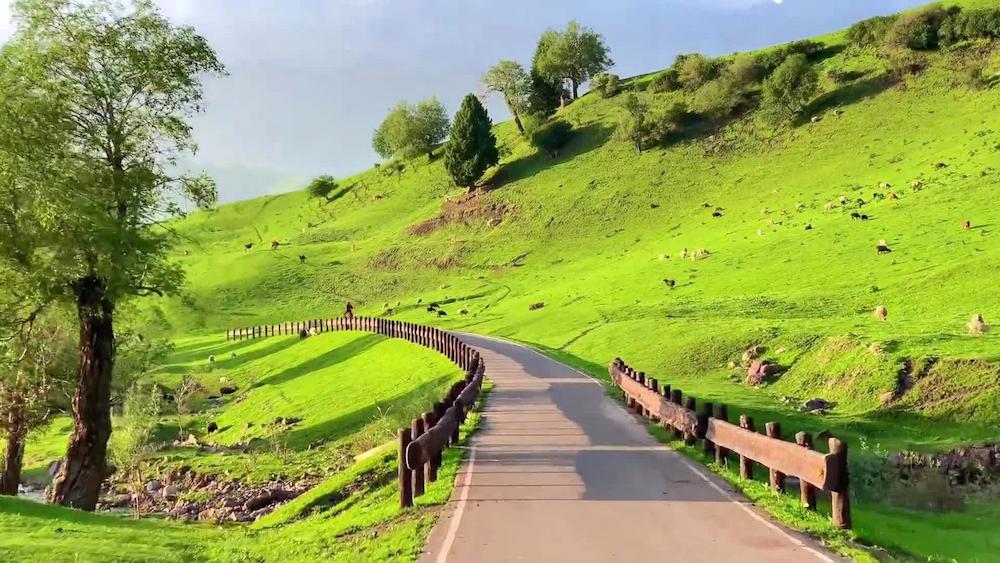
How This Xinjiang Accommodation Guide Itinerary Began
I wrote the first version of this plan after a 2021 trip where I lost a whole afternoon hunting for a room in Turpan during the grape festival. Since then I have refined it across eight driving seasons. The Xinjiang Accommodation Guide Xinjiang travelers message me about most often is the same question: should I book ahead or wing it? On this loop the answer changes by region, and the table above is the short version.
What I learned is that Xinjiang is not one booking environment. The north, around the Duku Highway and the Ili valleys, runs on a tight summer peak. The south, from Kuqa down to Kashgar, is more forgiving except during the October tourist rush. Treating the whole region the same way is the mistake that strands people in parking lots at midnight. In 2022 a friend ignored this and arrived in Karamay on a summer Friday with no reservation; he ended up 40 km away in a roadside motel, then drove two hours the next morning to reach the Duku entrance, losing the best light of the day.
How to Get There
Most travelers land at Urumqi Diwopu International Airport (URC). A taxi to the city center cost me 60 yuan at 11 p.m. in 2023, and the airport bus is 15 yuan. If you are driving, this loop works as a rental from Urumqi; I cover the road logistics in the Xinjiang Self-Driving Guide. From Beijing, direct flights run about 4 hours and cost 1,400-2,200 yuan depending on season. From Xi’an, budget 3 hours and 900-1,500 yuan. Trains are slower but cheaper: the Lanzhou-Urumqi high-speed line puts you in the city in a day from the east.
Kashgar has its own airport (KHG) with flights from Urumqi (2 hours, 700-1,100 yuan). If your Xinjiang Accommodation Guide itinerary ends in Kashgar, you can fly home from there and skip the long drive back.
Best Time to Visit
Spring (April-May) is quiet and cheap. Hotels in Urumqi drop to 240 yuan, and you will have the grasslands almost to yourself, though some high passes stay closed until June. I once paid 230 yuan for a Urumqi room in late April and had the hotel breakfast buffet entirely to myself, which told me everything about how empty the city was that week.
Summer (June-August) is the peak. This is when Nalati and Sayram Lake yurts sell out, and the Xinjiang Accommodation Guide guide I keep on my phone becomes essential: I book grassland stays at least two weeks out. Expect to pay 20-40 percent more than the spring rates.
Autumn (September-October) is my favorite. The poplar forests around Luntai and the Old City light up, and the weather is calm. On this Xinjiang Accommodation Guide Itinerary, September is the calmest month, with Kashgar filling only during the October holiday, so book 4-7 days ahead then.
Winter (November-March) is sparse. Many yurts and mountain guesthouses close. City hotels are cheap (200 yuan and under) but choices thin out. I spent a quiet February night in Kuqa for 180 yuan and the only other guest was a long-haul truck driver passing through, which is exactly the kind of calm you can find when the crowds leave.
My clear recommendation: travel in the second half of September. You get the colors, the roads are open, and the booking pressure is lower than July.
Where to Stay
Budget. Hostels and basic hotels in Urumqi and Kashgar run 120-180 yuan for a private double. In smaller towns like Kuqa you can find clean rooms for 160-220 yuan. Yurts on the grasslands are the best budget experience at 180-260 yuan per person including dinner.
Mid-range. This is the sweet spot. A solid 3-star in Urumqi cost me 320 yuan in September 2023, with breakfast and a real hot shower after a long drive. In Kashgar, a renovated Old City guesthouse ran 420 yuan and put me steps from the night market.
Upper. If you want comfort, the Seman (Qinibagh) Hotel in Kashgar is the historic choice at 700-1,100 yuan, and Urumqi has several international-brand towers at 800-1,500 yuan. Worth it only on the first and last nights when you are dragging luggage. For the full breakdown of grades and neighborhoods, see the Xinjiang Accommodation Guide Guide, which I keep updated with each season’s rates.
Food
Where you sleep often decides where you eat, so plan them together. In Urumqi, a plate of big-plate chicken (dapanji) runs 68-88 yuan and feeds two. Laghman noodles are 25-35 yuan. At the Kashgar night market, mutton skewers are 3-5 yuan each, and a fresh naan is 3-5 yuan. Hand-pulled noodles near the grasslands cost 18-28 yuan.
In the yurts, dinner is usually included: a shared pot of lamb stew, flatbread, and milk tea. Tell the herder you do not eat certain parts ahead of time; I once got a sheep’s head placed in front of me as a guest of honor, which is polite but surprising on an empty stomach. In Kashgar’s tea houses, a pot of milk tea and a plate of dried fruit runs 20-30 yuan and is the best way to warm up after walking the night market, and it pairs well with the 3-5 yuan naan you picked up on the way in.
Budget 80-120 yuan per day for food if you eat local, more if you stick to hotel restaurants. The Xinjiang Budget Travel Guide has a tighter food breakdown if you want to keep costs down.
Practical Tips
- Book Urumqi and Kashgar first, then fill the middle. The two ends sell out first during holidays.
- Carry cash for yurts and rural guesthouses. I was turned away from a 200-yuan yurt once because the herder’s phone had no signal for payment.
- Confirm the real price by phone before you arrive. Listed rates on small-town sites are often stale.
- Ask about heating in spring and autumn. Mountain nights drop below 5°C, and a cold room ruins the next driving day.
- Keep your Xinjiang Visa and Permit Guide checklist handy; some border-region stays near Tashkurgan need a permit on file at the front desk.
- Save screenshots of bookings. Patchy signal in the mountains means you may not load your confirmation email at check-in.
Sample Itinerary: The Xinjiang Accommodation Guide Itinerary Day by Day
Day 1, Urumqi. Land, grab a hotel near the bazaar for 320 yuan, walk off the flight. Day 2, drive to Karamay, sleep at a 260-yuan business hotel. Day 3, enter the Duku Highway, overnight in a Nalati yurt at 220 yuan per person. Day 4, grassland and forest, second yurt night or a 300-yuan guesthouse in Xinyuan. Day 5, drive south to Kuqa, hotel at 300 yuan. Day 6, Kuqa caves and canyon, same hotel. Day 7, long drive to Aksu, basic room 220 yuan. Day 8, on to Kashgar, Old City guesthouse 420 yuan.
Day 9, rest day in Kashgar, same guesthouse. Day 10, day trip to Karakul Lake, return to Kashgar. Day 11, push to Tashkurgan, permit-required stay 350 yuan. Day 12, back to Kashgar. Day 13, fly out or start the return drive. If you want a tighter version of the drive itself, the 14-Day Xinjiang Itinerary Guide covers the road day by day without the lodging detail.
This Xinjiang Accommodation Guide Itinerary is built so you only make two or three bookings in advance and decide the rest as you go, which is how Xinjiang is best traveled.
FAQ
Do I need to book yurts in advance?
Yes in July and early August. I book grassland yurts two weeks out in summer. In September you can often find one the same day by asking at the parking lot.
Is it safe to stay in rural guesthouses?
The ones I used were clean and the hosts were helpful. Ask to see the room before you pay, and confirm there is heating if it is cold.
Can I just sleep in my car?
On the Duku Highway, no. There are no safe pull-offs, and nights are cold. A yurt or town hotel is the realistic option.
What is the single best value stay?
A grassland yurt with dinner included. For 220 yuan per person you get a bed, a meal, and a sunrise over the mountains that no city hotel matches.
How much should I budget for 14 nights?
Roughly 3,500-5,000 yuan per person for rooms alone, more if you pick upper-range hotels on the ends. Food is separate.
Disclaimer
Prices, permits, and hotel availability in Xinjiang change often. The rates above are what I paid between 2021 and 2023 and are shared as a planning reference, not a guarantee. Always confirm current prices and entry rules with the hotel, the local tourism office, or official sources before you travel, and check the latest border-permit requirements if your Xinjiang Accommodation Guide itinerary reaches Tashkurgan.