

Published: 2026-07-27 | Author: Karl Huang
In August 2019 I stood on the ridge above Sayram Lake at 6:40 a.m., watching the wind push whitecaps across water that was still 14°C. That morning taught me more about Xinjiang in August than any guidebook could. I had paid 480 RMB for a round-trip flight from Chengdu to Urumqi, booked a 260 RMB guesthouse in Yining, and rented a car for 350 RMB a day. The month delivers long daylight, grape and melon harvests, and grasslands at their greenest, but it also brings crowds and 35°C heat in the south. If you want a trip that avoids the worst of both, the timing and the packing matter more than people expect.
Quick Reference
| Aspect | At a Glance |
|---|---|
| Location | Across Xinjiang, from Ili grasslands (north) to the Taklamakan edge (south) |
| Typical fee | Kanas scenic area 230 RMB; Nalati grassland 95 RMB; Tianchi 215 RMB (shuttle included) |
| Best window | Aug 12–28, after the summer holiday rush eases and nights cool down |
| Elevation | Urumqi 800 m; Nalati 1,800 m; Bayinbuluke 2,500 m; Pamir 3,600 m |
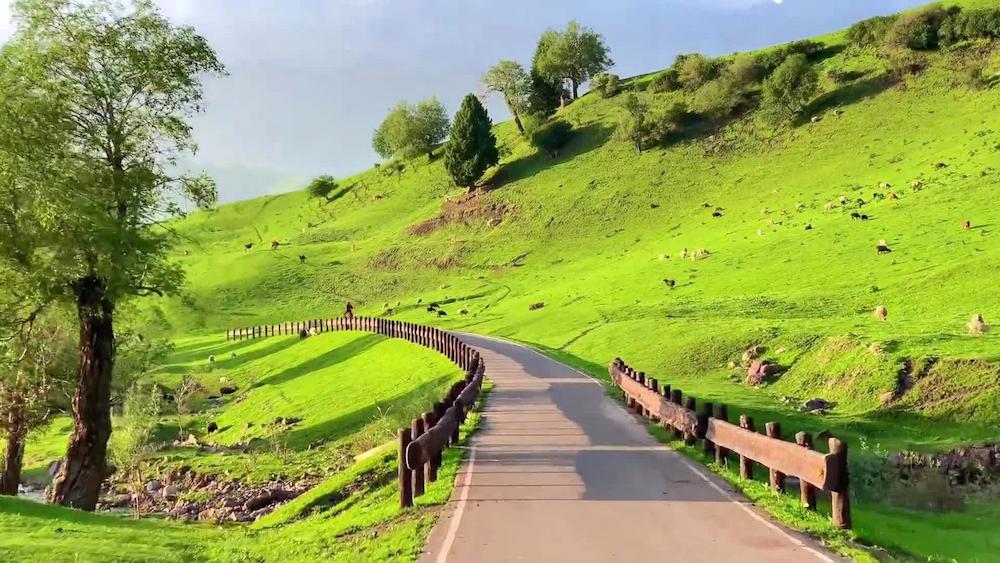
I want to be straight about what the month feels like on the ground. On my 2019 loop I drove from Urumqi to Yining, then up to Nalati and back through Korla. The first week of August was packed: the Kashgar old city streets were shoulder to shoulder, and a basic hotel room in Turpan that I found on the spot cost 420 RMB for one night. By Aug 18 the mood changed. I paid 260 RMB for a cleaner room in Zhaosu, ate grapes straight from a roadside stall for 5 RMB a kilo, and watched the grassland fog lift at 7 a.m. with maybe ten other people around. The heat in the Turpan basin hit 40°C at noon, but the Pamir nights dropped to 9°C. One night in Korla I found a noodle shop where the owner refused to charge me more than 22 RMB for a full beef ban mian, even when I tried to add extra. Those small moments are why I keep coming back in August rather than wait for September. That swing between heat and cold is the real story of Xinjiang in August, and it shapes every choice you make.
How to Get There
Most travelers reach Xinjiang through Urumqi Diwopu International Airport (URC). In August a direct flight from Beijing costs roughly 1,400–2,000 RMB round trip if you book two weeks out, while Shanghai routes run 1,800–2,600 RMB. For Xinjiang in August, the train is a calmer alternative: the Xinjiang by train travel guide covers the Lanzhou–Xinjiang high-speed line, which gets you from Lanzhou to Urumqi in about 11 hours for 550 RMB in a second-class seat. Once you land, renting a car remains the most flexible option. I paid 350 RMB per day for a compact SUV in 2019, and summer 2025 rates run closer to 450–600 RMB. For the southern route, flying into Kashgar (KHG) saves two long driving days. Regional flights from Urumqi to Kashgar take 2 hours and cost 700–1,100 RMB. Internal flights between Urumqi, Kashgar, and Yining run daily and usually cost less than the fuel plus a driver for a comparable drive. A solid Xinjiang travel guide archive helps you compare these routes before you book.
Best Time to Visit
Xinjiang has four very distinct travel seasons, and Xinjiang in August sits inside the short, intense summer window. Spring (April–May) brings apricot blossoms and light crowds, but mountain passes can still close from late snow. Summer (June–August) is warm across the whole region and is the only time some high pastures are fully green; it is also the busiest and most expensive period. Autumn (September–October) is the favorite of many regulars because the light turns gold and the crowds thin after National Holiday. Winter (November–March) opens ski resorts and frozen lake scenes but shuts several northern roads.
For the specific question of best time to visit Xinjiang in August, I give a clear answer: aim for the back half of the month. The first week overlaps with the summer holiday peak, when hotel prices climb and parking at Kanas fills by 10 a.m. From about Aug 12 onward, family-trip demand eases and the weather stays warm without the early-month crush. Southern routes like Kashgar to Tashkurgan are best done in the last two weeks, when the wind off the Pamir is less violent. If your only option is early August, book lodging 30 days ahead and start drives before 8 a.m. The Best Time to Visit Xinjiang guide breaks the trade-offs by region if you want the full picture.
Where to Stay
In Xinjiang in August, budget travelers can find hostel beds and basic hotels from 120–200 RMB per night in Urumqi and 180–300 RMB in smaller cities. Mid-range chain hotels (Hampton, Atour, and local brands) run 300–550 RMB and are the safe default; I stayed at an Atour in Yining in 2019 for 340 RMB and it was clean and quiet. Upper-end choices include resort-style stays near Tianchi or vineyard hotels outside Turpan at 900–1,800 RMB per night. Book the northern grasslands early if you want a yurt with a view; the good ones near Nalati sell out by late July. In peak National Holiday weeks, add 30–50% to every number above and reserve at least a month early.
Food
Xinjiang in August is the best month for fruit in the region, and the food alone justifies the trip. At the Urumqi International Grand Bazaar I paid 8 RMB for a plate of laghman noodles and 15 RMB for a skewer plate of 10 lamb chunks (chuanr). A whole smoked horse sausage in Yining cost 40 RMB at a market stall. Melons and grapes are the headline: Hami melon runs 3–5 RMB per kilo, seedless Xinjiang grapes 4–8 RMB per kilo at roadside stands. Don’t skip the dairy. A cup of salty suutei tea costs 3 RMB, and fresh koumis (fermented mare’s milk) runs 10–15 RMB a bowl near the grasslands. It is an acquired taste, but it cools you fast after a hot hike. For a sit-down Uyghur meal (polo rice with lamb, naan, and tea) budget 35–60 RMB per person. The Xinjiang food tour guide lists market-by-market prices if you want to plan meals around specific cities.
Practical Tips
- Book lodging 30 days out for early August, and always confirm the exact address before paying.
- Carry two layers: a light t-shirt for 38°C Turpan afternoons and a fleece for 9°C Pamir nights.
- Start driving by 7:30 a.m. to beat both the heat and the Kanas parking cutoff.
- Download offline maps; signal drops on the Duku Highway and across the Pamir.
- Keep your passport and border permit on you for the Kashgar–Tashkurgan route.
- Drink more water than usual; the dry heat hides how much you sweat at 2,000 m.
The Xinjiang packing list guide has a printable checklist I update each season.
Sample Itinerary
This 8-day Xinjiang in August loop favors the cooler north and avoids the worst crowds:
- Day 1: Fly into Urumqi, rest, dinner at the bazaar (laghman + chuanr).
- Day 2: Drive to Tianchi, walk the lakeshore, overnight Urumqi.
- Day 3: Morning train or flight to Yining; afternoon grasslands near the city.
- Day 4: Nalati grassland full day, stay in a yurt or nearby inn.
- Day 5: Zhaosu to Tekes, see the Bagua city layout, stop at local grape stalls.
- Day 6: Drive the Ili loop back, stop at Sayram Lake at 6 p.m. for the light.
- Day 7: Return to Urumqi, visit the regional museum.
- Day 8: Fly out, or extend south if your border permit is ready.
FAQ
Is Xinjiang in August too hot? The south, especially Turpan, regularly hits 38–42°C at noon. The north stays comfortable at 18–30°C. Plan south-bound drives for early morning and use midday for indoor or shaded stops.
How crowded does it get? The first week of August and National Holiday weeks are the busiest. From Aug 12 onward, major sites feel manageable if you arrive early.
Do I need a border permit? Only for the Kashgar–Tashkurgan–Khunjerab corridor and a few military-sensitive zones. The Xinjiang visa and permit guide explains where to apply and what documents to bring.
What should I pack for the temperature swing? A t-shirt, a light fleece, sunscreen, and a refillable bottle cover most situations. Higher passes need a wind layer.
Are fruits safe to buy from roadside stalls? Yes, and they are cheaper and fresher than supermarket imports. Wash them with bottled water and you will be fine.
Disclaimer
Prices, permits, opening hours, and flight routes listed above reflect my own trips (2019 and later checks) and change without notice. Entry fees, hotel rates, and border-permit rules can shift from year to year. Always verify current details with official tourism bureaus, your airline, and the Chinese consulate or embassy before you travel. This article shares first-hand experience and is not formal legal or travel advice.