

Published: 2026-07-27 | Author: Karl Huang
When I tell people I flew into Xinjiang in March, most assume I was braving a frozen wasteland. They are half right. I landed at Urumqi Diwopu International Airport on March 18, 2024, at 11:20 PM, stepped out into 2°C air, and paid 60 RMB for the airport bus into the city. The trip was a deliberate test: could a shoulder-season month deliver good photos, real local life, and sane prices? After nine days across Urumqi, Turpan, and Kashgar, my answer is yes, with conditions.
Quick Reference
| Item | Detail |
|---|---|
| Location | Xinjiang Uyghur Autonomous Region, northwest China (Urumqi, Turpan, Kashgar, Ili, Altay) |
| Typical fee | Scenic entry ¥30–195; several northern sites run winter-maintenance closures or half price before March 20 |
| Best time | March 15–31 for southern Xinjiang; late March for Ili grasslands beginning to green |
| Elevation / role | 0–7,400 m; March is the low-season shoulder month linking winter and spring |
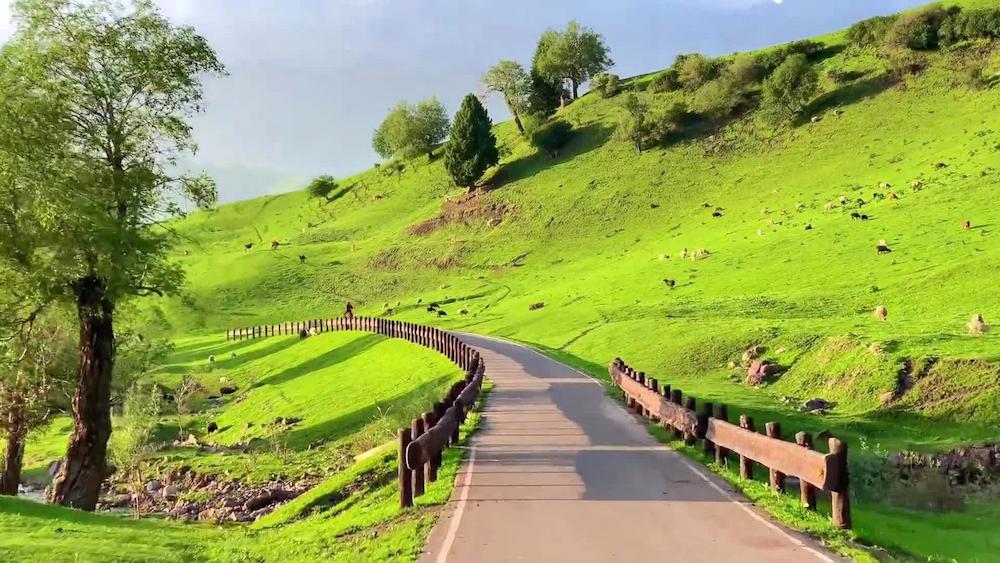
My March route started with a real surprise. On March 19 I walked the International Grand Bazaar in Urumqi around 10 AM. The morning light sat low and flat, perfect for the mud-brick stalls, and a samsa fresh from the tandir oven cost me 5 RMB. By noon the temperature had climbed to 9°C and the ice on Hongshan Park’s pond was already soft at the edges. That single day showed me the core of Xinjiang in March: mornings belong to winter, afternoons flirt with spring.
Two days later I took the 9:40 AM high-speed train south to Turpan, a 55 RMB ticket in second class. The Grape Valley was bare, the vines still bound for the cold, but the Jiaohe Ruins at 4 PM were empty of tour groups. I had the whole earthen city to myself for 90 minutes. That kind of access is the quiet prize of the month. I wrote down the feeling in my notebook: no selfie sticks, no bus engines, just wind moving through a 2,000-year-old ruin.
If you want the cold-and-snow version of the region instead, read my Xinjiang Winter Travel Guide before you book. Early March in Altay and the Kanas area still runs on winter rules: chains or a 4WD, closed boardwalks, and guesthouses that may not have reopened. The window I like best is March 15 onward, when southern Xinjiang warms but northern passes have not yet melted into the spring mud season.
How to Get There
Most international visitors planning Xinjiang in March connect through Beijing, Shanghai, Guangzhou, Xi’an, or Chengdu and then fly or train into Urumqi. Every Xinjiang travel guide warns about the region’s scale, but March shrinks the crowds. Here is what I found reliable:
- From Beijing: China Southern and Hainan Air fly nonstop to Urumqi in about 4 hours 20 minutes. I paid 1,480 RMB one way in mid-March 2024, roughly half the July peak. The overnight Z179 sleeper train is the budget play at 443 RMB for a hard sleeper, 31 hours.
- From Xi’an: A nonstop flight runs 3 hours 10 minutes; a daytime bullet train takes around 11 hours and costs 735 RMB.
- From Chengdu: Flights are 3.5 hours; expect 900–1,300 RMB in March.
- Overland within Xinjiang: The Urumqi–Turpan high-speed line is the workhorse (55 RMB, under an hour). For Kashgar, the 15-hour overnight sleeper from Urumqi is uncomfortable but cheap at 328 RMB, and it drops you in the old city by 9 AM.
Book trains through 12306 the moment tickets open (usually 15 days out). March is not sold out, but the better bunks go first on Friday and Sunday nights.
Best Time to Visit: Is Xinjiang in March the Right Month?
Xinjiang has four very different seasons, and March sits right on the seam. Here is the year broken down so you can see where the month fits.
Spring (March–May): Southern Xinjiang warms first. Apricot and peach orchards around Kashgar and the Taklamakan rim bloom from late March. Ili’s grasslands turn from brown to green across April. Crowds are light and hotels discount.
Summer (June–August): The classic season. Kanas and Nalati are green and full, but so are the bus loads. Prices peak and Urumqi hotels double.
Autumn (September–October): My favorite for color. The Populus euphratica forests glow gold in October, and the light is dry and clean. This is also when the Duku Highway fully opens.
Winter (November–February): Snow sports in Altay, ice festivals, and the lowest prices of the year. Many scenic boards close for maintenance.
My recommendation: Xinjiang in March sits right on the seasonal seam, so pick your region before your dates. For a first trip with good value and manageable weather, target March 15–31 and stay south of the Tian Shan, then consider Ili at the very end of the month. The best time to visit Xinjiang in March for snow is early in the month up north; for orchard blossoms, late March down south. If you want guaranteed snow, come in February instead. For the full seasonal picture, my Best Time to Visit Xinjiang Guide maps every region month by month.
Where to Stay
Prices below are per room per night, double occupancy, quoted for March 2024. They will rise in summer.
- Budget (¥150–280): Local guesthouses near the Urumqi metro and family-run inns inside Kashgar’s old city. I stayed at a renovated courtyard inn in Kashgar for 220 RMB; the host made tea every evening at 8 PM.
- Mid-range (¥350–600): Chain business hotels and decent four-stars. The Vienna International in Turpan ran 420 RMB and included a solid breakfast buffet with fresh naan.
- Upper (¥700–1,300): International brands and the better Silk Road-themed resorts. Service and heating are the real difference in March, when a cold room ruins a cheap night.
Book the old-city Kashgar stays early if you want a courtyard room; only a few dozen exist and they fill on weekends.
Food
Xinjiang in March is a good eating month. Markets are stocked, and you are not fighting summer crowds for a seat. Prices are what I actually paid.
- Laghman (hand-pulled noodles): 18–28 RMB a bowl, with tomato, pepper, and your choice of lamb or chicken. The best I had was a 22 RMB plate near the Urumqi bazaar at 1 PM.
- Da pan ji (big plate chicken): 68–98 RMB for a plate built for two, served with wide belt noodles underneath.
- Samsa (baked meat pastry): 4–6 RMB each from a tandir oven. Buy two; they vanish fast.
- Kawap (mutton skewers): 3–5 RMB a stick, 10 RMB for a fatty tail skewer if you ask for yang wei.
- Fresh naan and milk tea: 2 RMB for naan, 6 RMB for a bowl of salty milk tea to cut the cold morning.
In Kashgar, the Sunday livestock market (starts around 9 AM, 30 minutes by taxi from the old city, 20 RMB fare) feeds you better and cheaper than any restaurant: grab samsa, a handful of dried apricots at 25 RMB a kilo, and watch the sheep trade.
Practical Tips
- Pack for two seasons. Mornings hit below freezing in the north; afternoons reach 15°C in the south. Layers beat a heavy coat. My Xinjiang Packing List Guide lists the exact kit I carry.
- Check site opening dates. Kanas, Hemu, and some Tian Shan boardwalks close for winter maintenance and reopen on a date that shifts each year, often mid-to-late March.
- Carry cash for small stalls. Bazaars and tandir bakers do not always take foreign cards or even WeChat Pay from an overseas account.
- Get permits before border zones. Tashkurgan, the Khunjerab Pass, and parts of the Pamir need a border travel permit from the Kashgar PSB. Details are in my Xinjiang Visa and Permit Guide.
- Start days early. Light is long but cold; the 9 AM–11 AM window gave me empty sites and clean photos.
- Confirm train times locally. Spring schedules adjust, and a missed sleeper costs you a day.
Sample Itinerary
A 9-day Xinjiang itinerary I ran in March 2024:
- Day 1: Arrive Urumqi 11:20 PM, airport bus to city, sleep.
- Day 2: Urumqi bazaar, Hongshan Park, Regional Museum (free, 10 AM–6 PM, closed Monday).
- Day 3: Morning high-speed train to Turpan, Jiaohe Ruins at 4 PM, overnight Turpan.
- Day 4: Turpan Grape Valley and Karez system, evening train back to Urumqi.
- Day 5: Fly Urumqi to Kashgar (1 hour 50 minutes, 980 RMB), old city walk at dusk.
- Day 6: Kashgar Sunday livestock market at 9 AM, Id Kah Mosque, recharge permits.
- Day 7: Day trip toward Karakul Lake if the pass is open; otherwise explore the old city lanes.
- Day 8: Overnight sleeper back to Urumqi, depart 9 PM.
- Day 9: Arrive Urumqi morning, fly out.
FAQ
Is Xinjiang in March too cold for travel?
Not if you plan south. Kashgar and Turpan sit comfortably above freezing by day in late March. The north stays wintery, so choose your region first, then your dates.
Will scenic spots be open?
Southern sites like the Kashgar old city, Jiaohe, and the Karez system run year-round. Northern boardwalks such as Kanas often reopen only in late March. Always confirm the specific site’s date before you buy a ticket.
How much should I budget per day?
Plan 350–700 RMB per person covering a mid hotel, three meals, local transport, and entry fees. Flights and long train sleepers are extra.
Do I need a special permit in March?
Only for border zones near Tashkurgan and the Khunjerab Pass. The rest of the region is open with a standard Chinese visa. See the permit guide linked above.
Is March good for photography?
Yes for empty sites and low, soft light. No for green landscapes in the north; those come in April and May. Snow shots are possible only in early March up north.
Disclaimer
Prices, train schedules, entry fees, and site opening dates in this article reflect what I personally observed in March 2024 and can change without notice. Border-permit rules, maintenance closures, and flight costs shift from year to year. Always verify current details with official sources (China Railway 12306, the Xinjiang tourism bureau, and your embassy’s travel advice) before you book. Nothing here is a guaranteed quote, and you travel at your own risk.