

Published: 2026-07-26 | Author: Karl Huang
My Beijing to Xinjiang Guide started the way most of mine do, with a one-way ticket and a half-zipped suitcase. On a Tuesday in late September I left Beijing Daxing (PKX) on China Southern CZ6902 at 08:25 and stepped off in Urumqi at 12:40 local time, four hours and fifteen minutes later. The fare was 1,180 yuan. That single flight turned a region I had only read about into somewhere I could walk through by lunch. If you are working out how to cover the 2,400 kilometers between China’s capital and its northwest, this guide sets out every route I have taken, what each one cost, and how to shape a trip around it.
Quick Reference
| Aspect | Detail |
|---|---|
| Origin | Beijing (Capital PEK / Daxing PKX) |
| Destination | Urumqi, Xinjiang, about 2,400 km west of Beijing |
| Typical fee | Flight 900-1,800 yuan one-way; train hard sleeper 450 yuan, soft sleeper 720 yuan; fuel plus tolls around 1,600 yuan by car |
| Best time | May to October; November to April brings snow and closed mountain passes |
| Role | Main air and rail corridor linking North China with Xinjiang |
How the Beijing to Xinjiang Route First Pulled Me In
I took the airport shuttle to the city for 15 yuan and checked into a small hotel near Hongshan Park. By five in the afternoon I was walking the lanes of the International Grand Bazaar, buying a warm naan and a stack of mutton skewers from a stall that had been there longer than I had been alive. The air was dry in a way Beijing never is. A vendor told me the price of walnuts had dropped because the new harvest had just come in, and I believed him because the bags were still dusty from the orchard.
That evening taught me the first real lesson of this corridor. Beijing runs on Beijing time, but Xinjiang keeps its own slower clock, about two hours behind in daily habit. Dinner starts at nine. The bazaar was fullest at ten. My body, still on capital time, wanted to sleep by eight. Giving in to the local rhythm turned out to be the cheapest upgrade of the whole trip. This Beijing to Xinjiang Guide comes from three such trips, and the lesson repeats each time: the capital undersells the northwest until you actually land.
How to Get There
The fastest way is to fly. Both Beijing Capital (PEK) and Beijing Daxing (PKX) run direct flights to Urumqi Diwopu (URC) every day, roughly ten to fifteen departures split across China Southern, Air China, and Hainan Airlines. The flight takes about four hours. I have paid 900 yuan in January and 1,780 yuan during the August peak. Book three or four weeks out and you usually land closer to the lower end.
If you would rather see the country change beneath you, take the train. The direct sleeper from Beijing West to Urumqi (Z179 or Z69) runs about thirty-one hours. A hard sleeper cost me 450 yuan, a soft sleeper 720. There is also a faster but fiddlier route: a high-speed train from Beijing West to Lanzhou West (roughly seven and a half hours), then the Lanzhou-Urumqi high-speed line (about eleven hours). That cuts the trip to around nineteen hours but adds a transfer you have to manage yourself. For the full breakdown of routes, schedules, and what to pack for the berth, see our Xinjiang by Train Travel Guide.
Driving is the third option and the most committed. The G7 Beijing-Urumqi Expressway is the longest desert highway on earth, about 2,540 kilometers end to end. At legal speeds that is twenty-eight to thirty-two hours of driving, so most people spread it across three or four days through Inner Mongolia. Fuel and tolls came to around 1,600 yuan on a trip I researched with a friend who drove it. The G7 is empty, straight, and strange in the best way, but it is not a first-timer’s plan. For anyone mapping a Beijing to Xinjiang Xinjiang route by road, start with the train or flight and save the wheel for a return trip.
Best Time to Visit
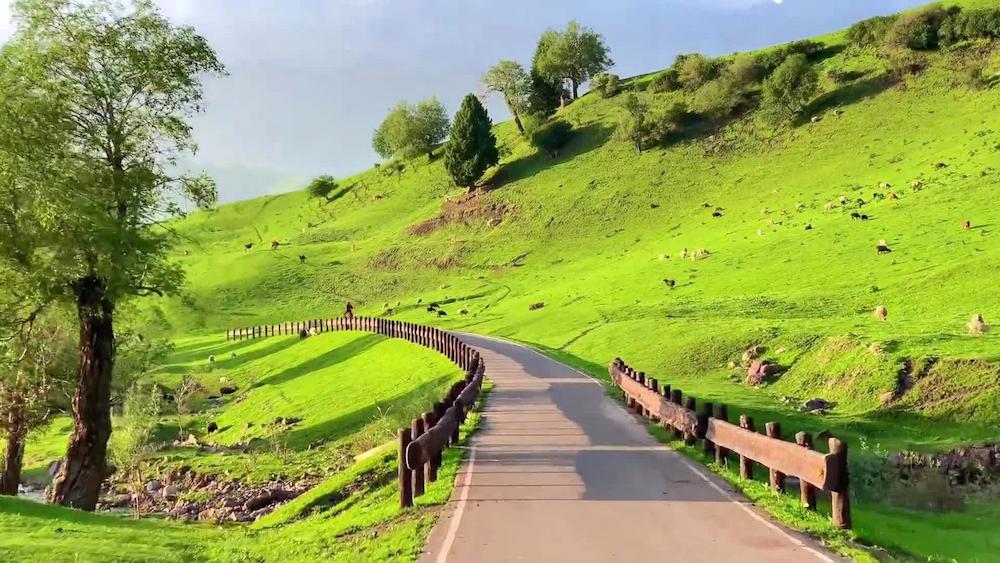
Spring, from April to May, opens the grasslands and melts the last snow on the passes. Wildflowers spread across the northern meadows and flight prices sit in the middle of the range. A few high roads near Kanas can still be closed in early April, so check before you commit.
Summer, June through August, is the busy season. Daylight in Urumqi stretches past nine-thirty in the evening, which means you can tour until your legs give out. The trade-off is heat in Turpan, where it regularly tops 40 degrees, and crowds at every headline site. This is also when the Beijing flights cost the most.
Autumn, September and October, is the sweet spot. The air is crisp, the light is clean, and the poplar forests of southern Xinjiang turn gold in mid-October. I planned my own trip for late September precisely for this window. Winter, November to March, is harsh and quiet. Some scenic areas limit access, but flights get cheap and the ski resorts around Urumqi open.
My clear recommendation is May to June or September to October. You get open roads, fair prices, and weather you can actually walk in. For the season-by-season detail across the whole region, our Best Time to Visit Xinjiang Guide breaks it down province by province.
Where to Stay
Budget travelers can find clean rooms near Urumqi South Railway Station and along Renmin Road for 120 to 200 yuan a night. I stayed at a no-name place behind the station for 160 yuan and slept fine. Hostels with dorms exist too if you want to meet other travelers.
Mid-range business hotels, the Home Inn Plus and Vienna types, run 280 to 450 yuan and give you a proper breakfast and a working heater. That is where I put friends on their first visit. Upper-end options like the Shangri-La Urumqi sit around 900 to 1,200 yuan and are worth it if you are landing after the thirty-one-hour train and need a real bed.
Outside Urumqi the pattern holds. Kashgar and Turpan have the same three tiers, though the top end is thinner in smaller towns. Book the famous spots like Kanas a month ahead in autumn, because the good rooms sell out. Every stop in this Beijing to Xinjiang Guide sits on one of the routes above, so you can chain them without backtracking.
Food
Urumqi eats well and cheap. Mutton skewers (kao yangrou) run 3 to 5 yuan each and taste best from a stall with a line. Big plate chicken (dapanji), a stew of chicken, potatoes, and wide noodles for two or three people, costs 58 to 88 yuan. Hand-pulled pilaf (zhuafan) is 25 to 35 yuan, and laghman noodles are 22 to 30. Baked buns (samsa) are 4 to 6 yuan apiece, naan is 3 to 8, and a cup of salty milk tea is 8 to 12.
The International Grand Bazaar food street is the easiest place to sample all of it in one walk, though the prices there run a little high for the tourists. For better value, slip into the side streets off Jiefang South Road where locals eat. A full dinner of skewers, a plate of chicken, and tea for two rarely passed 120 yuan on my visits.
Practical Tips
- Book flights three to four weeks ahead. Tuesday and Wednesday departures from Beijing are usually the cheapest of the week.
- Bring a power bank on the train. Outlets at the berth are unreliable and you will want your phone charged at the Lanzhou transfer.
- Reset your body clock on arrival. Xinjiang lives about two hours behind Beijing time, so dinner at nine and a late start will serve you better than fighting it.
- Sort your border permit before heading south. Kashgar, the Pamir Plateau, and parts of Kanas sit in controlled zones that need a border pass. Our Xinjiang Visa and Permit Guide walks through who needs what and where to apply.
- Carry some cash. Mobile pay covers the cities, but small bazaar stalls and remote tolls still prefer paper.
- Pack layers. The daily temperature swing can pass 15 degrees, so a morning jacket and an afternoon t-shirt are both correct at once.
Sample Itinerary: Building Your Beijing to Xinjiang Guide Plan
This ten-day loop works whether you fly both ways or mix in a train leg. It favors Urumqi as the hub and reaches the two marquee regions, the north lakes and the south desert cities.
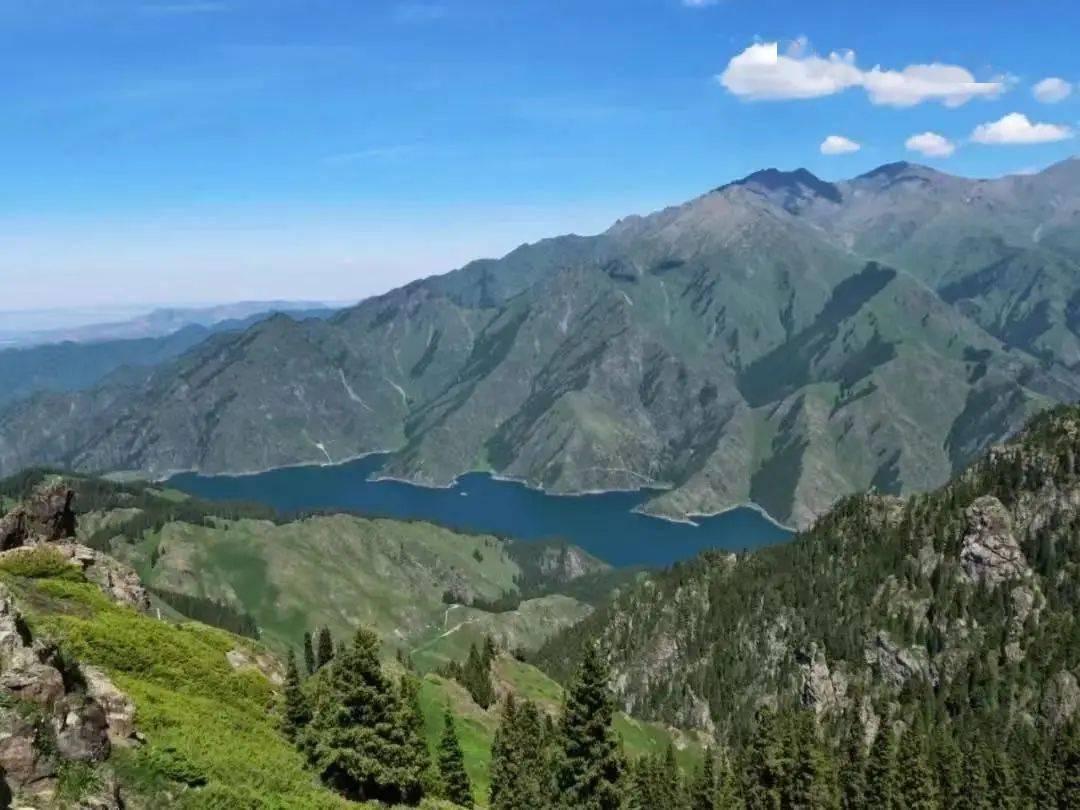
Day 1: Fly Beijing to Urumqi, settle in, walk the International Grand Bazaar after dark. Day 2: Heavenly Lake day trip by bus, back for an early night. Day 3: High-speed train to Turpan, see the Jiaohe Ruins and Grape Valley. Day 4: Turpan in the morning, return to Urumqi, take the overnight sleeper to Kashgar. Day 5: Kashgar Old City on foot, the mosque and the side alleys. Day 6: Drive or join a tour to Karakul Lake and the Pamir foothills, back by evening. Day 7: Fly Kashgar to Urumqi. Day 8: Fly Urumqi to Altay, transfer to Kanas, stay in the village. Day 9: Kanas Lake and Hemu at first light. Day 10: Fly back to Urumqi and catch the Beijing flight home.
If you want a longer, slower version with the self-drive stretches included, our 14-Day Xinjiang Itinerary Guide lays out the day-by-day driving plan.
FAQ
How long is the flight from Beijing to Xinjiang? A direct flight to Urumqi takes about four hours. Add an hour for airport time on each end and you are in the city by early afternoon.
Is the Beijing to Urumqi train comfortable? The sleeper berths are fine if you bring slippers, a snack stash, and a book. Soft sleeper gives you a door and more quiet. Hard seat for thirty-one hours is a test of will I do not recommend.
Can I drive from Beijing to Xinjiang? Yes, via the G7 expressway, about 2,540 kilometers. Plan three to four days and fuel plus tolls near 1,600 yuan. It is a serious road trip, not a casual detour.
What is the cheapest way to make the trip? An off-season flight can drop to 900 yuan, and a hard-seat train ticket is 340 yuan. The train wins on price, the flight wins on time.
Do I need a visa or permit for Xinjiang? Foreign visitors need a valid China visa. Border zones like Kashgar’s Pamir side and parts of Kanas need a separate local permit, which you can arrange in Urumqi or Kashgar.
When should I avoid going? Late February brings the most closures and the worst cold. The National Day week in early October floods every site with domestic crowds and lifts prices. Both are worth skipping if your dates are flexible.
Disclaimer
Prices, schedules, flight times, and permit rules change without notice. The figures here come from my own trips and were accurate at the time of writing, but airlines, China Railway (12306), and park offices set the real numbers. Always confirm current fares, train times, and border-permit requirements with official sources before you buy a ticket or cross into a controlled zone. This article shares personal experience and is not official travel advice.