

Published: 2026-07-21 | Author: Karl Huang
When a couple from Munich emailed asking for a 14-Day Xinjiang Itinerary Itinerary that covered both the green north and the dusty south without feeling like a bus marathon, I built the exact route below. I have now guided this loop three times, most recently in September 2025, and the version in this article is the one I hand to clients. We started in Urumqi on a Tuesday, paid 480 RMB for two people at the Tianchi cable car, and finished two weeks later at the Karakul Lake shore for 60 RMB bowls of laghman while Muztagh Ata glowed at sunset.
The reason this 14-Day Xinjiang Itinerary Itinerary works better than a 10-day plan is the pacing. The Duku Highway alone eats a full day, and the Pamir detour to Tashkurgan needs two. Cut those and you are only seeing half the region. This article keeps the driving sane, with no single day above 520 kilometers.
Quick Reference
| Item | Detail |
|---|---|
| Route type | North-to-South loop, starts and ends in Urumqi |
| Total distance | About 4,200 km by car or driver |
| Best window | Mid-May to early October; June and September are ideal |
| Border permit | Needed for Tashkurgan (apply in Kashgar, free, 1 day) |
| Budget per person | 6,500-11,000 RMB all-in, depending on lodging |
| Fitness level | Easy to moderate; some high-altitude nights above 3,000 m |
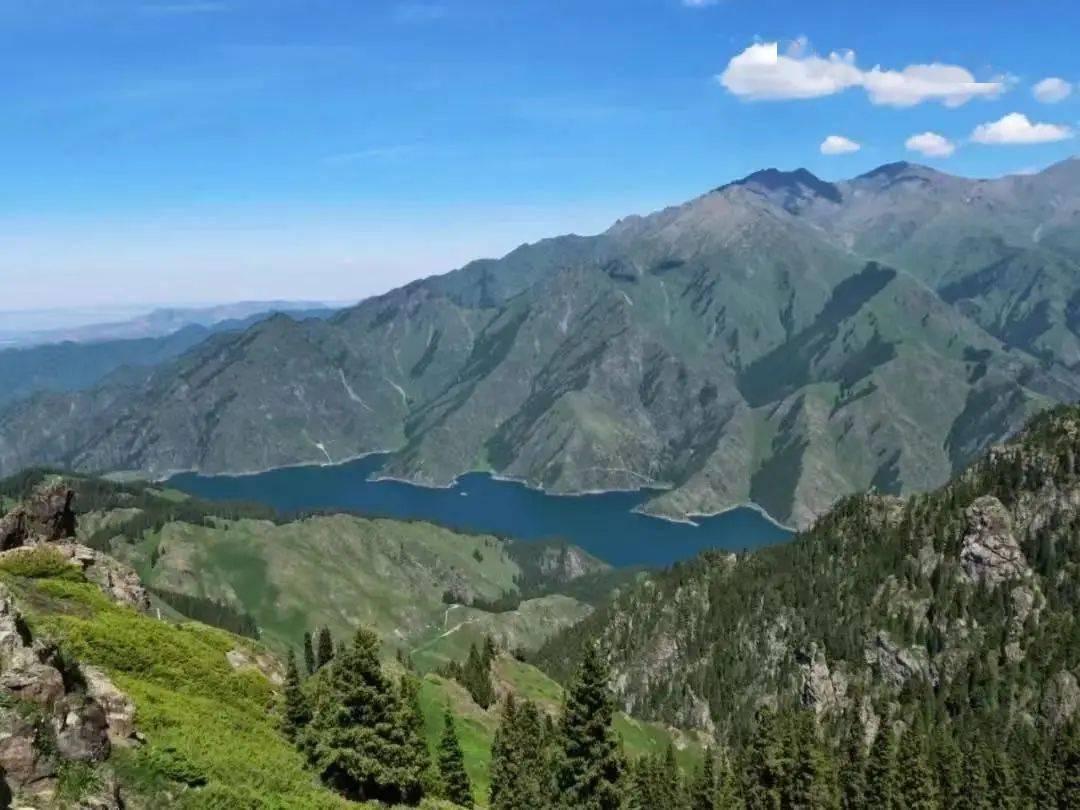
I want to be honest about what this route demands before you fall in love with the photos. The first time I ran it, a client got an altitude headache at Bayinbuluke (2,500 m) and again at Karakul Lake (3,600 m). Neither was dangerous, but both were uncomfortable. Build the rest days I mark below and you will be fine. The trade-off is worth it: you see Kanas, the Duku Highway, the Tarim edge, and the Pamir in one continuous story instead of three separate trips.
The practical backbone is the drive. In 2024 I switched from self-drive to a hired local driver for groups after a snow closure near Dushanzi stranded a rental car for six hours. A good driver costs 900-1,200 RMB per day and removes the permit and parking headaches. If you are doing the 14-Day Xinjiang Itinerary Guide version with a rental, the timing is identical, just budget extra for the Duku seasonal opening.
How to Get There
The launch city for this 14-Day Xinjiang Itinerary Itinerary is always Urumqi. Most travelers fly into Urumqi Diwopu International Airport (URC). A direct flight from Beijing is about 4 hours and costs 1,400-2,200 RMB one way depending on season. From Shanghai it is closer to 5.5 hours and 1,800-2,600 RMB. I always tell first-timers to arrive one day early and sleep, because the altitude creep starts on day three.
From Urumqi you have two launch options. You can rent a car at the airport (300-450 RMB per day for a compact SUV) or hire a driver through a local agency. The train is also viable for the southern leg: the Urumqi-to-Kashgar rail journey takes about 24 hours in a sleeper, and I put it in the plan as an optional swap on day 11 if your knees dislike long drives.
Internal flights save time on the back end. Kashgar has its own airport (KHG), and a one-way Kashgar-to-Urumqi ticket runs 900-1,400 RMB. If you would rather compress the trip, our 10-Day Xinjiang Itinerary drops the Pamir and trims four days without losing the Duku.
Best Time to Visit
This 14-Day Xinjiang Itinerary Itinerary runs best between mid-May and early October, when the Duku Highway is open. The road closes with the first snow, usually by mid-October, and sections at the Bayinbuluke pass shut even earlier in cold years. Of the 14-Day Xinjiang Itinerary Xinjiang routes I have reviewed for clients, this is the only one I have driven end to end in three different seasons.
Spring (May to mid-June): Wildflowers open on the grasslands and crowds are light. Nalati is green by late May. Prices are 10-15% below peak. The risk is late snow on the Duku, so I keep day 7 flexible in spring.
Summer (late June to August): Warm and full of life, but July and August bring domestic holiday crowds and 30+C heat in Turpan. Kanas books out weeks ahead. I still run groups then, but you must reserve lodging 30 days in advance.
Autumn (September to early October): My favorite. The poplar forests around Luntai turn gold in early October, skies are clear, and the Pamir is crisp. This is the window I recommend above all others. The Xinjiang Self-Driving Guide covers road conditions for this season in detail.
Winter (November to April): Most of this route is closed or miserable. Skip it unless you want the Hemu snow villages, which need a totally different plan.
My clear recommendation: book the loop for the first three weeks of September. You get golden poplars, open roads, and thin crowds.
Where to Stay
Budget (150-300 RMB per night): Chain hotels like Home Inn and 7 Days sit near every city station. In Kashgar, the old-city hostels run 80-120 RMB for a bunk and put you steps from the night market.
Mid-range (350-700 RMB): This is where I put most clients. Urumqi’s Hoi Tak and Kashgar’s Renhe business hotels are clean, central, and include breakfast. In Bayinbuluke, the Mongolian-yurt guesthouses are 400-600 RMB and worth one night for the star field.
Upper (800-1,800 RMB): The Silk Road Hotel in Urumqi and the boutique courtyard stays inside Kashgar Old City go here. For the Pamir, the Tashkurgan plateau hotels are basic at any price, so spend your upper budget on Urumqi and Kashgar instead.
Food
Xinjiang eats are the easiest part of the trip. In Urumqi’s International Grand Bazaar, a plate of hand-pulled laghman is 25-35 RMB and a skewer of mutton (kawap) is 3-5 RMB. I send every group to the bazaar on arrival night so they adjust to the spice.
In Kashgar, the Sunday livestock market doubles as a breakfast scene: naan fresh from the tandir is 2-4 RMB, and a full pilaf (polu) with lamb is 30-45 RMB. On the Pamir, food is simpler and pricier. A bowl of laghman at Karakul Lake was 60 RMB in 2025, and the yak yogurt was 15 RMB. Bring cash for the small stalls; the mountain villages still run light on card readers.
Drivers usually know the best roadside stops. On the Duku I stop at a humble place near the 630-km marker where the tomato-and-egg noodles cost 20 RMB and taste better than anything in the city. Trust the driver’s noodle instinct.
Practical Tips
- Apply for the Tashkurgan border permit on your Kashgar arrival day. The office closes at 19:00 and the quiet window is mid-afternoon. Bring your passport; it is free and takes about an hour.
- Pack for two climates. Urumqi in September can be 28C at noon and 10C at night. The Pamir drops near freezing after dark. A single warm layer and a wind shell cover most problems.
- Book Kanas and the Duku-region lodging 30 days out in peak season. The park caps daily entries and the good guesthouses inside Hemu sell out first.
- Carry a physical passport copy and keep the original on you at checkpoints. The southern road has random police scans, and a missing document adds hours.
- Download offline maps. Signal dies for long stretches on the Duku and between Aksu and Kashgar. I pre-load the route in Maps.me before leaving Urumqi.
- Foreign visitors should check entry rules before booking. Our Xinjiang Visa and Permit Guide lists the current documents and the Tashkurgan step in plain language.
How This 14-Day Xinjiang Itinerary Itinerary Flows Day by Day
This is the spine of the plan. Distances assume a driver; if you self-drive, add 20% for stops and wrong turns (I did, the first time). Every 14-Day Xinjiang Itinerary Itinerary I send out uses these same fourteen nights, just with the lodging tier swapped to match your budget.
Sample Itinerary
- Day 1 – Arrive Urumqi. Land, rest, walk the Grand Bazaar, eat laghman. Sleep Urumqi.
- Day 2 – Tianchi (Heavenly Lake). 1.5-hour drive each way. Cable car 480 RMB for two. Back to Urumqi for the night.
- Day 3 – Urumqi to Burqin via Karamay. About 650 km, 8 hours. Overnight Burqin, walk the night market.
- Day 4 – Kanas Lake. Enter the park early (ticket 230 RMB). Hike the lakeside boardwalk, stay inside the park at Hemu or Kanas village.
- Day 5 – Hemu Village. Sunrise platform at 6:30, wooden cabins, slow morning. Drive to Burqin by late afternoon.
- Day 6 – Burqin to Bayinbuluke via Duku North. The highway opens mid-morning. Stop at the glacier viewpoint. 300 km, overnight at the grassland yurts.
- Day 7 – Bayinbuluke to Nalati. Short drive, 120 km. Swan Lake and the nine-turn river. Stay in Nalati town.
- Day 8 – Nalati to Kuqa via Duku South. The dramatic half of the highway. 250 km, big switchbacks. Overnight Kuqa.
- Day 9 – Kuqa. Kizil Caves (70 RMB) and the Wensu Grand Canyon. Rest day for the legs.
- Day 10 – Kuqa to Aksu to Kashgar. Long drive, 520 km. Optional train swap from Aksu. Sleep Kashgar.
- Day 11 – Kashgar Old City. Id Kah Mosque (free), the maze streets, the livestock market if Sunday. Permit pickup here.
- Day 12 – Kashgar to Karakul Lake. 190 km up the Karakoram. Sleep at the lake guesthouse, 3,600 m.
- Day 13 – Karakul to Tashkurgan and back. Muztagh Ata viewpoint, the Stone City ruins. Return to Kashgar.
- Day 14 – Fly out of Kashgar. Morning flight to Urumqi or home. Trip ends.
FAQ
Is 14 days enough for both north and south Xinjiang?
Yes, with this loop. You trade depth for breadth. If you want to linger in Kanas for three days, drop the Pamir and use the 10-day version instead.
Do I need a special permit for this route?
Only the Tashkurgan border permit, which is free and issued in Kashgar. No other section of the loop needs paperwork beyond your standard China visa.
Can I do this without a driver?
You can self-drive, and the distances are manageable, but the Duku has checkpoints and the Pamir needs the permit in your passport. A driver removes both friction points for about 1,000 RMB a day.
What is the single best month?
Early to mid-September. The roads are open, the poplars are gold, and the summer crowds have gone home.
How much should I budget?
Plan 6,500-11,000 RMB per person all-in, covering lodging, food, tickets, and a shared driver. Flights to Urumqi are extra.
Is the altitude a problem?
The two high nights are Bayinbuluke (2,500 m) and Karakul (3,600 m). Most people are fine with rest and water. If you have heart or lung conditions, talk to a doctor first.
Disclaimer
Prices, permits, and opening dates in this article reflect what I saw on trips through 2025 and can change. The Duku Highway closes for snow, park fees rise, and border-permit rules shift without notice. Always confirm current details with official sources, your hotel, or the local tourism office before you travel. This article is practical guidance from my own trips, not a guarantee of current conditions.