

Published: 2026-07-27 | Author: Karl Huang
When people ask me for a Xinjiang Spring Itinerary, they usually imagine warm weather and empty roads. They are half right. I ran this exact loop in April 2023: twelve days from Urumqi down to Turpan, then west to the Yili valleys and up to Sayram Lake. The trip cost me about 4,200 yuan all in, not counting the 1,850 yuan Beijing to Urumqi flight I booked three weeks out. Spring here is not summer lite. It is its own season, with apricot blossoms in Huocheng, thawing ice on the alpine lakes, and a Duku Highway that stays shut until June.
Quick Reference
| Location | Spring ticket fee | Best spring window | Role in the trip |
|---|---|---|---|
| Urumqi | Free old town; 30 yuan Red Mountain | April to May | Arrival hub and supply stop |
| Turpan (Flaming Mountains, Tuyoq, Karez) | 40 yuan Flaming Mountains; 45 yuan Karez System | Late March to April | Warmest, earliest spring leg |
| Yili valleys (Huocheng apricot, Narat) | 60 yuan county parks; Narat 95 yuan | Mid-April to May | Blossom and green-pasture core |
| Sayram Lake | 70 yuan entry plus 60 yuan shuttle | Mid-May onward | Alpine lake, ice just gone |
| Dushanzi Grand Canyon | 40 yuan | May | Pre-Duku taster before the highway opens |
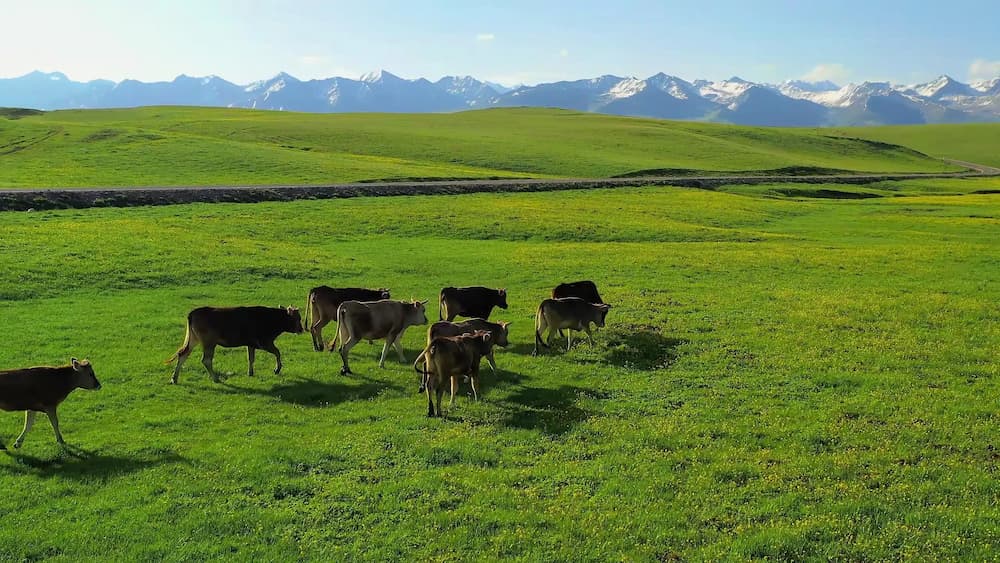
The Spring Route I Actually Drove
I landed in Urumqi on a Tuesday and spent the first night near the International Grand Bazaar, where a plate of laghman noodles ran me 25 yuan and a cup of milk tea was 6 yuan. The next morning I took the 08:20 high-speed train to Turpan, a 55-minute ride that cost 51 yuan in second class. Turpan in early April was already 26 degrees, dry, and quiet. I hired a local driver for 400 yuan for a half day to see the Flaming Mountains and the Tuyoq Village, an earth-built settlement where I ate grapes that had been dried on the vine over winter.
From Turpan I flew to Yining (480 yuan, 70 minutes) instead of enduring the long bus, then based myself in Huocheng for the apricot blossom window. In 2023 the blossoms peaked around April 14, about ten days later than the warm year before. A homestay outside the village charged 260 yuan a night and the owner’s wife cooked a breakfast of fried eggs, tomatoes, and flatbread that I still think about. The North Xinjiang Itinerary Guide I wrote covers this stretch in more detail, but spring adds a wrinkle: the high passes to Kanas were still closed, so my Xinjiang Spring Itinerary turned north only as far as Sayram Lake.
Sayram in mid-May was the high point of the trip. The ice had pulled back from the shore but the water sat at about 4 degrees, and a wind off the lake dropped the felt temperature by ten degrees. I paid 70 yuan to enter and another 60 yuan for the circular shuttle that stops at six viewpoints. By the time I looped back to Urumqi five days later, I had ridden four trains, two flights, and one very patient taxi, and I had seen Xinjiang in the one season most visitors skip.
How to Get There
Most international and domestic travelers reach Xinjiang through Urumqi Diwopu International Airport (URC). Direct flights run from Beijing (about 4 hours, 1,400 to 1,900 yuan by season), Shanghai (5.5 hours), Xi’an (3 hours), and Chengdu (3.5 hours). From Urumqi, the high-speed rail reaches Turpan in under an hour and continues toward the west, though the full line to Yining still requires a transfer or a short flight.
If you prefer the rails, the Xinjiang Train Travel Guide lays out the major corridors and the sleeper options that save you a night of hotel cost. The broader Xinjiang travel guide on this site maps each region month by month, which helps you time the blossoms. For a spring loop, I recommend flying into Urumqi, training or flying to your first regional base, and renting a car only for the valley sections where buses run thin. Roads in March can still carry snow patches at elevation, so check conditions the morning you leave.
Best Time to Visit: Planning Your Xinjiang Spring Itinerary
Spring in Xinjiang runs roughly March through May, and the three months could not be more different. March is a shoulder of snow and slush; northern sites like Kanas and Hemu stay closed, and even the Taklimakan edge can be windy and grey. April is the practical start: Turpan warms first, and the Yili apricot blossoms open mid-month. May is the safest bet for a full Xinjiang Spring Itinerary because the alpine lakes thaw and the grasslands turn green without the summer crowds.
The best time to visit Xinjiang spring itinerary really depends on what you chase. Want apricot blossoms and few tourists? Target April 10 to 25 in Yili. Want green pastures and open lakes with manageable prices? Go in mid-to-late May. I would avoid early March unless you specifically came for off-season solitude and do not mind closed highland roads. A May Xinjiang Spring Itinerary beats July on price and on crowd, and that is the version I tell most first-timers to book.
Where to Stay
Budget travelers can sleep well for 90 to 150 yuan a night. In Turpan I found a clean hostel bed for 90 yuan, and in Yining a simple hotel near the bus station ran 130 yuan. Mid-range hotels in Urumqi and Yining, the kind with an elevator and a real breakfast, cost 280 to 360 yuan; I paid 320 yuan for a central Urumqi room in April. Upper-end options, including the lakefront stays near Sayram and the better Yili resorts, run 600 to 1,000 yuan and book out during the National Day period but sit half-empty in spring. A Xinjiang Itinerary in spring costs less than the same route in July. Homestays in the blossom villages are the best value for atmosphere: 240 to 280 yuan with a home-cooked meal included.
Food
Spring is a good time for Xinjiang’s staple dishes before the summer tourist prices kick in. A full Xinjiang Food Tour Guide would fill a book, but the essentials on this route are: big plate chicken (da pan ji) at 58 to 78 yuan for two, hand-pulled laghman at 22 to 28 yuan, mutton skewers at 5 yuan each, baked samsa pastries at 6 yuan, and round naan at 3 yuan. In Turpan, try the seedless raisins and the cold noodle salad called pi lan for about 15 yuan. In Yili, the apricots themselves are the snack, sold roadside at 10 yuan a kilo during blossom season. Tea is 4 to 6 yuan; a local beer is 8 yuan.
Practical Tips
- Pack layers. Urumqi can be 18 degrees while Sayram Lake sits near freezing. I carried a down jacket, a wind shell, and a single T-shirt, and used all three in one day.
- Book the Yili apricot window late. Blossom dates move with the weather, so watch local reports and lock lodging only two weeks ahead.
- Confirm highland road status. Kanas and the Duku Highway open in late May and June. Do not plan a spring loop that assumes they are open.
- Carry cash for village stalls. Card works in cities, but the blossom-road vendors and small homestays often take only WeChat or cash.
- Start drives early. Spring daylight is long but mountain weather builds by afternoon; leave by 08:00 to beat wind and closures.
Sample Itinerary
This Xinjiang Spring Itinerary runs twelve days. Day 1: Arrive Urumqi, bazaar walk, overnight 320 yuan hotel. Day 2: Morning train to Turpan (51 yuan), Flaming Mountains and Tuyoq, overnight hostel 90 yuan. Day 3: Karez System and local brunch, fly to Yining (480 yuan). Day 4: Huocheng apricot villages, homestay 260 yuan. Day 5: Drive to Narat grassland (95 yuan), evening return. Day 6: Yili food crawl, rest day. Day 7: Transfer to Sayram Lake (70 yuan plus 60 yuan shuttle), lakeside stay. Day 8: Full lake loop, back to Yining. Day 9: Fly to Urumqi, Dushanzi Grand Canyon day trip (40 yuan). Day 10: Urumqi museums and Red Mountain (30 yuan). Day 11: Buffer day for weather. Day 12: Fly out.
FAQ
Is spring cold in Xinjiang? It depends on elevation. Turpan in April hits the mid-20s, while Sayram Lake and any high pass stay near freezing well into May. Pack for both.
Can I drive the Duku Highway in spring? Usually no. The highway opens around June 1 and closes by October. A spring trip should treat Dushanzi Grand Canyon as the northern teaser, not the full crossing.
When do the Yili apricot blossoms peak? Typically April 10 to 25, but the date shifts with that year’s warmth. In 2023 it was about April 14. Book lodging flexibly.
Do I need a permit for this route? The standard Urumqi to Turpan to Yili to Sayram loop does not require a border permit. If you later extend south to Kashgar or the Pamir, you will. Check the current rules before you go.
How much does a 12-day spring trip cost? My own run was about 4,200 yuan including trains, flights, lodging, and food, excluding the international flight. Budget travelers can trim this by using hostels and sleeper trains.
Disclaimer
Prices, opening dates, and permit rules change. The figures above reflect my April to May 2023 trip and were correct at the time, but ticket fees, train schedules, apricot-blossom timing, and the Duku Highway opening date vary by year and by weather. Always confirm against official sources, your hotel, or the site ticketing pages before you travel. This article shares personal experience and is not a guarantee of current conditions.