

Published: 2026-07-28 | Author: Karl Huang
My first Xinjiang Motorcycle Tour Itinerary started on a Tuesday at 7:10 a.m. outside the Urumqi Bird Circle motorcycle market, where I paid 380 yuan a day for a rented 650cc twin and shook hands with the shop owner, Lao Ma, who lent me a paper map of the Duku Highway drawn in blue ballpoint. By 9 a.m. I was on the G216 with 540 kilometers of planned riding ahead that week. Three seasons later I have ridden the north-south corridor twice more, once in a group of nine and once solo, and the route below is built from those trips rather than from a brochure.
Quick Reference
| Item | Detail |
|---|---|
| Location | Urumqi south to Kuqa via the Duku Highway (G217), 561 km one way |
| Permit / fee | No toll on Duku for motorcycles; border areas need a travel permit (free at county PSB, 20 minutes) |
| Best time | June 10 to September 25, when the pass is snow-free |
| Role | The Duku Highway cuts the Tarim Basin-to-Tianshan distance from 1,000 km to 561 km |
| Rental cost | 300 to 480 yuan per day for a 300cc to 650cc bike, plus fuel |
Why I Built This Xinjiang Motorcycle Tour Itinerary
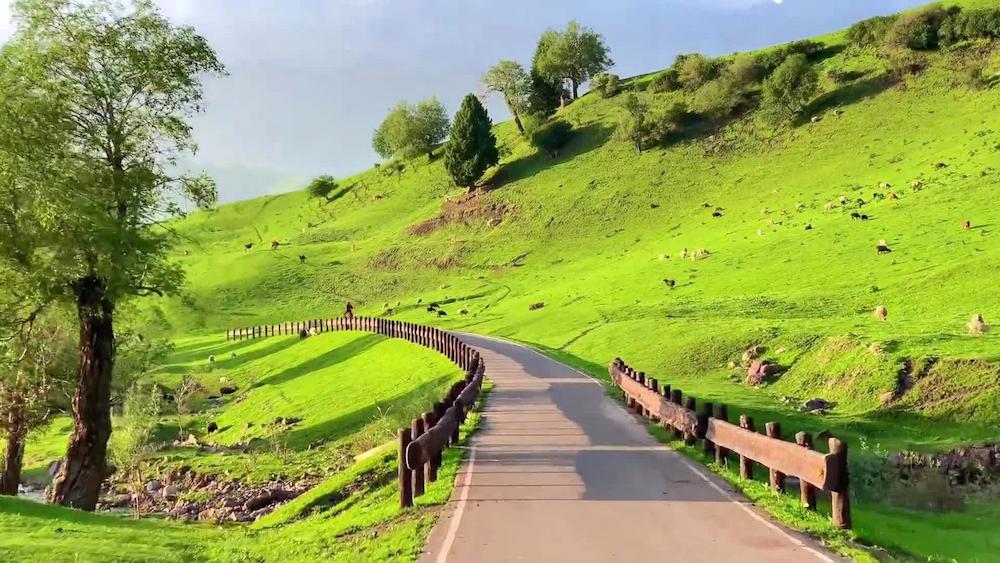
The first year I rode, I made the rookie mistake of trusting a forum post that said the Duku opened on May 1. It did not. I reached the northern gate at Dushanzi on May 3 and found a snow wall across the road and a ranger named Ablimit who told me in plain terms to turn back. That lost day cost me a 420 yuan hotel in Kuqa I never used. So the single most important thing I can tell you is to confirm the opening date with the local traffic bureau, not with last year’s blog. The highway usually opens between June 5 and June 15 and closes by early October, depending on snow.
On my second trip I rode with eight others from a Shanghai riding club. We carried a satphone, split the support van at 1,200 yuan a day, and still had the freedom to stop whenever a herd of sheep blocked the lane, which happened four times on day three alone. Riding in a group changed how I planned fuel, because the nearest pump can be 180 km apart once you leave the G30 corridor. The Xinjiang Motorcycle Tour Itinerary below is the version I wish I had been handed in 2021.
How to Get There
Most riders fly into Urumqi and start the Xinjiang Road Trip Duku Highway Guide route from there, since the city has the widest choice of rental shops. DiDi from the airport to the Bird Circle market runs about 45 yuan. If you are shipping your own bike, the train from Xi’an to Urumqi takes roughly 30 hours and costs 1,100 to 1,600 yuan depending on crate size; the freight yard at Urumqi West handles about a dozen bikes a week in peak season.
From Kashgar in the south, you reach the Duku’s southern end at Kuqa by the G3012, a flat 700 km run that most riders split over two days with a night in Aksu. From Yining in the west, the northern approach goes through the Narat area and joins the Duku at the 320 km mark. Each gateway works; the question is whether you want to climb the pass north-to-south or the reverse, and I prefer south-to-north because the big descent into the Dushanzi canyon comes at the end when legs are tired but the risk is lower.
Best Time to Visit
Spring, from April to mid-May, is too early. The high passes stay closed under snow and the grasslands are still brown. I would not book a bike before June 5.
Summer, from mid-June to August, is the reliable window. The road is open, the grass is green, and the Xinjiang travel guide archives fill with current condition reports from other riders. The downside is heat in the southern desert stretches, where afternoon temperatures hit 38 Celsius, and crowds at the Bayinbuluke boardwalk.
Autumn, from early September to late September, is my favorite. The poplar trees turn gold, the tour buses thin out, and the mornings are crisp. After September 25 the first snow can close the pass without warning.
Winter is for nobody on two wheels here. The Duku shuts completely.
The best months for a best time to visit xinjiang motorcycle tour itinerary plan are June 15 to September 20. That window gives you open passes, green scenery, and enough daylight (up to 15 hours in June) to cover long stages without night riding. This Xinjiang Motorcycle Tour Itinerary assumes you ride inside that window and keep one buffer day for weather.
Where to Stay
Budget riders sleep where the locals do. In Dushanzi I paid 120 yuan for a clean twin room at the Jinyuan Guesthouse, and in Kuqa the Renhe Hotel charged 150 yuan with secure motorcycle parking behind a gate. These places will not appear on international booking sites, so walk in or use the Chinese apps Meituan and Ctrip.
Mid-range choices include the Narat Yurt camps, where a felt room runs 280 to 360 yuan and puts you right at the grassland trailhead. In Bayinbuluke the Xinlong Hotel was 320 yuan and had a heated floor that mattered at 2,500 meters.
Upper-end riders can book the Klu Club in Urumqi at around 900 yuan a night, which stores your bike indoors and serves a decent breakfast at 7 a.m. For a splurge on the southern end, the Kuqa Hotel’s suites start near 680 yuan and the staff speak some English.
Food
Xinjiang road food is built for hungry riders. A plate of laghman noodles with mutton cost me 22 yuan at a truck stop near Toksun, and a whole grilled chicken (dapanji) for two ran 68 yuan in Kuqa. Naan bread from a roadside tanur is 3 to 5 yuan and keeps for two days in a saddlebag.
In Urumqi the International Grand Bazaar has a mantou and kebab row where 10 skewers of lamb cost 30 yuan. In the south, try the Aksu watermelon in August, sold by the half at 6 yuan a kilo, and the Hotan rose jam on naan for 12 yuan. Carry cash for the smallest stalls; the card reader fails more often than it works once you leave the G30.
Hydration matters at altitude. I drank about four liters a day on the pass and bought spring water at 2 yuan a bottle from the vendors at the Bayinbuluke viewpoint.
Practical Tips
- Check the Duku opening date with the local traffic bureau one week before you ride. Do not trust old forum posts.
- Carry fuel for 200 km. The gap between pumps south of the pass is real, and a jerry can saved my group on day three.
- Bring a paper map as backup. My phone lost signal for 90 minutes inside the canyon, and Lao Ma’s ballpoint sketch was what got us out.
- Pack for two seasons. At the summit it was 6 Celsius in July while the desert floor hit 36. Layers beat a single heavy jacket.
- Sort your border permit early. If your route touches Tashkurgan or the Khunjerab side, the free PSB permit takes about 20 minutes but only during office hours.
- Ride the pass before noon. Afternoon thunderstorms build over the Tianshan and the descent gets slick fast.
For road rules and packing, the Xinjiang Self-Driving Guide covers the same corridors by car and is worth a read even on two wheels. Every Xinjiang Motorcycle Tour Itinerary should flex with the weather rather than fight it.
Sample Itinerary
Day 1: Fly to Urumqi, rent bike, ride to Dushanzi (250 km, 4 hours). Sleep at the Jinyuan Guesthouse.
Day 2: Dushanzi to Narat via the northern Duku (230 km, 6 hours with stops). Grassland yurts at night.
Day 3: Narat to Bayinbuluke (80 km, 2 hours). Walk the boardwalk, watch the swans, sleep at the Xinlong Hotel.
Day 4: Bayinbuluke over the summit to Kuqa (251 km, 7 hours). The big descent comes late. Dapanji dinner in town.
Day 5: Rest day in Kuqa. Visit the Kizil Caves, service the bike, refill supplies.
Day 6: Kuqa south on the G3012 to Aksu (220 km, 4 hours) or fly home from Kuqa airport.
A longer 14-Day Xinjiang Itinerary Guide can add Kashgar and the Pamir loop after Kuqa if your visa and permit allow.
FAQ
Do I need a special license to ride in Xinjiang?
A Chinese motorcycle license (or an international one accepted locally) and your home license are required. Rentals in Urumqi check both before handing over the keys.
Can foreign riders do this route?
Yes, but border districts such as Tashkurgan need a permit from the county PSB. The Duku itself does not require a special pass, only normal road rules. See the Xinjiang Visa and Permit Guide for the current list.
How many kilometers a day is realistic?
Plan 200 to 260 km on the Duku because the road is slow, narrow, and full of photo stops. Pushing 400 km here is a mistake I made once and regretted.
Is the Duku safe in rain?
The asphalt is good but the descent gets slick and rockfall happens after storms. I wait out afternoon weather at a town rather than risk the canyon.
What about altitude?
The summit near Bayinbuluke sits around 3,400 meters. Take the first day easy, drink water, and skip the pass if you feel dizzy.
Disclaimer
Prices, permits, fuel availability, and highway opening dates in this article are based on my trips between 2021 and 2025 and change without notice. The Duku Highway opening date in particular shifts year to year with snow conditions. Always confirm current rules, costs, and permit requirements with official sources such as the local traffic bureau and the county Public Security Bureau before you travel. This article is practical experience, not legal or official advice.