

Published: 2026-07-22 | Author: Karl Huang
If you are planning a long overland route, my Silk Road Itinerary Tips come from eight seasons of driving it myself. The first version was a 2 a.m. text I sent from a guesthouse in Kuqa after covering 520 km from Turpan in one day and paying ¥180 for a lamb-skewer dinner that justified the detour. I had also forgotten the border permit for Tashkurgan, which cost me a full extra day. Those small errors became the checklist I now hand every client who lands in Urumqi.
A Silk Road Itinerary Xinjiang travelers actually finish is different from the romantic version in brochures. The real route is long, the fuel stops are far apart, and the weather on the Pamir side can close a pass without warning. This article skips the poetry and gives you the practical bits: when to go, how to move, what to budget, and the mistakes I have watched people make more than once.
Quick Reference
| Item | Detail |
|---|---|
| Starting point | Urumqi (elevation 800 m), the usual fly-in city |
| Full route length | ~1,800 km one way, Urumqi to Kashgar; ~2,200 km with the Pamir loop |
| Best travel window | April to October; Pamir side best June to September |
| Permits needed | Free border travel permit for Tashkurgan, issued in Kashgar (1 working day) |
| Typical self-drive cost | ¥1,200 to ¥1,800 per day with driver, fuel, and tolls |
Silk Road Itinerary Tips I Wish I Knew Before the First Drive
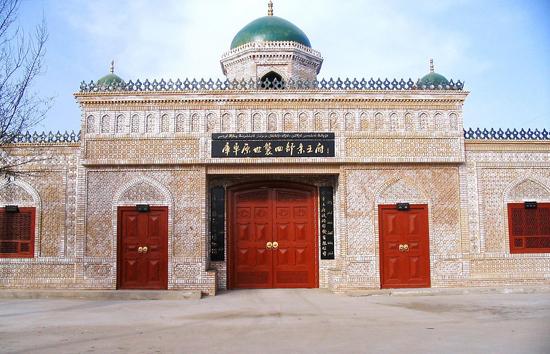
My Silk Road Itinerary guide breaks the route into four legs, and the mistakes cluster around the seams between them. These Silk Road Itinerary Tips are not theory pulled from a desk; they come from repeating those four legs more than forty times across eight seasons. Leg one is Urumqi to Turpan: short, hot, and easy, which makes people overconfident. Leg two is Turpan to Kuqa along the Tarim rim, where the distance looks small on a map but the noon heat and the single-lane sections slow you down. Leg three is Kuqa to Kashgar on the southern highway, the part everyone remembers. Leg four is the Pamir loop out to Tashkurgan and back.
The first time I did it, I treated the whole thing like a highway run. I left Urumqi at 7 a.m., pushed to Turpan by 10, then kept going because the road was good. By the time I reached Korla at 6 p.m. I had driven 460 km and my concentration was gone. The lesson stuck: on a route this long, the daily cap matters more than the daily ambition. I now tell people to stop around 350 to 400 km a day and protect the afternoon for the sites.
Another tip that came from embarrassment: the border permit. You cannot get it in Tashkurgan, and you cannot get it online. You apply at the entry-exit office in Kashgar, and it takes most of a morning. I have stood in that office with three clients who assumed their regular China visa covered the Pamir. It does not. Build the permit day into the plan or skip the Pamir entirely.
The food was the pleasant surprise. I expected bland truck-stop meals and found instead that every oasis town has a night market with hand-pulled laghman, roasted mutton, and fresh naan for almost nothing. The ¥180 dinner in Kuqa I mentioned was nine skewers, a bowl of soup, and two rounds of naan. That single meal reset my whole budget assumption for the trip.
How to Get There
Most travelers fly into Urumqi first. The international airport has direct flights from Beijing, Shanghai, Guangzhou, and several Central Asian cities, and the domestic network is dense enough that you can usually connect the same day. From Urumqi you have three ways west.
The train is the calmest option. The line to Kashgar takes about 24 hours on the regular service or 12 to 14 hours on the faster D-series trains that run as far as Turpan and Korla. It is cheap, it is safe, and you arrive rested, but you see little of the desert. The bus network is extensive and shockingly cheap, with sleeper coaches running most city pairs, yet the schedules are loose and the comfort varies.
The third option is to drive, and this is where most of my tips apply. You can rent a car with a local driver in Urumqi for roughly ¥900 to ¥1,400 a day, or self-drive if you hold a Chinese license. The highways are excellent and well signed in both Chinese and, increasingly, in English near the big tourist stops. The gaps are the fuel deserts between oasis towns: I keep the tank above half at all times, because the next station can be 200 km away and occasionally closed for midday prayers.
Best Time to Visit
Spring, from April to early May, is quiet and cheap. The deserts are mild, the apricot blossoms near Kashgar are brief and worth timing, and hotel rates sit at their yearly low. The downside is wind: the Tarim basin throws dust storms that can cut visibility on the open road.
Summer, June through August, is the peak. The Pamir is open, the grasslands are green, and every site runs at full service. It is also hot, with Turpan regularly hitting 40°C, and the popular stops get crowded on Chinese holidays. If you go in summer, start driving at 6 a.m. and be off the road by 2 p.m.
Autumn, September to October, is my favorite. The poplar forests along the Tarim turn gold for about three weeks, the heat eases, and the light on the Pamir is flat and clean for photography. This is the window I recommend to almost everyone who asks.
Winter, November to March, is harsh. The Pamir passes close, several grassland sites shut, and a single snow can strand a self-drive car for days. I only send experienced winter drivers then, and usually only as far as Turpan and Urumqi.
My clear recommendation: plan for a Silk Road Itinerary Xinjiang loop in mid-September. You get the poplars, the open Pamir, and weather that will not cook you or freeze you. Book the Kashgar hotels two weeks ahead, because the autumn window is short and popular. That timing is the spine of every Silk Road Itinerary Tips plan I send out, because it is the only window where the Pamir, the poplars, and the desert heat all line up.
Where to Stay
Budget travelers do well on this route. Clean guesthouses in Turpan, Kuqa, and Kashgar run ¥120 to ¥220 a night, and the ones near the old city bazaars put you within walking distance of dinner. I stayed in a ¥160 courtyard room in Kashgar that had better character than hotels ten times the price.
Mid-range hotels, the four-star local chains, cost ¥350 to ¥550 and give you reliable hot water, an elevator, and a real breakfast. In Urumqi and Kashgar these are easy to find; in smaller oasis towns the choice thins, so book ahead for the leg-three towns.
Upper-end options exist mainly in Urumqi and Kashgar, where international brands and restored caravanserai-style hotels run ¥800 to ¥1,400. The restored guesthouse inside Kashgar Old City is the one I send to clients who want the Silk Road feeling without the rough edges. Worth it for two nights, not for the whole trip.
Food
Start with laghman, the hand-pulled noodle stir-fry, at ¥18 to ¥30 a bowl depending on the meat. In Korla I found a stall where the cook pulled the noodles in front of you and the portion fed two people. Then there is mutton skewer, ¥3 to ¥6 each, best eaten standing at a street grill with a glass of cold black tea.
Polo, the carrot-and-raisin rice with lamb, is the road staple at ¥20 to ¥35, and it keeps well if you buy extra for a long drive. Fresh naan costs ¥2 to ¥5 and lasts two days in the car. In Kashgar, the Sunday livestock market doubles as a food scene, and a full breakfast of naan, tea, and boiled eggs runs under ¥15.
For a sit-down meal, the Uyghur restaurants in any city center serve a shared spread of 8 to 12 small dishes for ¥60 to ¥120 per person. I warn clients about one thing: portions are large, so order for the table, not per person, or you will waste food and money.
Practical Tips
The short version of my Silk Road Itinerary Tips fits into seven points, and most of them are about pace and paperwork rather than sights.
- Apply for the Tashkurgan border permit in Kashgar on a morning you are not driving anywhere else. Bring your passport and a passport photo.
- Keep your fuel tank above half at all times. The gap between oasis towns can exceed 200 km, and stations close for midday prayers.
- Drive early. Leave by 6 or 7 a.m. and stop by 2 p.m. to dodge both the heat and the fatigue that causes accidents.
- Carry cash in small bills. Rural tolls, market stalls, and rest-stop toilets often do not take cards or phones.
- Download offline maps before you leave Urumqi. Signal drops on the Pamir and along long desert stretches.
- Respect the prayer times and dress modestly in the old city areas. A scarf for shoulders and knees opens more doors than any guidebook line.
- Build two buffer days into any plan longer than ten days. The route rewards flexibility far more than strict schedules.
Sample Itinerary
This is the 12-day version I run most often, timed for mid-September.
Day 1 to 2, Urumqi. Arrive, sort the car and supplies, visit the regional museum to see the mummies that anchor the whole Silk Road story. Sleep two nights.
Day 3, Urumqi to Turpan (180 km). See the Jiaohe ruins and the Karez water system, then eat grapes in season at the Grape Valley.
Day 4, Turpan to Korla (420 km). Long but flat. Stop at the Flaming Mountains viewpoint for twenty minutes, not two hours.
Day 5, Korla to Kuqa (280 km). Visit the Kizil Caves if murals interest you. This is the town where my ¥180 dinner lives.
Day 6 to 7, Kuqa to Kashgar (700 km). Split it with a night in Aksu. The southern highway is the heart of the trip.
Day 8, Kashgar. Apply for the border permit in the morning. Spend the afternoon in the old city and the evening at the night market.
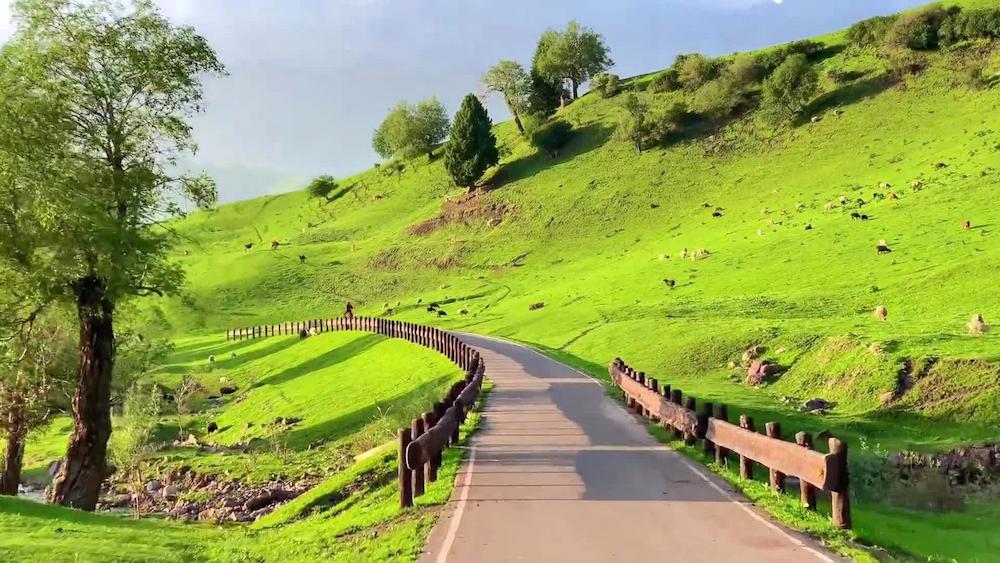
Day 9 to 10, Kashgar to Tashkurgan (290 km each way). The Pamir loop: Karakul Lake, the White Sand Lake, and the stone city ruins. Altitude tops 3,600 m, so move slowly.
Day 11 to 12, Kashgar to Urumqi. Fly back, or take the fast train if you want one calm day to process it all.
FAQ
Do I need a special visa for the Silk Road route in Xinjiang?
A standard Chinese tourist visa (L) covers Urumqi, Turpan, Kuqa, and Kashgar. Only the Pamir loop into Tashkurgan needs the free local border permit, which you get in Kashgar.
Is it safe to self-drive?
The highways are good and the police checkpoints are routine, not threatening. I recommend a local driver for first-timers because the checkpoints and the Uyghur-language signs slow solo navigation. Read the Xinjiang Visa and Permit Guide before you book.
How much should I budget per day?
Plan ¥400 to ¥600 per person with a shared car, mid-range hotels, and market food. Add ¥200 a day if you want private transport or upper-end hotels. The food is the cheap part; the driving is the expensive part.
Can I do this by train instead of car?
Yes. The train reaches Kashgar and is comfortable and cheap. You lose the desert stops and the Pamir loop, but for a first visit it is a calm way to see the main cities. Many of my clients do train one direction and fly the other.
What should I pack that I might forget?
A power bank, a paper map, small cash, and a scarf. The cold on the Pamir at night surprises people who packed only for desert heat, so bring one warm layer even in September.
Is the route worth it compared to North Xinjiang?
Different trips. North Xinjiang is forests and lakes; this route is history, deserts, and the Pamir. My Silk Road Itinerary Itinerary page lays out the day-by-day contrast if you are choosing between them.
Disclaimer
Prices, permit rules, opening hours, and road conditions on the Silk Road route change without notice. The figures above reflect my trips through 2025 and are shared as planning guidance, not guarantees. Border permit procedures in particular shift with local policy, so confirm the current requirements at the Kashgar entry-exit office or through official channels before you travel. Always verify times, fees, and access with the sites themselves or a licensed local operator.