

Published: 2026-07-22 | Author: Karl Huang
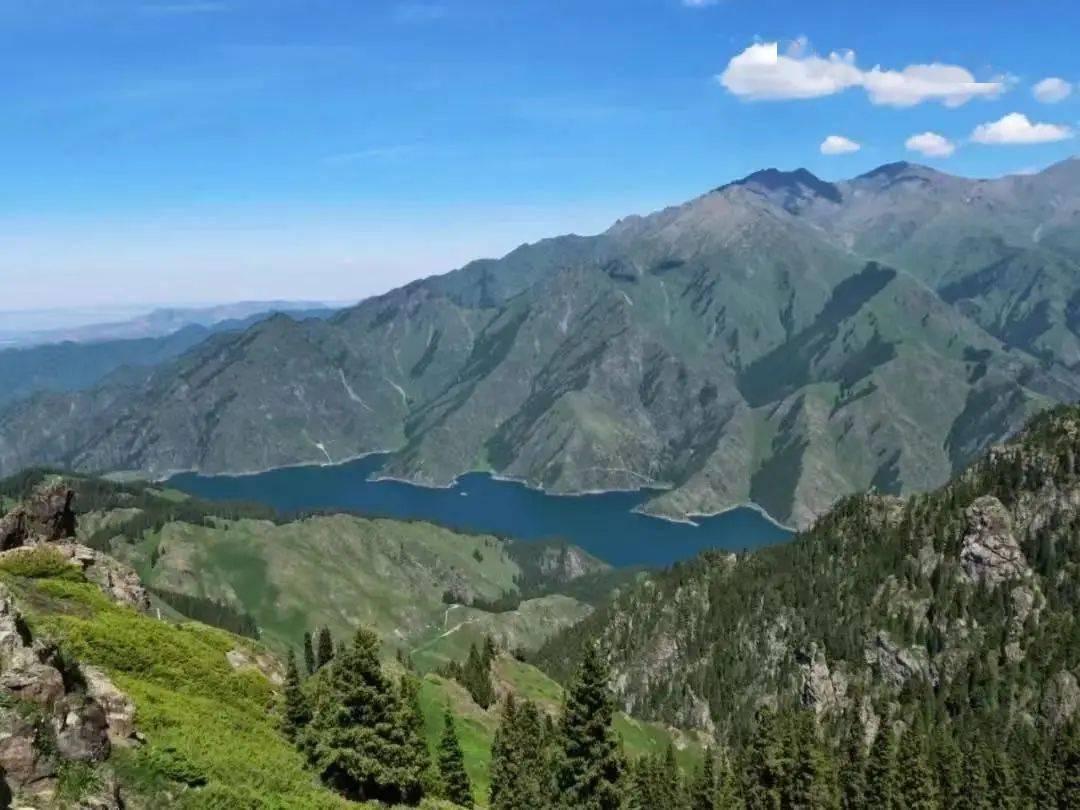
When I tell people the single thing that makes or breaks a Xinjiang trip, it is rarely the hotel or the food. It is the calendar. The Best Time to Visit Xinjiang Tips I share below come from eight seasons of running trips between Urumqi and Kashgar, and they would have saved me real money on my very first tour. In April 2017 I landed at Heavenly Lake during a snowstorm and ate a 380-yuan canceled boat ticket for lunch.
That trip taught me Xinjiang is not one climate. It is a province-level region about the size of Western Europe, and the right week in Turpan can be the wrong week in Kanas. These notes are the timing rules I now give every client, with the actual prices and dates I have paid along the way.
Quick Reference
| Item | Detail |
|---|---|
| Location | Xinjiang Uyghur Autonomous Region, northwest China (bordering 8 countries) |
| Best Time | May to October; peak color is mid-September to mid-October in the north |
| Typical Fee | Park tickets 30-215 yuan; Duku Highway free; Tashkurgan border permit free |
| Region Role | China’s largest province-level region, spanning 4 climate zones and 1,600 km east-west |
The Trip That Taught Me to Watch the Calendar
My friend David and I drove toward the Duku Highway in late May 2018. We reached the northern gate at 9:40 a.m. and found a chain across the road, with a ranger named Ablet shaking his head. “Opens June 5,” he said. We had already paid 420 yuan for a guesthouse in Bayinbuluke that night, non-refundable, so we lost it and spent six hours backtracking through Korla on empty highways.
The next year I called the road hotline the morning before we left. It was open. That single phone call saved the whole loop. Since then I have treated timing as the first thing to plan, not the last.
Another lesson came at the Tarim Poplar Forest near Luntai in October 2019. I arrived on the 22nd, three days after the rangers told me by phone the gold had already peaked. The trees were brown. We paid 45 yuan each to walk a boardwalk past leaves that should have been glowing, and a local photographer laughed and said, “You are one week late, my friend.” I now aim for the second week of October and confirm by calling ahead.
How to Get There
Most travelers reach Xinjiang through Urumqi Diwopu International Airport (URC). A direct flight from Beijing takes about 4 hours 20 minutes; from Shanghai it is closer to 5 hours; from Xi’an roughly 3 hours 30 minutes. I usually tell first-timers to connect through Xi’an because the flight is short and the city makes a good warm-up stop before the long drive west.
Trains are slower but scenic. The high-speed line from Lanzhou to Urumqi runs about 11 hours, and from Xi’an about 13 hours. Sleeper berths cost between 400 and 700 yuan depending on class, and the carriages are comfortable enough to sleep through the Gobi. If you want the season breakdown by region before you book, my best time to visit Xinjiang guide maps each area month by month.
Once inside the region, the real distance is the issue. Urumqi to Kashgar is 1,470 km by road. Plan your arrival city around the loop you want, not the other way around.
Best Time to Visit
Spring (April to May). The south warms first. Turpan and the Tarim Basin hit the mid-20s by late April, while the north stays cold and many mountain passes stay closed. This is a good window for budget travelers who do not mind bare trees, but Heavenly Lake and Kanas can still be snowed in through mid-May.
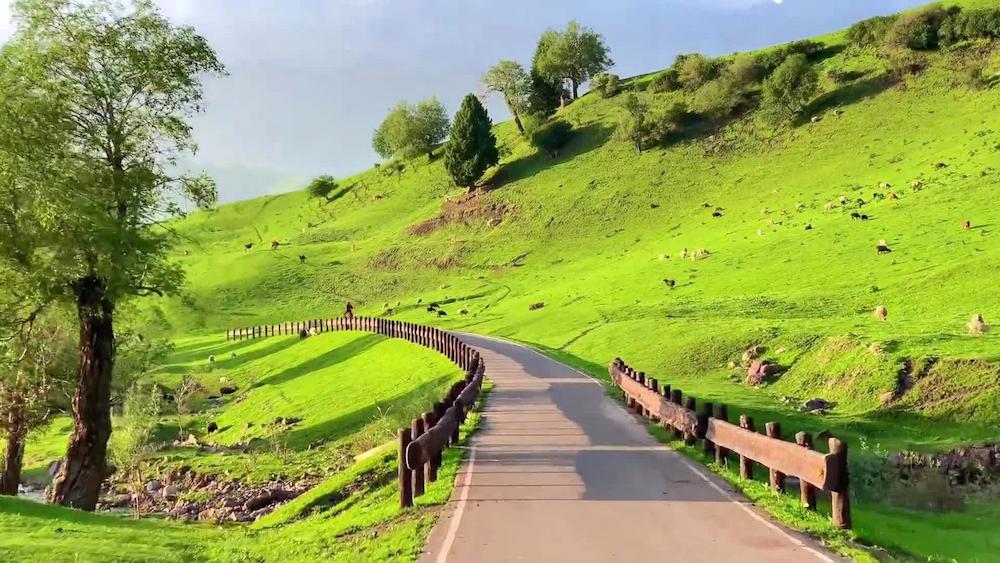
Summer (June to August). The whole region opens. Huocheng lavender blooms around June 15 and the fields run purple for about three weeks. Sayram Lake is at its bluest in July. The downside is heat: Turpan regularly tops 40 C in July, and domestic flights get expensive because every Chinese family is on the move. I book summer flights at least six weeks out.
Autumn (September to October). This is the window most travelers should target. Kanas and Hemu turn gold in late September. The Tarim poplars follow in early to mid-October. Daytime temperatures sit in the teens, the light is clean, and the summer crowds have gone home. The catch is the Duku Highway, which usually closes by early October once snow hits the 3,400 m passes.
Winter (November to March). The north goes quiet and cold, with Kanas often reachable only by a special shuttle. The south stays open and cheap. Silk Road Ski Resort near Urumqi runs from December to March, and I have skied there on a 199 yuan day pass. Winter is real value, but it is not for anyone who wants green pastures.
My recommendation. If you can take only one trip, aim for September 20 to October 10. You catch the north at its peak, beat the National Day crowds if you finish before October 1, and still have warm enough days for camping in the desert. The single line I repeat from all my Best Time to Visit Xinjiang Tips is this: go north before October, go south before the roads ice.
Where to Stay
Budget. In Urumqi a clean hostel or budget hotel near the Grand Bazaar runs 150 to 220 yuan a night. In smaller cities like Korla or Aksu, a decent business hotel is 180 yuan. I put solo travelers in the Soho-style places around Renmin Road; they are bare but safe and central.
Mid-range. A four-star like the Urumqi Hilton or a solid local chain costs 400 to 550 yuan. In Kashgar the old-city guesthouses are the better story: 200 to 350 yuan gets you a courtyard room with carved wood and a rooftop view of the mosque. I steer couples here over the big towers every time.
Upper. The Marco Polo in Urumqi and similar runs 900 to 1,400 yuan, with heated floors and a proper breakfast buffet that includes fresh naan and melon. For a Xinjiang itinerary built around comfort, this tier removes most of the stress of long drive days.
Food
Xinjiang food is the easiest part to get right. A plate of big-plate chicken (dapanji) for two costs about 68 yuan and comes with hand-cut noodles underneath. Laghman (pulled noodles with meat and peppers) is 30 to 35 yuan. Mutton skewers run 3 to 5 yuan each at a night market, and you will lose count after the fourth. A round naan from a street oven is 4 to 6 yuan and keeps for three days in a daypack.
In Kashgar the Sunday livestock market has stalls selling samsa (baked meat pies) for 8 yuan and fresh pomegranate juice for 10. In Turpan, a plate of raisins or a bowl of cold noodles with vinegar is the move when the thermometer passes 38 C. I tell every group to budget 80 to 120 yuan per person per day for food if they eat local, double that if they want hotel restaurants.
Best Time to Visit Xinjiang Tips You Should Know
Those Best Time to Visit Xinjiang Tips are the rules I repeat on every pre-trip call. They are short, but each one has cost me something at least once.
- Call the Duku Highway hotline the morning before you drive. The opening date slides with snow, and the chain across the gate does not care about your hotel booking.
- Book Kanas for the last week of September, not October. By October 10 the north is gray and the shuttles thin out.
- Catch Huocheng lavender around June 15. Miss it by a week and the fields are already cut.
- Avoid the National Day week of October 1 to 7. Roads, hotels, and park tickets across the region triple in price and jam with domestic tour buses.
- Winter keeps the south open. Tashkurgan and Kashgar are fine in January; the northern passes are not.
- Sort your border permit in Kashgar two days before you head to Tashkurgan. The free Alien Travel Permit takes half a morning at the public security office.
- Lock in July and August flights early. I have watched a Beijing Urumqi seat jump from 1,100 to 2,400 yuan in three weeks.
- Pack for two seasons on any loop. A September day in Turpan can be 30 C and a Kanas night 2 C. Layers beat luggage.
Sample Itinerary
This is the 7-day loop I run most often in late September, timed so the color and the road both cooperate:
Day 1. Fly into Urumqi (arrive 3 p.m.), pick up the car, dinner at the bazaar. Overnight Urumqi.
Day 2. Drive the Duku Highway south (open after June 5), stop at the Tianshan Grand Canyon, reach Bayinbuluke by evening. Overnight guesthouse.
Day 3. Morning at Swan Lake, then on to Korla. Overnight Korla.
Day 4. Drive to Luntai and the Tarim Poplar Forest if it is early October; otherwise push to Aksu. Overnight Aksu.
Day 5. Long drive to Kashgar via the desert highway. Overnight Kashgar old city.
Day 6. Kashgar old city and the Sunday market, then the Xinjiang Self-Driving Guide route out to Karakul Lake if permits are sorted. Overnight Kashgar.
Day 7. Fly out of Kashgar or back to Urumqi. Build in a buffer day for weather.
The Best Time to Visit Xinjiang Tips in this guide are written for first-timers, but even on my tenth loop I still make the Duku call the morning before. Timing is the one thing you cannot fix once you are already standing at the chain.
FAQ
What is the absolute best single month to visit?
Late September. Kanas is gold, the poplars are close behind, the heat is gone, and the National Day crowds have not arrived yet.
Is Xinjiang safe to visit year-round?
Yes. The region is heavily policed and calm for travelers. The only real “closed” risk is mountain roads in deep winter, not personal safety.
Do I need a special permit?
Only for border areas like Tashkurgan and Khunjerab. The Alien Travel Permit is free and issued in Kashgar. See the Xinjiang Visa and Permit Guide for the current list and office hours.
Can I see snow and flowers on the same trip?
In spring, yes. Early May can show snow on the Tianshan while the Tarim Basin is already flowering. It is a narrow window but real.
How many days do I need at minimum?
Seven days for one loop, as above. Anything under five days only works if you stay in one city and take day trips.
Does the Duku Highway close at night?
It can. Trucks are banned during the day in peak season and the gate hours shift. I never plan a Duku crossing after 4 p.m.
Disclaimer
Prices, park fees, flight costs, and road opening dates in this article reflect what I personally paid or confirmed between 2017 and 2025. They change. Permit rules, ticket prices, and the Duku Highway schedule are set by local authorities and can shift with weather or policy without notice. Always confirm current details with the official Xinjiang tourism boards, the park offices, or your embassy’s travel advisories before you book. Nothing here is a guarantee of cost or access.