
Published: 2026-07-27 | Author: Karl Huang
When friends ask me the best shoulder month to explore China’s northwest, I point to Xinjiang in April. I landed at Urumqi Diwopu International Airport on a Tuesday at 06:40, paid 1,880 yuan for a round-trip ticket from Shanghai, and watched the snow line climb the Tianshan within ten days. April is the month the region wakes up. The wild apricot valleys of Yili turn pink, the Turpan basin warms to shirt-sleeve weather, and the summer tour buses have not shown up yet. For a traveler who dislikes crowds and likes fair prices, this window is hard to beat.
Quick Reference
| Destination | Location | Entry fee | Best April window | Elevation / role |
|---|---|---|---|---|
| Urumqi | Northern hub | Free old town; museum 30 yuan | All April | 800 m, gateway city |
| Yili apricot valleys | Western Xinjiang | 30 to 60 yuan | Apr 10 to 22 | 700 to 1,100 m, bloom core |
| Turpan | Eastern basin | Grape Valley 75 yuan | Apr 5 to 30 | -154 m, warmest district |
| Kashgar Old City | Southern edge | 30 yuan | Apr 10 to 28 | 1,289 m, living culture |
| Sayram Lake | Bortala Prefecture | 70 yuan plus shuttle | Apr 20 to 30 (thaw) | 2,073 m, alpine lake |
My April Trip, Day by Day
I planned this route as part of my broader Xinjiang travel guide work, and April suited it perfectly because hotels were still charging winter rates. In Urumqi I paid 260 yuan a night for a clean business hotel two blocks from the International Grand Bazaar. On April 3 I took the 09:15 high-speed train to Turpan, a 58-minute ride that cost 51 yuan, and walked the Jiaohe Ruins at 11:00 when the wind had not yet picked up. The site was nearly empty, and I had the clay walls to myself for an hour.
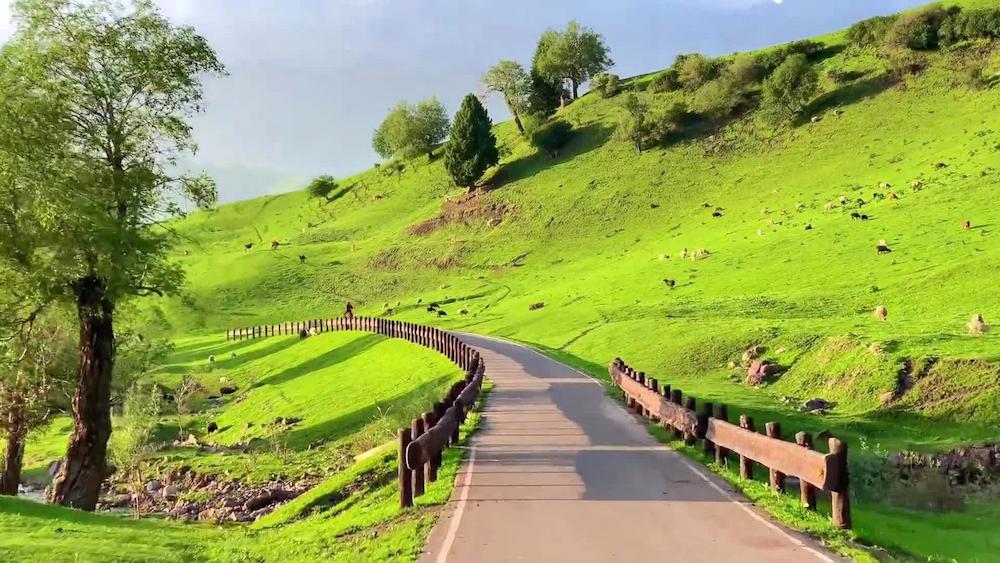
The moment that sold me on the month was in Yili. I rented a car in Yining for 320 yuan a day and drove the 160 km to the apricot valleys outside Tokkuztara on April 14. The orchards were at full pink, and a local family sold me freshly grilled lamb skewers for 5 yuan each outside the gate. The same scene in May would have meant tour groups and doubled prices. That quiet advantage is what keeps me coming back to Xinjiang in April instead of the busy summer.
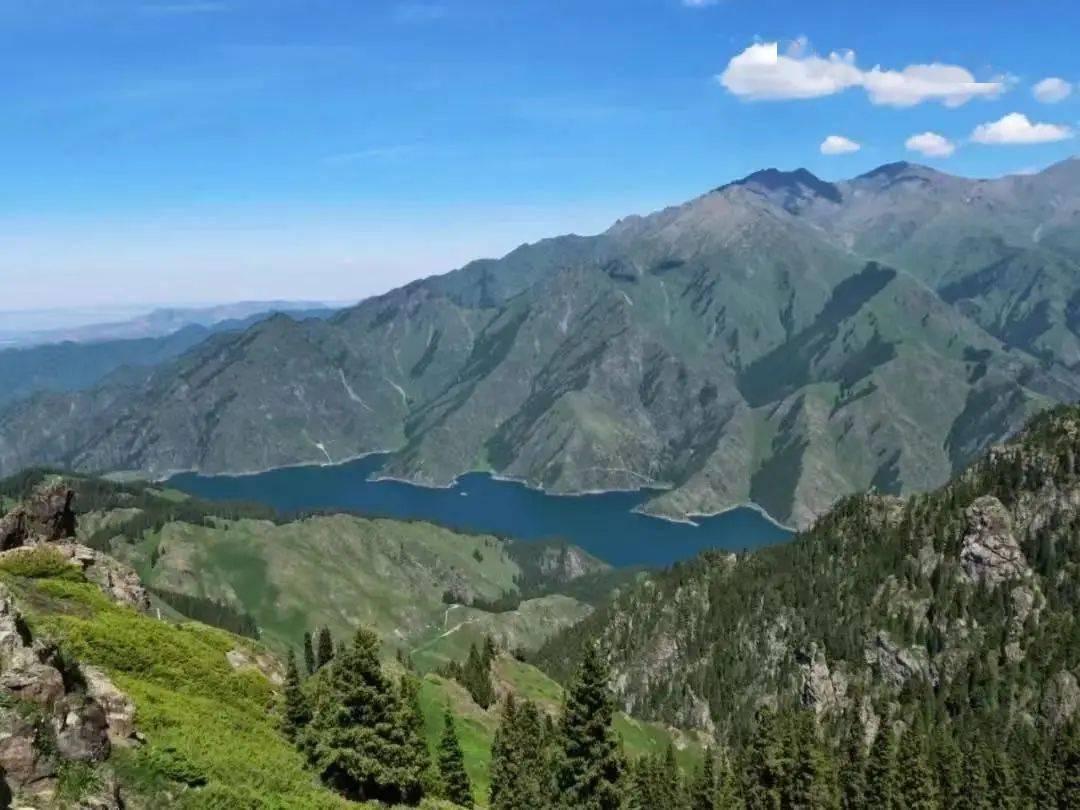
One honest caveat from the same trip: I hit a snow squall on the road to Sayram Lake on April 22. The lake was still half frozen, the shuttle ran on a reduced schedule, and I needed the wool hat I had almost left behind. April rewards flexibility more than it rewards a rigid plan. If you expect every pass to be open and every lake to be blue, you will be frustrated. If you expect change, you will have a great trip.
How to Get There
Most travelers fly into Urumqi first. Direct flights run from Beijing, Shanghai, Guangzhou, and Chengdu, with spring fares between 1,400 and 2,200 yuan round trip if you book three weeks out. From Urumqi, the rail network reaches Turpan, Kashgar, and Yining, and the road system connects everything else. The high-speed line to Turpan is the easiest win: fast, cheap, and comfortable.
If you want to cover long distances on your own schedule, read the Xinjiang Self-Driving Guide before you rent. I used a local agency in Urumqi that delivered the car to the airport and handled the paperwork for 340 yuan a day including full insurance. Note that the Duku Highway stays closed in April, so a north to south crossing through the Tianshan is not possible yet. You will route around via the G30 or fly the Urumqi to Kashgar leg, which I did for 980 yuan one way.
Best Time to Visit
April sits in the spring shoulder, and the conditions change week by week. Early April still feels like winter in the north and at altitude: Urumqi nights dropped to -3°C during my stay, and Sayram Lake was frozen solid. Mid-April is the sweet spot in Yili, when the wild apricots bloom and daytime temperatures reach 15 to 18°C. Late April warms the south, and Kashgar becomes pleasant for walking the old city all day without a jacket.
For a broader view of the year, the best time to visit Xinjiang guide breaks down every month with its own trade-offs. My straight recommendation: if apricot blossoms are your goal, target April 10 to 20 and base yourself in Yining. If you prefer dry warmth and open roads with fewer crowds, the last ten days of April in Turpan and Kashgar are hard to beat. The best time to visit Xinjiang in April is really the middle of the month, when bloom and mild weather overlap before the wind picks up.
Xinjiang in April Versus Other Months
People often ask why I do not just wait for summer. The answer is practical. June through August brings blue skies and open highways, but also the highest prices, the longest queues, and the thickest crowds at every famous viewpoint. October is gorgeous in Kanas but cold and far busier than April. Winter is cheapest and quietest, yet many passes and lakes are fully closed. Xinjiang in April gives you about 70 percent of the scenery at roughly half the cost, with the one trade-off being that some high roads are not open. For a first independent trip, that is a fair deal.
Where to Stay
Budget. In Urumqi and Yining I found hostels and guesthouses from 120 to 180 yuan a night. They were basic but warm, with reliable heating and decent Wi-Fi. In smaller towns like Toksun or Korla, local inns ran 100 to 150 yuan and included a generous breakfast of tea and flatbread.
Mid-range. Business hotels in the city centers cost 220 to 380 yuan. I stayed at a place near the Urumqi bazaar for 260 yuan and walked to dinner every night. In Kashgar, the rebuilt old-city guesthouses start around 300 yuan and put you inside the maze of lanes, which is the experience most travelers actually want.
Upper. International chains and resort properties in Urumqi run 600 to 1,100 yuan. Near Sayram Lake, the lakeside yurts and cabins open in late April at 500 to 800 yuan, but book ahead because inventory is thin in the shoulder season and the wind off the lake is sharp even then.
Food
Xinjiang food in April is hearty and cheap. In Urumqi I ate hand-pulled laghman noodles for 18 yuan, a plate of spicy chicken with belt noodles (da pan ji) for 68 yuan shared between two, and fresh nang bread from a corner oven for 3 yuan each. The morning market near the bazaar sold warm milk tea for 6 yuan and fresh walnuts still in the shell.
In Turpan, the seedless grapes were not in season yet, but the dried fruit and the raisin stalls were excellent, with a kilo of apricots at 25 yuan. Kashgar’s night market gave me mutton kebabs at 5 yuan a stick and a full pilaf (zhua fan) for 22 yuan. A sit-down Uyghur meal for two with bread, salad, and tea landed around 120 yuan. My Xinjiang food tour guide covers regional dishes in more depth if you want to plan meals by city rather than by chance.
Practical Tips
- Pack for two seasons. April swings from winter mornings to spring afternoons. Bring a down jacket, a mid layer, and a light shirt. I wore all three in one day near Sayram Lake, and I was glad for each.
- Book lodging ahead only in Yining and Urumqi. Elsewhere you can walk in, but the shoulder season has limited open inventory, and the lakeside cabins sell out on weekends.
- Carry cash for small stalls. Village markets and roadside skewer stands often take only paper money or local payment apps that foreign cards cannot use.
- Check road status daily. Spring snow can close mountain passes without notice. The local traffic broadcasts and your rental agency are the fastest sources of truth.
- Start drives early. Daylight in April runs from about 07:30 to 20:30, and the best light on the apricot valleys is before 10:00, before the tour vans arrive.
- Respect mosque and village customs. Dress modestly in conservative areas and ask before photographing people, especially at markets and festivals.
Sample Itinerary
This 9-day Xinjiang in April loop worked well in mid-April and kept me ahead of the crowds:
Day 1 to 2, Urumqi. Arrive, see the Xinjiang Regional Museum (30 yuan), walk the International Grand Bazaar in the evening and eat at the food street behind it.
Day 3, Turpan. High-speed train at 09:15, Jiaohe Ruins and Grape Valley, overnight in Turpan where the night air is already mild.
Day 4 to 5, Yining. Fly or train west, pick up a rental car, drive to the apricot valleys on Day 5 at first light for the best photographs.
Day 6, Sayram Lake. Drive north, take the shuttle, accept that it may still be frozen, and photograph the ice edge against the snow peaks.
Day 7 to 8, Kashgar. Fly south, wander the old city, visit the Sunday livestock market if your dates line up, and eat your way through the night market.
Day 9, depart. Fly out from Kashgar or return to Urumqi for your international connection.
FAQ
Is Xinjiang in April too cold for travel?
Not for most of the region. Daytime highs reach 15 to 18°C in the basins and Yili, though nights stay near freezing up north and at altitude. Pack a warm layer and you will be comfortable.
Can I drive the Duku Highway in April?
No. The highway opens around June after the snow clears. In April you reach the same regions by longer routes or by flying the Urumqi to Kashgar leg, which is what most travelers do.
Will the apricot blossoms be out?
In Yili the wild apricots typically peak between April 10 and 22, but the exact dates shift with that year’s snowmelt. Build a flexible buffer of two or three days around your guess.
Do I need a permit in April?
Standard tourist areas do not require a special permit, but border zones near the Pamirs do. Check the Xinjiang visa and permit guide and apply through your hotel or local PSB before heading south toward Tashkurgan.
How crowded is it?
April is quiet. I rarely waited in line, and several sites were nearly empty. The trade-off is that some seasonal restaurants and the lakeside cabins were not yet open, so plan meals with a little slack.
Disclaimer
Prices, train times, opening dates, and permit rules change. The figures above reflect my own April trips and were correct at the time of writing, but exchange rates, fuel costs, and park fees move. Always confirm current details with official sources, your hotel, or the local tourism office before you travel. This article shares personal experience and is not a substitute for official guidance.