

Published: 2026-07-22 | Author: Karl Huang
I built my first Xinjiang Transportation Guide Itinerary in the spring of 2022, flying into Urumqi Diwopu International Airport on a China Southern flight from Beijing that cost me 1,680 yuan and took exactly four hours and ten minutes. What I learned on that trip still shapes how I move around the region today. Xinjiang covers about 1.66 million square kilometers, so the difference between a good transport plan and a bad one is the difference between a dream trip and a week stuck in a station.
This Xinjiang Transportation Guide Itinerary is the practical backbone I give to every traveler I work with. It is not a list of pretty places. It is the order in which you should use planes, trains, and mountain highways so the distances work in your favor instead of against you. Below I walk through how I actually get around, what it costs, and where the road closures will bite you if you are not paying attention.
Quick Reference
| Item | Detail |
|---|---|
| Region covered | Whole of Xinjiang Uygur Autonomous Region (north, south, and Ili) |
| Main gateway | Urumqi Diwopu International Airport (URC) |
| Typical flight cost | Beijing to Urumqi 1,400-2,200 CNY one way; Kashgar to Urumqi 600-1,100 CNY |
| Best travel window | Mid-May to early October (Duku Highway open June 1 to early October) |
| Role in your trip | The transport spine that connects every city, desert, and mountain stop |
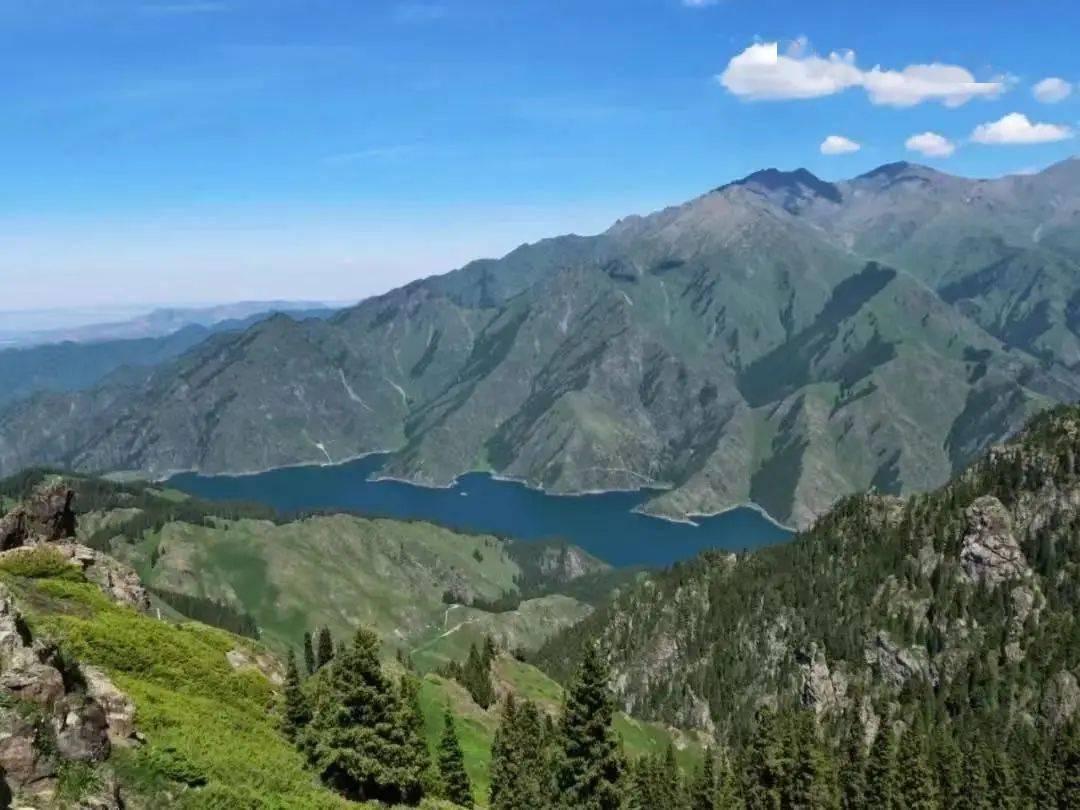
On that first trip I made a rookie mistake. I tried to see Kashgar, Turpan, and Kanas in nine days using only buses. I spent eleven hours on a coach from Kuqa to Aksu and arrived too tired to enjoy anything. The fix was obvious once I accepted the scale of the place: fly the long legs, train the medium legs, and drive only where the roads are the attraction.
The Xinjiang Transportation Guide Guide I published alongside this one goes deeper on individual route grades, but the itinerary version here is what you can actually follow day by day.
How to Get There
Most international and domestic travelers enter through Urumqi. From Beijing, Shanghai, Guangzhou, Chengdu, Xi’an, and Shenzhen there are daily direct flights to Urumqi, usually two to four per day depending on the season. A Beijing to Urumqi economy seat runs 1,400 to 2,200 yuan and the flight is about four hours. Shanghai and Guangzhou add another hour.
If you would rather ride the rails, the Lanzhou to Xinjiang high-speed line now reaches Urumqi. The high-speed train from Lanzhou to Urumqi takes around eleven to twelve hours, and from Xi’an you are looking at thirteen to fifteen hours depending on the service. Within Xinjiang the fastest hop is Urumqi to Turpan North, which is about one hour on a second-class ticket priced at 51 yuan.
For the Xinjiang Transportation Guide Xinjiang travelers ask me about most, the southern desert loop is the headline. The Taklimakan loop railway finished in June 2022 and now links Kashgar, Hotan, Ruoqiang, and Korla in a ring around the desert. I rode Kashgar to Hotan in about six hours for 165 yuan, which saved me a brutal 500-kilometer road transfer.
Best Time to Visit
Spring, from April to early May, is quiet and cheap, but mountain passes stay closed and some high pastures are still under snow. I once tried the northern loop in late April and lost two days to road ice near Fuyun.
Summer, June through August, is the peak. The Duku Highway opens around June 1 and stays open until early October. This is when the Xinjiang Transportation Guide guide becomes essential, because every domestic traveler is on the same roads and hotel prices in Burqin and Yining climb 40 to 60 percent. Days are long; the sun sets after 9 p.m. in July, which gives you extra driving light.
Autumn, September to early October, is my favorite. The poplar forests near Luntai turn gold, flights drop back to off-peak prices, and the Duku Highway is still open for the first weeks. By mid-October the high road closes.
Winter, November to March, is for budget fliers and skiers only. Flights to Urumqi can fall under 900 yuan from Beijing, but the Duku, Yizhao, and most mountain routes shut completely. Unless you are doing the Silk Road ski resorts, I suggest waiting.
My clear recommendation: plan the main Xinjiang Transportation Guide Itinerary for June through September, and treat October as a bonus window if you want golden poplars without the crowds.
Where to Stay
Urumqi is your hub, so book here on both ends of the trip. Budget travelers can find clean hostels and budget hotels near the railway station for 120 to 200 yuan a night. Mid-range international chains around the Hongshan area run 350 to 550 yuan and put you close to the metro. Upper-end options near the International Grand Bazaar go from 700 yuan upward, with better soundproofing and airport transfers.
In Kashgar, stay inside or next to the Old City if you can. Budget rooms start around 150 yuan, mid-range boutique guesthouses with a courtyard style are 300 to 450 yuan, and the top hotels near the Id Kah Mosque reach 800 yuan. Yining and Turpan both have solid mid-range choices in the 250 to 400 yuan band, which is where I base clients doing the Ili or Turpan legs.
Food
Eating on the move in Xinjiang is half the fun. At Urumqi’s bazaar and station food courts, a plate of da pan ji (big plate chicken) runs 48 to 68 yuan and easily feeds two. Laghman noodles are 18 to 28 yuan, and a bowl of plov (zhua fan) is 25 to 35 yuan. Grab samsa (baked meat buns) for 4 to 6 yuan each at any corner oven, and mutton skewers are 3 to 5 yuan a stick.
On long train rides, pack water and fruit from the station before boarding; the dining car is basic and pricey. In Kashgar the Sunday livestock market area has noodle stalls where a full bowl costs under 20 yuan. I budget about 80 to 120 yuan per day for food if I am eating local, and double that if I sit down at a proper restaurant each night.
Practical Tips
- Book train tickets on the 12306 app up to 15 days ahead. Summer sleepers sell out fast on the Urumqi to Kashgar route.
- Carry your passport everywhere. Foreign travelers must register with the local police within 24 hours of arrival, and hotels handle this at check-in if you show ID.
- Get your border permit in Kashgar before heading to Karakul Lake or Taxkorgan. The office opens at 10 a.m. and the permit is free, but you need a confirmed hotel booking in the border zone.
- Hire a car with driver for the scenic highways. A 7-seat SUV with driver costs 900 to 1,500 yuan per day plus fuel, and it removes the stress of navigating checkpoints.
- Download offline maps. Signal drops for long stretches on the Duku Highway and in the Taklimakan fringe, so do not trust live navigation alone.
- Build in buffer days. A single closed pass or weather delay can push a transfer back by a full day, and the distances are unforgiving.
Sample Itinerary: The Xinjiang Transportation Guide Itinerary Day by Day
This nine-day Xinjiang Transportation Guide Itinerary mixes all three transport modes so you cover the maximum without burning out.
- Day 1: Fly Beijing to Urumqi (4h, about 1,680 CNY). Settle in, register at the hotel.
- Day 2: High-speed train Urumqi to Turpan North (1h, 51 CNY). Visit the Gaochang ruins and the Karez system.
- Day 3: Drive Turpan to Kuqa via the southern Duku section with a hired car (about 6h). Sleep in Kuqa.
- Day 4: Train Kuqa to Aksu to Kashgar (roughly 7h total, about 180 CNY). Evening in the Old City.
- Day 5: Kashgar rest day. Get your border permit, walk the bazaar, eat samsa.
- Day 6: Drive Kashgar to Karakul Lake and back (permit required, about 5h round trip).
- Day 7: Fly Kashgar to Urumqi (2h, 600-1,100 CNY), connect to Yining same day (about 1h).
- Day 8: Drive the Ili loop around Yining and Nalati with a local driver.
- Day 9: Fly Yining to Urumqi, then onward to your home city.
The shape of this Xinjiang Transportation Guide Itinerary keeps the two longest legs in the air, the medium legs on rail, and the scenic bits in a car. That balance is what makes the region feel manageable rather than exhausting.
FAQ
Do I need a special permit to travel in Xinjiang?
Foreign visitors need to register with police within 24 hours, which your hotel does at check-in. Border zones like Taxkorgan and Karakul Lake require a free border permit from the Kashgar office. See the Xinjiang Visa and Permit Guide for the full list.
Is it better to drive or take trains?
Trains are cheaper and reliable for city-to-city medium hops. Drive only where the road is the highlight, such as the Duku Highway. For long desert crossings, the new loop railway beats the bus every time.
Can I rent a car and drive myself?
Foreign travelers usually hire a car with a local driver because of checkpoint navigation and permit logistics. Self-drive is possible for residents with the right license. The Xinjiang Self-Driving Guide covers the rules in detail.
How much should I budget for transport?
A nine-day loop like the one above costs roughly 4,500 to 7,000 yuan per person for flights, trains, and a shared hired car, not counting hotels. Booking more rail and fewer flights drops that figure toward the lower end.
What happens if the Duku Highway is closed?
You reroute through Korla and the desert highway, which adds time but keeps you moving. Always have a backup rail leg booked.
Is the high-speed train from the east worth it?
If you are already in Lanzhou or Xi’an, the train is a comfortable way in and saves a flight. From Beijing I still prefer the plane for the time saved. You can compare options in the Xinjiang by Train Travel Guide.
Disclaimer
Prices, schedules, permit rules, and road opening dates in this article reflect my trips through 2022 to 2025 and can change without notice. Flight fares swing with season, the Duku Highway closing date moves with snowfall, and border permit procedures shift with local policy. Always confirm current details with official sources such as the 12306 railway site, your airline, and the Kashgar public security bureau before you travel. This is a personal account, not guaranteed fact.