

Published: 2026-07-20 | Author: Karl Huang
When I first sketched out this Hoxud Travel Guide for Xinjiang Itinerary readers, I assumed the county would be a quick pass-through on the way to bigger names like Korla or Bayinbuluke. I was wrong in the best way. Hoxud sits at the southern foot of the Tianshan range, about 65 km north of Korla, and it guards the northern shore of Bosten Lake, the largest inland freshwater lake in China. I spent two nights there in early July, swam at Golden Beach, and ate more grilled fish than my waistline appreciated.
Hoxud Xinjiang (和硕县) belongs to Bayingolin Mongol Autonomous Prefecture. Most travelers have never heard of it, which is exactly why it works as a low-stress stop. The county seat is Tewulike Town, a small grid of wide streets where the only traffic jam I saw was a flock of sheep crossing at dusk. If you are building a broader Xinjiang cities loop, Hoxud slots in neatly between Korla and the northern grasslands.
Hoxud Travel Guide: Quick Reference
| Item | Detail |
|---|---|
| Location | Hoxud County, Bayingolin Prefecture; southern foot of Tianshan, about 65 km north of Korla |
| Entry fee (Golden Beach) | About ¥45 per person (verify on arrival; prices change) |
| Best time to visit | June to August for the lake; May and September to October for mild weather |
| Elevation | County seat around 1,100 m; lakeshore lower |
| Role on a route | Gateway between Korla and the Duku Highway / Bayinbuluke corridor |
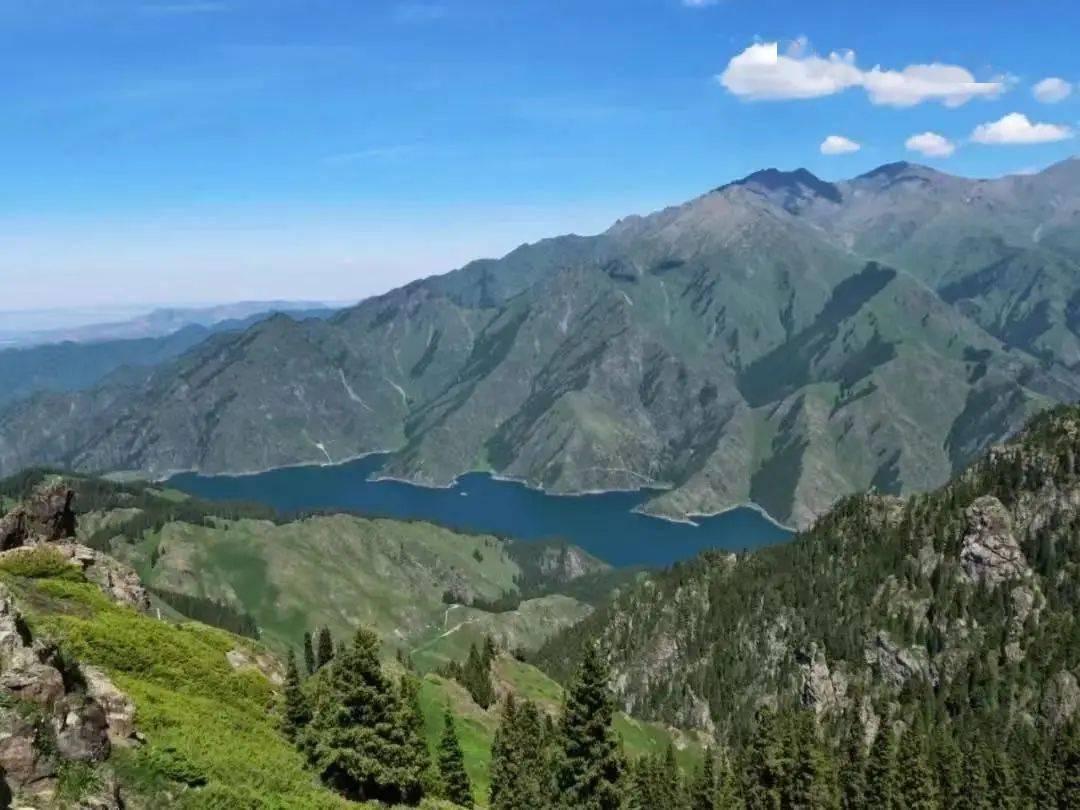
The first thing that struck me on arrival was the light. The lake throws a soft silver glare by midday, and the sand at Golden Beach is fine enough that my shoes filled up within minutes. I rented a pedal boat for ¥60 an hour and floated near the reed beds where egrets lifted off in low, slow lines. A local fisherman told me the lake holds more than 30 fish species, and the one everyone asks for is wudaobei, a striped perch that grills beautifully over charcoal.
I came back the next evening for the sunset and wished I had brought a tripod. The light turns the reeds gold and the far shore of the lake fades into haze. Tewulike Town itself is sleepy. By 21:00 most shops were shut and the only sound was the wind moving through the poplars planted along the main road. The county earns its living from cotton, tomatoes, and grapes rather than tourism, which keeps the pace honest and the prices fair.
How to Get There
Hoxud has no airport and no passenger rail station of its own. The practical hub is Korla, which has both an airport and a high-speed rail stop. From Korla’s city center I drove north on the G218 and reached Tewulike Town in about 70 minutes, covering roughly 65 km. The toll was ¥20 each way when I went. A taxi or hired car from Korla runs ¥150 to 200 one way; shared vans leave from Korla’s long-distance bus station for around ¥25 a seat, though they wait to fill up.
If you are coming from the north, Hoxud is the natural southern bookend after the Duku Highway. After descending from Bayinbuluke you pass through Hejing and then reach Hoxud within another hour. Urumqi is about 400 km away by road, a five-hour drive if you push it, but I prefer breaking the trip at Korla.
Within the county, distances are short. Tewulike Town to Golden Beach is about 50 km, most of it straight highway. Ride-hailing apps barely function here, so arrange a return car with your driver or rent a car in Korla.
Best Time to Visit
Summer is the obvious window. From June through August the lake water warms enough for swimming, and Golden Beach fills with Xinjiang families on weekend holidays. Daytime highs reach 30°C, which feels mild next to the desert heat further south. I visited in early July and the water was a comfortable 22°C by mid-afternoon.
Spring, from April to May, is quiet and green. The apricot orchards around the county bloom, and hotel prices dip. Autumn, September to October, is my favorite for driving. The cotton fields turn white, the sky stays clear, and the Peacock River corridor glows at sunset. Winter is harsh and cold, with the lake partly frozen, so I would skip December through February unless you have a specific reason.
My clear recommendation: go in late June or early September. You get warm lake days without the July to August crowd crush, and the roads are in good shape. Avoid the first week of October if you can. National Day week pushes every lakeside room to double price.
Where to Stay
Budget: Tewulike Town has a handful of guesthouses and small inns where a clean double room runs ¥120 to 180 a night. I stayed at one near the main crossroad; the heating worked, the shower was hot, and the owner lent me a bike. Mid-range: the county town’s better hotels, including a couple of chain-branded buildings, charge ¥260 to 350. Upper: the resort hotels right at Golden Beach run ¥500 to 900 in peak season, and you are steps from the sand. I tried one for one night and the sunrise over the water was worth the premium, but I moved back to town to save money.
Food
Lake fish is the headline. A whole grilled wudaobei at a lakeside stall cost me ¥48; in town the same fish in a soup ran ¥38. The Bosten Lake catch also shows up as cold-smoked fillets sold in vacuum packs at the roadside, about ¥30 a pack, which makes a good gift.
Beyond fish, Hoxud eats like the rest of southern Xinjiang. A plate of dapanji, big-plate chicken, is ¥45 to 55 and easily feeds two. Zhua fan, hand-grabbed rice with carrots and lamb, is ¥25 to 30. Ban mian, hand-pulled noodles with toppings, is the fastest lunch at ¥18 to 22. At the morning market I bought warm samsa, baked meat pies, for ¥4 each and a bowl of sour yogurt with melon for ¥10. Fruit is cheap in season: seedless grapes at ¥6 a kilo in August, watermelons at ¥1 a kilo.
Practical Tips
Here are the Hoxud travel tips I wish I had before going:
- Bring cash. The lakeside stalls and small inns often have flaky card readers, and one ATM in town went offline during my stay.
- Pack sun protection even on cool days. The lakeshore reflects light and I burned my shoulders in two hours.
- Book Golden Beach lodging ahead for weekends. The resort sells out by Friday afternoon in July and August.
- Carry water and a full fuel tank. The stretch between Korla and the lake has few services, and my phone lost signal twice.
- Respect the restricted zones. The Malan area in the county’s interior is a closed military zone. Do not attempt to enter or photograph it.
- Learn a few Uyghur and Mongolian phrases. A simple greeting opened more stalls to me than any map.
Sample Itinerary
Day 1, morning: Leave Korla by 9:00, arrive Tewulike Town by 10:10, grab samsa at the market.
Day 1, midday: Drive to Golden Beach (50 km), pay entry, rent a pedal boat, swim.
Day 1, evening: Grilled fish dinner on the sand, back to town hotel.
Day 2, morning: Walk the Peacock River greenway, buy smoked fish packs.
Day 2, afternoon: Drive north toward Hejing and the Duku corridor, or return to Korla.
FAQ
Is Hoxud worth visiting on its own? Most Hoxud Travel Guide readers treat it as a stopover, and I agree. For a full dedicated trip, probably not. As a one- or two-night stop between Korla and the grasslands, it is relaxed and cheap, and Golden Beach is a genuine surprise.
Can I swim in Bosten Lake? Yes, at the designated Golden Beach swimming area. There are lifeguards in peak season. Avoid open reed areas where the bottom drops fast.
Do I need a permit? No special permit for Hoxud County itself. Standard China entry rules apply. The nearby Malan zone is closed and off-limits regardless.
How many days do I need? One night is enough to see the lake and eat well. Two nights let you drive the river corridor and relax.
Is it family friendly? Very. The shallow beach shelf is safe for kids, and the pedal boats are a hit. Just watch the midday sun.
What should I skip? The town center has little to do after dark. Spend your energy at the lake, not the streets.
Disclaimer
Prices, entry fees, opening hours, and road conditions in this Hoxud Travel Guide are based on the author’s visit in July and can change without notice. Permits, fuel availability, and transport schedules should be confirmed with official sources before you travel. This article shares personal experience and is not a guarantee of current conditions.