

Published: 2026-07-21 | Author: Karl Huang
When I mapped out my 21-Day Xinjiang Itinerary Itinerary, I wanted more than a checklist of famous stops. I had already driven shorter loops through the region, but this length is the only one that lets you cover both the green north and the cultural south without feeling rushed. In June 2024 I boarded a morning flight to Urumqi Diwopu Airport, paid ¥85 for the airport shuttle into the city, and started the loop that I now hand to readers who ask for the real grand tour. The route below is built from that trip, with honest numbers and the mistakes I made so you don’t repeat them.
Most people who try to see Xinjiang in a week end up on a bus watching the highway. Twenty-one days changes the math. You can wake up in a Kazakh yurt one morning and eat laghman in a Kashgar alley ten days later. That spread is the whole point of the 21-Day Xinjiang Itinerary Itinerary: it is slow enough to actually meet the place.
Quick Reference
| Region | Role on the route | Typical fee | Best time to visit |
|---|---|---|---|
| North Xinjiang (Kanas, Yili) | Forests, grasslands, alpine lakes | ¥900–1,200 per person | June–September |
| South Xinjiang (Kashgar, Pamir) | Old towns, deserts, high mountains | ¥600–900 per person | May–October |
| Turpan & Hami belt | Desert history and heat | ¥300–500 per person | April–May, September–October |
What the 21-Day Xinjiang Itinerary Itinerary Actually Covers
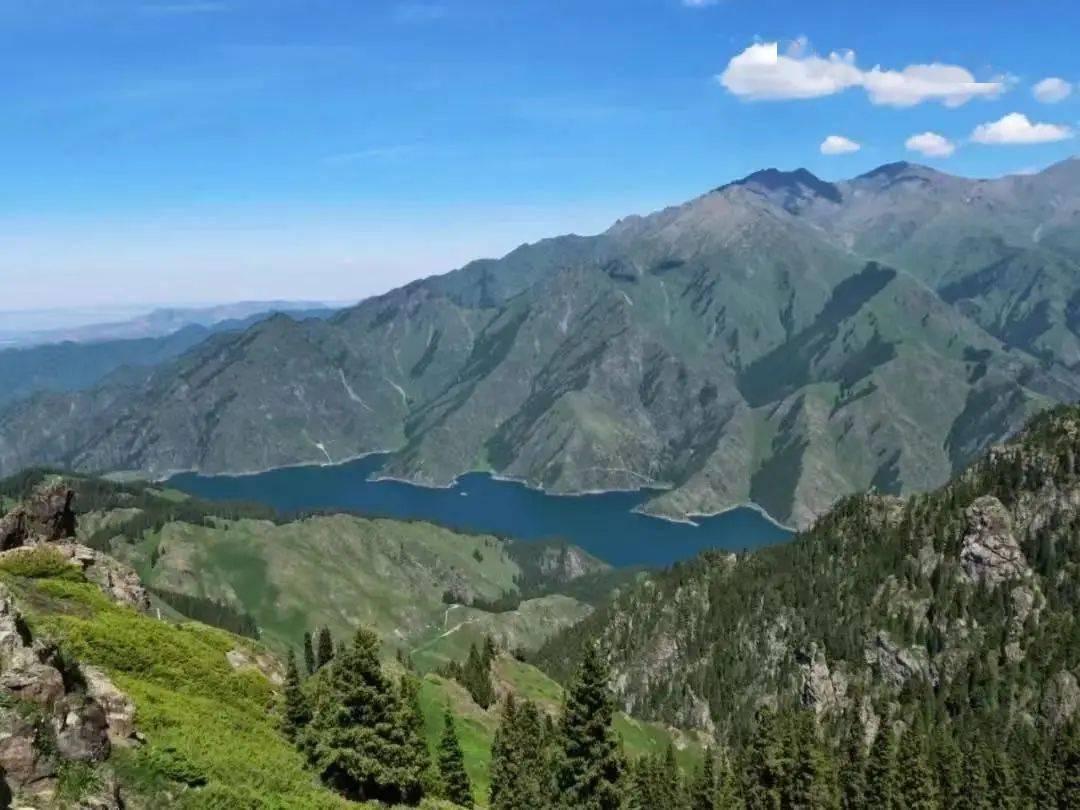
My loop ran 4,520 kilometers by car and touched nine prefectures. I started in Urumqi, looped north through Tianchi and the Kanas region, dropped south into Yili’s grasslands, crossed the Duku Highway to Kuqa, then flew the long leg to Kashgar for the Pamir and Hotan stretch before riding the railway back to the capital. The single biggest cost was time, not money. On the 21-Day Xinjiang Itinerary Xinjiang finally shows its true scale: distances that look small on a map take a full day of driving.
I learned that the hard way on day four. I had budgeted three hours to reach Kanas from Burqin and it took six because the fog slowed the mountain road to 30 km/h. Build buffer days. The plan below has two of them on purpose.
How to Get There
Most travelers fly into Urumqi Diwopu International Airport (IATA: URC). A direct flight from Beijing costs around ¥1,600 in shoulder season; from Shanghai it runs ¥1,900–2,400. From the airport, the shuttle to the city center is ¥85 and takes about 40 minutes. If you prefer rail, the high-speed line from Lanzhou reaches Urumqi in roughly 11 hours.
For the south Xinjiang leg, I took a domestic flight from Urumqi to Kashgar (¥780, 2 hours) instead of driving the 1,470 km. The train is cheaper at ¥320 but takes 24 hours, and after two weeks on the road I wanted the rest. You can also use the Xinjiang Self-Driving Guide to plan a car rental. I rented a Toyota Land Cruiser in Urumqi for ¥480 per day plus ¥1.2 per km, which worked well on the Pamir dirt roads.
Best Time to Visit
Xinjiang has four clear seasons and they matter more here than almost anywhere else in China.
Spring (April–May). The south warms first. Turpan’s grapes are not ripe but the ruins are comfortable, and Kashgar’s apricot trees bloom. North is still cold and some mountain passes are closed.
Summer (June–August). This is peak season for the north. Kanas and Hemu turn green, Yili’s grasslands are at their best, and the Duku Highway opens (usually June 1). Expect crowds and higher hotel rates. Daytime in Turpan can hit 42°C.
Autumn (September–early October). My favorite window. The Populus euphratica forests near Luntai go gold, the summer crowds thin out, and the Pamir is clear and dry. This is the time I recommend for the 21-Day Xinjiang Itinerary Itinerary if you can only pick one.
Winter (November–March). Many passes close with snow. The north is quiet and cheap, and the Hemu ice festival draws photographers, but a full 21-day loop is not practical because several attractions shut.
My recommendation: leave in early September. You catch the golden forests, miss the worst summer crowds, and the whole Duku Highway stays open through the trip.
Where to Stay
Budget. Hostels and guesthouses run ¥90–150 per night. In Kashgar I stayed at the Old Town Youth Hostel for ¥110 and met three other solo travelers heading to the same Pamir guesthouse. In Burqin, a basic hotel near the river was ¥130.
Mid-range. Comfortable business hotels cost ¥260–420. The Wyndham in Urumqi was ¥380 and gave me a good night before the long drive north. In Yili I found a clean four-star for ¥300 in July.
Upper. Resorts near Kanas and Hemu charge ¥700–1,400 in peak season because supply is limited and the view is the product. I splurged on one night in a Hemu wooden cabin at ¥980 and watched the sunrise from the platform. Worth it once.
For cost control, read the Xinjiang Budget Travel Guide before you book. Booking the north stays two months ahead saved me about ¥600 across the trip.
Food
Xinjiang food is the part people underestimate. Here is what I ate and what it cost in 2024.
Big plate chicken (dapanji). ¥68–98 for a plate that feeds two, with hand-pulled belt noodles added for ¥10. I had it in Shawan, the town that claims to have invented it.
Laghman (hand-pulled noodles). ¥25–35 a bowl, eaten at a corner shop in Kashgar at 9 p.m. after the Pamir drive.
Uyghur pilaf (polu). ¥30–45 with lamb and carrot, a lunch staple across the south.
Roast mutton (kawaplar). Sold by the skewer at ¥3–5 each. A full dinner of ten skewers, naan, and tea ran me about ¥60 in Hotan.
Fresh fruit. Xinjiang melons in summer are ¥2–4 per kilo. I carried a small knife and bought from roadside stalls, which is both cheap and a good way to talk to locals.
Practical Tips
- Carry your passport at all times. The Xinjiang Visa and Permit Guide explains the border passes needed for the Pamir and parts of the Karakoram. I was checked at three roadblocks south of Kashgar.
- Download offline maps. Signal disappears for hours on the Duku Highway and between Hotan and Aksu.
- Pack for two climates. I wore a t-shirt in Turpan at 40°C and a down jacket in Hemu at 4°C, both in September.
- Keep cash. Small desert towns and mountain villages often have no card reader. I carried ¥1,500 and never needed more than that in a day.
- Start driving by 8 a.m. Gas stations, toilets, and food get scarce after 6 p.m. outside the big cities.
- Build two buffer days into the plan. Roads close, weather turns, and you will want one extra night somewhere. The 21-Day Xinjiang Itinerary Itinerary below leaves day 11 and day 20 open for exactly this.
Sample Itinerary
This 21-Day Xinjiang Itinerary guide is the day-by-day backbone of the full loop. Treat it as a frame, not a contract.
Days 1–2, Urumqi. Arrive, rest, visit the Regional Museum (¥free, book ahead) and the International Grand Bazaar. Buy snacks and a SIM top-up.
Days 3–4, Tianchi and Burqin. Drive to Heavenly Lake (¥215 entry with cable car), then on to Burqin for the night.
Days 5–7, Kanas and Hemu. Three nights in the forest region. Hike the lake boardwalk, stay one night in Hemu village, watch the morning mist.
Days 8–10, Yili grasslands. Nalati and Karajun grasslands, plus a night in Yining for the night market.
Day 11, buffer. Use it in Yili if the weather is good, or push early toward the Duku.
Days 12–13, Duku Highway to Kuqa. One of the great mountain drives in Asia. Sleep in Kuqa, see the Kizil Caves.
Days 14–16, Kashgar. Fly from Urumqi. Walk the Old City, the livestock market on Sunday, and the Id Kah Mosque.
Days 17–18, Pamir Plateau. Karakul Lake, White Sand Lake, and the Karakoram Highway toward Tashkurgan. Overnight in a Pamir guesthouse.
Days 19–20, Hotan and buffer. Jade market, old town, then a flexible day for the long rail or road return.
Day 21, back to Urumqi. Train or flight north, final meal, depart.
If 21 days feels like too much, the 14-Day Xinjiang Itinerary Guide trims the south and keeps the best of the north. I wrote that one for travelers who only have two weeks of leave.
FAQ
Is 21 days enough for all of Xinjiang? No, and that is fine. The region is larger than many countries. This 21-Day Xinjiang Itinerary Itinerary covers the highlights of both halves but skips the far west (Khorgos) and the eastern Hami desert loop. You could spend a month and still find more.
Can I do this by public transport? Partly. Trains and buses connect the big cities, but the Kanas Hanas forest road, the Duku Highway, and the Pamir are far easier with a car or a joined tour. I drove, which gave the most freedom.
How much does the full loop cost? Not counting international flights, I spent about ¥9,500: ¥3,200 on transport (car, fuel, one flight, one train), ¥2,800 on lodging, ¥1,800 on tickets and permits, and ¥1,700 on food and small buys. A tighter budget can land near ¥7,000.
Do I need a guide for the south? For Kashgar and the Pamir, a local guide is optional but helpful at the border pass office and the Sunday market. In the north, you can self-drive without one.
When should I book? Hotels in Kanas, Hemu, and Yili sell out in July and August. Book those three at least eight weeks ahead. The rest can be booked a week before.
Is it safe for foreign visitors? The tourist areas are calm and well policed. Follow the permit rules, carry ID, and you will be fine. The main risk is weather and long drives, not personal safety.
Disclaimer
Prices, permits, park opening dates, and road conditions change. The numbers above are from a single 2024 trip and are shared as a planning reference, not a guarantee. Always verify entry fees, border-pass requirements, and the Duku Highway opening schedule with official sources and your accommodation before you travel. The author is not liable for changes in cost or access.