
When travelers ask me whether to choose Xinjiang vs Tibet, I give the same honest answer I’ve given after eight seasons on the road: they are the two great frontier regions of western China, but they feel like different planets. Xinjiang is about space, Silk Road history, and a mix of deserts, grasslands, and snow peaks you can reach by your own car. Tibet is about altitude, faith, and the silent weight of the world’s highest plateau. This guide lays out the real differences — geography, altitude, culture, access, seasons, and cost — so you can pick the right one, or decide to combine both.
Geography: a desert-crossed northwest versus a single high plateau
Xinjiang sits in China’s far northwest and is the country’s largest provincial-level region, covering about 1.66 million square kilometers. Its terrain splits around the Tianshan range: the north holds the Ili grasslands and the Altai mountains, while the south opens into the Tarim Basin and the Taklamakan Desert, the world’s second-largest shifting-sand desert. To the west, the Pamir Plateau pushes toward Tajikistan, Afghanistan, and Pakistan. It is a landscape of contrast — one day you are on a green alpine lake, the next on a highway through dunes.
Tibet, by contrast, is built on a single idea: the Tibetan Plateau, which averages over 4,500 meters above sea level. The Himalaya form its southern wall, and the land is dominated by wide grasslands, glacier-fed rivers, and monastery towns rather than oasis cities and bazaars. Where Xinjiang rewards movement and road trips, Tibet rewards stillness and acclimatization.
One practical note on the Silk Road thread that ties the two together: Xinjiang holds the living oasis cities — Kashgar, Turpan, Hotan — that were the real engine of east–west trade, while Tibet’s role was the plateau salt-and-wool routes and the great pilgrimage circles. If the Silk Road is your hook, Xinjiang is where it is still visible on the ground, and our Xinjiang cities guides walk you through the ones worth the detour.
For travelers mapping a wider Xinjiang attractions route, the variety within one region is the main draw — you rarely repeat a landscape twice in a single week.
Altitude: the single biggest difference
This is where the comparison stops being theoretical and becomes physical. Most of Xinjiang sits between 500 and 1,500 meters — Urumqi is around 800 meters, Kashgar about 1,300 meters, Turpan actually sits 150 meters below sea level. Only the Pamir in the far southwest climbs seriously, with Tashkurgan at about 3,100 meters and the Khunjerab Pass reaching 4,693 meters. For the vast majority of a Xinjiang trip, altitude sickness is not a concern.
Tibet is the opposite. Lhasa sits at 3,650 meters. Shigatse, the route to Everest Base Camp, climbs past 4,000 meters, and Everest Base Camp (Tibet side) is roughly 5,200 meters. Namco Lake is about 4,700 meters. Acute mountain sickness is a real risk, and most travelers need two to three days of rest in Lhasa before moving higher. I’ve seen fit clients struggle in Tibet who had zero trouble driving the Duku Highway at 3,000 meters.
| Factor | Xinjiang | Tibet |
|---|---|---|
| Typical elevation | 500–1,500 m (Pamir 3,000 m+) | 3,650 m+ (much over 4,500 m) |
| Altitude sickness risk | Low, except Pamir | High, near-constant |
| Acclimatization needed | Rarely | 2–3 days minimum |
| Best physical prep | None special | Build fitness, hydrate, go slow |
Culture: Silk Road bazaars versus mountain monasteries
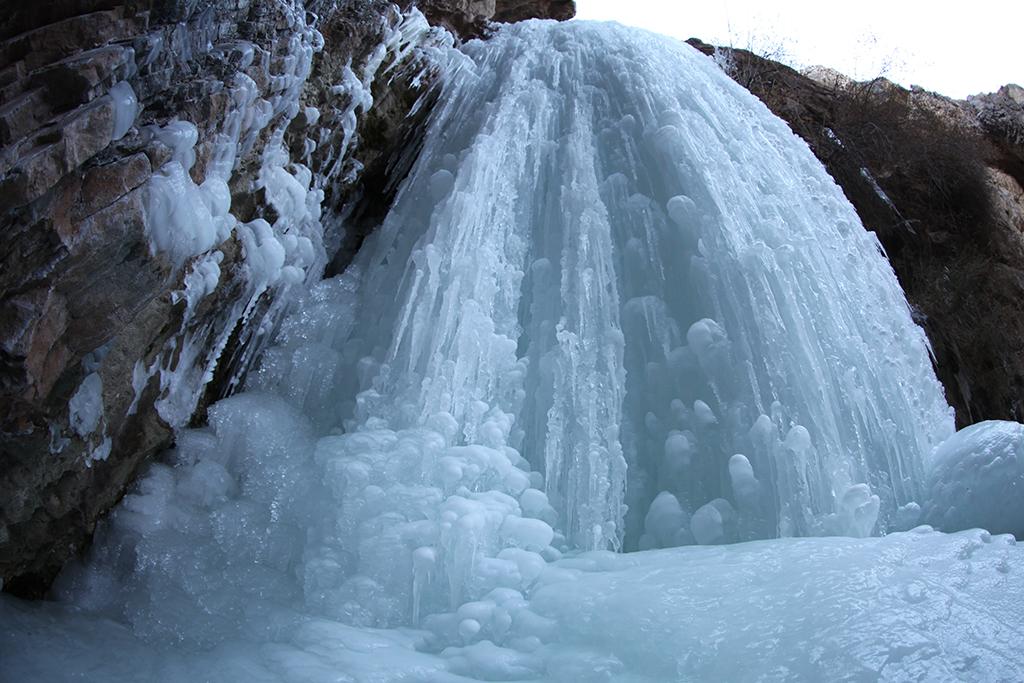
Xinjiang’s population is a layered mix of Uygur, Kazakh, Hui, Han, Kyrgyz, and Tajik peoples. The cultural texture is Central Asian and Islamic: you hear the call to prayer in Kashgar, eat at open-air kebab stalls, and bargain in languages that sound more like Istanbul or Almaty than Beijing. The Silk Road runs through it — ruins, caravanserais, and living oasis towns.
Tibet is overwhelmingly Tibetan Buddhist. The experience centers on monasteries (such as the Potala and Jokhang in Lhasa, Tashilhunpo in Shigatse), prayer flags strung across passes, and a devotional rhythm of prostration and mantra. The two regions share a border and a history of trade, but the daily life, food, and soundscape are completely different.
Best for: what each region actually delivers
Xinjiang is built for landscape variety and road trips
If your idea of a trip is driving a mountain highway one morning and walking a desert oasis that evening, Xinjiang wins. The Duku Highway road trip alone crosses snow peaks, canyon, and grassland in a single day’s drive, and that is only one of a dozen routes. You get the Kanas forests of the north, the Ili flower valleys, the Pamir, and the Taklamakan — four trips in one.
Tibet is built for the spiritual high plateau
If you want turquoise lakes like Namco, the north face of Everest, and the quiet authority of Buddhist Himalaya, Tibet is unmatched. It is less about checking landscapes off a list and more about the feeling of being on the roof of the world. The pace is slower by necessity: every extra thousand meters demands a rest day, and the journeys between sites are long, empty, and humbling. That slowness is the point for many travelers, but it is a poor fit for anyone who wants to cover ground quickly.
Access and permits: Xinjiang is far easier
Xinjiang is open and self-drive friendly. Urumqi is the hub, with direct flights from most major Chinese cities and a high-speed rail link deep into the region. Foreign travelers can move independently, rent cars with a driver, or join small groups. The only permit wrinkle is the Border Permit for the Pamir (Tashkurgan), which is a simple local application.
Tibet is restricted. Foreigners cannot travel independently there — you must obtain a Tibet Travel Permit, which can only be arranged through a registered Tibetan travel agency as part of an organized tour with a guide and vehicle. That permit alone shapes your entire itinerary and lead time. I tell clients: if you want freedom to wander, Xinjiang; if you want the plateau, plan months ahead and accept the structure.
Seasons: when to actually go
Xinjiang’s window is roughly June through October. Summer brings green grasslands and the Ili blooms; September and October bring the famous autumn gold of Kanas and the poplar forests of the south. Winter is harsh and many mountain roads close.
Tibet’s comfortable window is May through October. The monsoon clears by autumn, giving the clearest mountain views, and the high passes are snow-free. Winter is brutally cold, with some roads cut and guesthouses shut.
| Element | Xinjiang | Tibet |
|---|---|---|
| Best months | Jun–Oct (autumn gold Sep–Oct) | May–Oct (autumn clearest) |
| What to avoid | Deep winter road closures | Harsh winter, closed passes |
| Signature season | Kanas autumn, Ili summer | Post-monsoon Himalaya views |
Cost: the permit and guide tax
Xinjiang is cheaper to travel independently. A self-drive or small-group loop keeps daily costs moderate: guesthouses run from about RMB 200–400 a night, meals at local restaurants from RMB 30–60, and fuel is the main variable on long routes. A full northern loop for two weeks can land in the low thousands of RMB per person excluding flights.
Tibet costs more because of the mandatory permit, guide, and private vehicle bundled into every foreign tour. Even a basic Lhasa-to-Everest circuit typically runs several thousand RMB per person, before flights. Budget travelers feel the structure immediately.
Can you do both?
Yes, and it is a strong combination. The classic link is the Qinghai–Tibet railway from Xining (Qinghai, the gateway to both) up to Lhasa — a two-day train that itself is a highlight. The newer G219 national highway also connects the two along the western edge, though that is an expedition, not a casual add-on. Many of my clients fly into Urumqi, drive a Xinjiang loop, then train east to Xining and continue to Lhasa.
Our broader Xinjiang travel guide covers how to string these routes together without backtracking.
Verdict: which should you choose in 2026?
Choose Xinjiang if you want landscape variety, Silk Road culture, easier logistics, and the freedom of a road trip — especially the kind you can build around the Duku Highway. Choose Tibet if your priority is the spiritual high plateau, the Himalaya, and iconic lakes, and you are willing to plan ahead and travel on a guided permit.
My honest recommendation for a first western-China trip with limited time: Xinjiang, because the altitude is kinder and the range of experiences is wider per kilometer driven. Return for Tibet when you want the plateau itself.
Equally important is who should skip each. Skip Tibet if you have a heart or lung condition, a tight schedule, or no tolerance for fixed itineraries — the permit system will fight you. Skip Xinjiang only if you specifically want the Buddhist Himalaya and high-monastery experience; almost everything else it offers, Tibet does not. A balanced Xinjiang itinerary can be shaped around your fitness and time rather than around permit offices.
Frequently asked questions
Is Xinjiang or Tibet better for first-time visitors to western China?
Xinjiang is the gentler introduction. Lower altitude, easier independent travel, and a wider mix of landscapes mean you get more variety with less planning friction. Tibet demands a permit, a guide, and real altitude preparation.
Do I need a special permit for Xinjiang?
Not generally. Only the Pamir area around Tashkurgan requires a local Border Permit, which is quick to arrange. The rest of the region is open to foreign travelers without special paperwork beyond a standard Chinese visa.
Which region is more expensive?
Tibet is consistently pricier because foreign travelers must book a packaged tour with guide and vehicle, plus the Tibet Travel Permit. Xinjiang can be done independently or in small groups, which keeps daily costs lower.
Can I combine Xinjiang and Tibet in one trip?
Yes. The most practical route is to fly into Urumqi, drive a Xinjiang loop, then take the Qinghai–Tibet railway from Xining to Lhasa. Allow at least three weeks to do both justice, and build in acclimatization time before Tibet.
Which has the more dramatic driving?
Both are excellent, but for different reasons. Xinjiang offers the Duku Highway and Pamir routes with huge landscape changes in a day. Tibet offers the high passes and Himalayan approaches. If self-drive freedom matters, Xinjiang is the clearer choice.
What about food differences?
Xinjiang food is Central Asian: lamb kebabs, hand-pulled noodles (laghman), naan, pilaf (polo), and dairy from Kazakh and Kyrgyz herders. Tibetan food centers on tsampa (roasted barley), yak meat, butter tea, and hearty noodle soups — heavier and simpler at altitude.