

If this is your first time in the region, the right Xinjiang Itinerary for First-Timers is not the famous full loop you see on posters. It is a focused North Xinjiang route that strings together Urumqi, Tianchi, Kanas, Hemu, the Ili grasslands and the Duku Highway — and stops there. In my eight seasons planning trips, the travellers who enjoy Xinjiang most are the ones who saw fewer places well rather than all of them tired. North Xinjiang packs the postcard scenery into a compact, drivable arc, and it is where a first visit pays off hardest.
Save Kashgar, the Pamir and the Tarim desert for trip two. They are wonderful, but they are far, dry, and culturally a different world; bolting them onto a first visit turns a holiday into a haul. A Xinjiang itinerary that respects your time will keep you north of the Tianshan on a debut run.
Why North Xinjiang for a first trip
The north has the highest density of “I can’t believe this is real” scenery per kilometre: glacial lakes, larch forest, river-valley wooden villages, and high pastures. It is also the easiest part to drive — good roads, plenty of towns, and the Duku Highway as a showpiece crossing. The south is flatter, hotter, and more about history and bazaars than landscape. Give yourself the landscape first.
The other reason is pace. A first-timer who tries Urumqi → Kanas → Kashgar → Turpan in eight days spends more time in the car than at sights. North Xinjiang lets you actually wake up somewhere and look at it.
A sample 8-day first-timer route
| Day | Route | Drive time | Overnight |
|---|---|---|---|
| 1 | Arrive Urumqi, museum & bazaar | — | Urumqi |
| 2 | Urumqi → Tianchi → Urumqi | 1.5 h each way | Urumqi |
| 3 | Urumqi → Burqin (Colorful Beach at sunset) | ~7 h | Burqin |
| 4 | Burqin → Kanas Lake | ~2.5 h | Kanas |
| 5 | Kanas → Hemu village | ~1 h | Hemu |
| 6 | Hemu → Koktokay → Yining (fly or long drive) | variable | Yining |
| 7 | Yining → Nalati grassland | ~3 h | Nalati |
| 8 | Nalati → Duku Highway → Urumqi, depart | ~6 h | — |
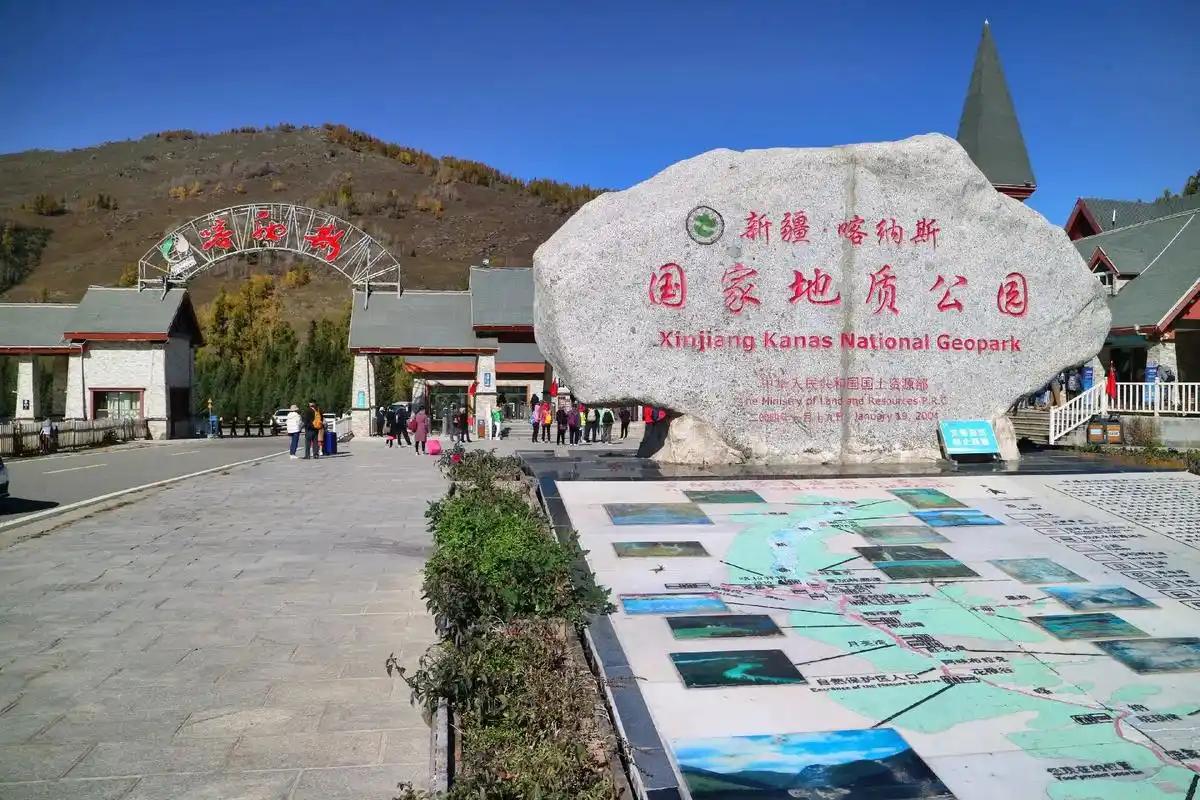
This is a real, runnable first trip. It front-loads the Altai (Kanas and Hemu are the headline), then jumps to Ili for grasslands, and closes with the Duku crossing back to Urumqi. If eight days feels tight, stretch to ten by adding a night at Sayram Lake and a second grassland day. More on the backbone in our Xinjiang travel guide.
A note on the long day 3: Burqin is about seven hours from Urumqi by road, so I usually suggest either an early start or a flight Urumqi → Burqin (seasonal, ~1.5 hours) to save the drive for the scenery north of Burqin instead. Day 6 is the flexible one — Koktokay to Yining is a full day by car, so most first-timers either fly Koktokay/Burqin → Yining or accept an early start. The point of the table is the shape, not the exact transport; a driver will sort the realistic version once he sees your flight times.
What to prioritise
- Kanas Lake. The one sight every first-timer should see. Stay inside the scenic area so you catch the morning mist.
- Hemu village. Quieter than Kanas, with wooden Tuva houses and a river valley. One night is enough but it is the calmest stop on the trip.
- The Duku Highway. Even a partial crossing (Nalati to Urumqi) gives you the Tianshan in a day. It is open roughly June to early October only.
- Ili grasslands (Nalati or Karajun). Pick one. Nalati is easier; Karajun is wilder. Both show the pasture culture that defines the north.
- Tianchi (Heavenly Lake). An easy half-day from Urumqi that justifies the first morning and acclimatises you to the region.
What to skip on a first visit
- Kashgar and the Pamir. Save them. They need a flight or two long days of driving and deserve their own trip.
- Hotan and the Taklamakan. Fascinating, but far south and better paired with Kashgar later.
- Both Nalati and Karajun. They are similar; seeing both wastes a day you can spend at a lake.
- Turpan on a short trip. Worth it, but it sits southeast of Urumqi and pulls you off the north loop. Add it only if you have a spare day and a flight out of Urumqi late.
Logistics that make or break a first trip
Fly into Urumqi
Urumqi Diwopu International Airport is the main hub, with domestic connections from Beijing, Shanghai, Xi’an, Chengdu and others, plus some Central Asia links. Fly in, rest a day, and start the loop from there. Internal flights (Urumqi–Yining, Urumqi–Kashgar) can save long drives if you are short on days.
Hire a driver
I tell every first-timer to hire a local driver rather than self-drive. The cost is RMB 800–1,200 per day including car and fuel, and it removes the checkpoints, the navigation, and the permit desk stress. Xinjiang has routine police ID checks on inter-city roads; a local handles them without breaking your rhythm. Small-group tours are a cheaper alternative if you are solo.
Book ahead in peak season
July and August are the crush. Kanas, Hemu, Sayram and the grassland hotels sell out weeks ahead and prices triple. Book the scarce in-scenic-area rooms the moment your dates are fixed. June and September are better: good weather, fewer crowds, and rooms you can actually get.
Carry your passport
You will show it at checkpoints and to enter some scenic areas. Keep it on you, not in the hotel safe, on travel days.
Payment, SIM and everyday hassles
Bring a mix of cash and a Chinese payment app. Alipay and WeChat Pay cover nearly everything in towns, but small scenic-area vendors and remote stops still prefer cash, and foreign cards rarely work at the counter. Set up Alipay’s tourist version before you fly if you can; otherwise carry RMB 2,000–3,000 in small notes. For connectivity, buy a local SIM at the airport (China Mobile or Unicom) — registration takes minutes with your passport. Western apps like Google and WhatsApp are blocked without a VPN, so sort messages and maps before you lose access or use a roaming eSIM that routes outside the firewall.
What to eat and drink
North Xinjiang eating is a highlight, not a chore. Expect laghman noodles, hand-grabbed rice (polu), grilled lamb, samsa pastries, and dairy like suut (boiled milk) and kurut (dried yoghurt balls) from the Kazakh and Mongolian stalls. Tap water is not for drinking — buy bottles, which are everywhere and cheap. In Kanas and Hemu, meals inside the scenic area cost more and the choice is narrower, so I tell clients to enjoy a big Urumqi or Burqin dinner before going remote.
Best time for a first visit
June to September is the window. June and July bring grassland wildflowers and reliable road conditions; September brings golden larches at Kanas and thin crowds. Avoid winter — the Duku closes and the Altai passes can snow in. If you only have one slot, September is my pick for a first-timer: the north looks its best and the driving is calm.
Pace and altitude notes
Nothing on this route is dangerously high. Tianchi is ~1,900 m, Kanas ~1,300 m, Nalati ~1,800 m, and the Duku tops out over 3,000 m only at the pass. Sleep low when you can and you will be fine. The real risk is over-scheduling — keep at least one genuinely slow day (Hemu is perfect for it).
For more on each stop, the Xinjiang attractions pages cover the sites, and the Xinjiang cities guides handle the town-level logistics like where to eat and change money.
One more rule: slow down at the good ones
The single mistake I see first-timers make is treating Kanas and Hemu like drive-by photo stops. They are not. The reason to come north is the quiet hours — the morning mist on Kanas Lake before the coaches arrive, the evening light on Hemu’s wooden roofs, a slow walk along the river. Build those in by sleeping inside the scenic areas and protecting at least one afternoon with nothing scheduled. A first Xinjiang itinerary that rushes the headline sights to “see more” ends up seeing less. Fewer places, slower — that is the no-regret formula.

Frequently asked questions
Is a week enough for a first Xinjiang trip?
Seven to eight days covers the North Xinjiang highlights — Urumqi, Tianchi, Kanas, Hemu and one grassland — if you fly the long hops. Ten days is more comfortable and lets you add Sayram Lake. Don’t try the full region in a week.
Should a first-timer include Kashgar?
Only if you have at least twelve days and a flight budget. Kashgar is 1,500 km from Urumqi; by road it eats two full days each way. On a first trip I’d keep it for next time and focus north.
Is it safe and easy to get around?
Yes. The region is heavily policed with routine ID checks, which most travellers find reassuring rather than intrusive. A hired driver handles the logistics; English signage is limited outside Urumqi, so a translator app helps.
Do I need a special visa or permit?
A standard China tourist visa covers the north. No Border Permit is needed for this route. (The Pamir extension later would need one, issued in Kashgar.)
What should I pack for a first trip?
Layers — mornings at Kanas and the Duku pass are cold even in summer. Good walking shoes, sun protection, a wind jacket for Sayram, and any personal medication, since pharmacies in small towns may not stock Western brands.
Can I do this without a car?
Partly by train and bus to the towns, but Kanas, Hemu, the grasslands and the Duku are not served. A driver or small-group tour is the practical way to run the loop.