
Published: 2026-07-30 | Author: Karl Huang
My first overland exit needed a real Xinjiang Border Crossing Guide, not another brochure. In October 2023 I left Kashgar at 06:40 with my Uygur driver Ablimit and a thermos of black tea, drove the Karakoram Highway toward the Khunjerab Pass, cleared the Chinese exit stamp at 13:20, and stood on the Pakistan side by 15:10. That single day taught me more about land borders than any embassy website had. This guide pulls together what I have learned crossing into Pakistan, Kazakhstan, and Kyrgyzstan, plus the paperwork that actually matters once you reach the gate.
Xinjiang Border Crossing Guide: Which Pass Fits Your Trip
Three countries sit within a day’s drive of Kashgar, and each uses a different gate. Pakistan is the Khunjerab Pass, the highest paved international border in the world. Kazakhstan runs through Khorgos for people and Alashankou for trains. Kyrgyzstan offers Torugart and Irkeshtam, both mountain roads that need a local permit. Pick your pass by where your visa takes you, then build the rest of the plan around its season.
Quick Reference
| Crossing | Connects | Fee / Note | Best Window | Role |
|---|---|---|---|---|
| Khunjerab Pass | Xinjiang – Pakistan (Sost) | Chinese exit free; Pakistani visa from ~USD 60 (e-visa) | May – Oct | Highest paved international border, on the KKH |
| Khorgos (Khorgas) | Xinjiang – Kazakhstan | Pedestrian and cargo; Kazakh visa required | Apr – Nov | Busiest road and rail port of entry |
| Torugart Pass | Xinjiang – Kyrgyzstan | Border permit and local guide required | Jun – Sep | High mountain road, fewer weekly crossings |
| Irkeshtam (Erkeshtam) | Xinjiang – Kyrgyzstan | Border permit and local guide required | May – Oct | All-weather road crossing, more frequent buses |
| Alashankou | Xinjiang – Kazakhstan | Freight-focused, limited passenger use | Year-round | Major rail freight hub |
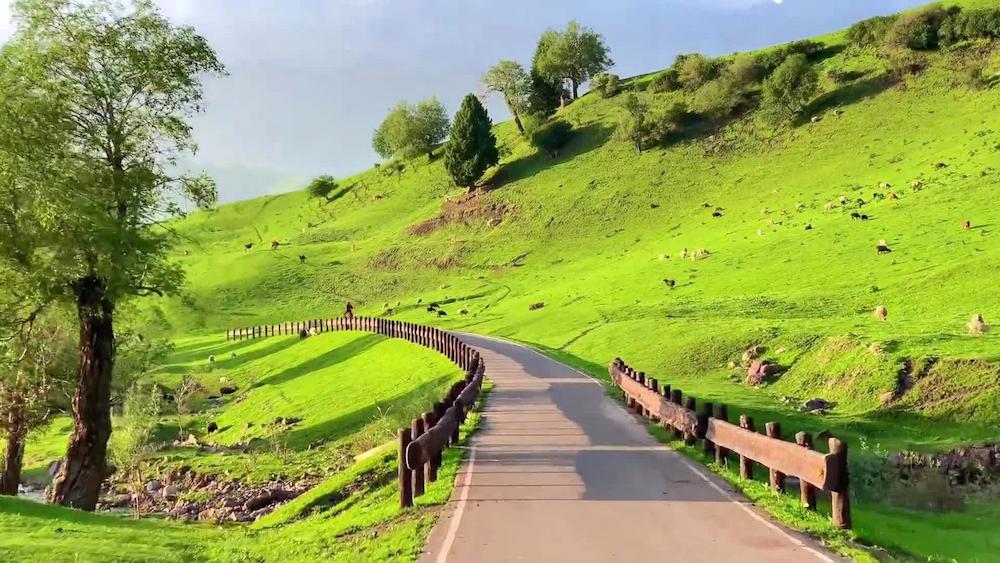
I still remember the silence at the top of Khunjerab. The altitude sign read 4,693 meters, and my phone lost signal the moment we passed the last Chinese checkpoint. Ablimit handed me a packet of dried apricots from a market in Tashkurgan and said, in his careful Mandarin, “No shops now for two hours.” He was right. The stretch between the two border posts is empty grassland and scree, and the wind cuts straight through a thin jacket. That trip shaped how I plan every crossing now: fuel up, eat first, and carry cash in the currency of the country you are entering.
The paperwork is the part most travelers underestimate. For Khunjerab you need a valid Pakistani visa before you arrive in Kashgar; there is no visa-on-arrival at the pass. For the Kyrgyz crossings you normally arrange a border permit and a guide through a licensed Kashgar agency, often for a fixed daily rate of around 800 to 1,200 yuan including the vehicle. I booked mine through a small office near the Id Kah Mosque three days ahead, and the agent, a woman named Gulnur, walked me through every form. If you want the full domestic side of this, our Xinjiang Border Travel Permit Guide covers the paperwork for restricted counties inside Xinjiang itself, which is a separate step from leaving the country.
How to Get There
Most international crossings start from Kashgar, the logical hub for the south and west. From Urumqi you can fly to Kashgar in about two hours on a morning China Southern flight that I have taken five times; a soft sleeper train takes roughly 24 hours if you prefer the slow view. From Kashgar city to the Khunjerab checkpoint is about 420 kilometers, almost all of it on the upgraded G314. We left at dawn and reached the Chinese immigration building outside Tashkurgan by early afternoon.
For Khorgos, the practical route is Urumqi or Yining to the port near the Ili valley. A direct coach from Yining takes around three hours, and I paid 68 yuan for a seat in 2024. The crossing itself sits about 90 kilometers from Yining. Torugart and Irkeshtam both feed off the Kashgar – Osh corridor; shared taxis and agency vehicles leave from the long-distance station on the western edge of Kashgar, and the drive to the Kyrgyz side runs six to nine hours depending on the pass and road work.
If you are building a longer route, our Urumqi to Kashgar Guide breaks down the transport links that connect the north to the border region. I treat Kashgar as the anchor: everything west of it is border country.
Best Time to Visit
Timing decides whether a crossing is open at all. Khunjerab closes for winter, usually from early November until late April, because snow blocks the pass. I crossed in early October and the weather was cold but clear; by late October the first storms start. Khorgos stays busier longer because it is lower and rail-linked, but the pedestrian hall still slows in deep winter.
Spring, from April to May, is workable but the mountain roads can be muddy after the thaw. Summer, June through August, is the safest window for Torugart and Irkeshtam, though afternoon heat on the Kyrgyz side is real and border queues lengthen in July. Autumn, especially September and early October, is my pick: the skies are steady, the roads are dry, and the passport control lines in Kashgar are shorter after the National Day week ends. Winter is only for Khorgos and Alashankou, and even then I would confirm the schedule the day before.
My clear recommendation for the best time to visit Xinjiang border country is mid-September to early October. You get the most reliable road conditions and you avoid the October holiday crowds that jam Kashgar hotels. For a wider seasonal picture, see our Xinjiang travel guide archive, which includes month-by-month planning notes.
Where to Stay
Budget travelers in Kashgar can take a bed in a hostel near the old city for 60 to 90 yuan a night; I stayed at one called the Silk Road Inn in 2023 and met three cyclists heading to Pakistan. Mid-range hotels around Renmin Road run 280 to 450 yuan and include breakfast, which matters when you leave at 06:00. Upper-end options near the airport, such as the Kashgar Radisson or similar, cost 700 yuan and up and are worth it if you need a quiet night before a long drive.
On the Pakistan side, Sost has basic guesthouses for around 2,000 to 4,000 Pakistani rupees, and on the Kyrgyz side Osh has everything from 15-dollar dorms to 60-dollar boutique stays. I always book the first night on the far side in advance, because SIM cards and taxi apps do not work the moment you cross.
Food
Kashgar feeds you well before you go. A plate of laghman noodles at a corner canteen costs 18 to 25 yuan, and a full nan-and-kebab dinner near the Id Kah Mosque runs 35 to 50 yuan. I liked the mutton skewers at the night market, eight for 20 yuan, and the fresh pomegranate juice in October for 10 yuan a cup. On the road to the pass, pack your own food; the last real restaurant is in Tashkurgan, where a bowl of beef soup with bread was 28 yuan in 2023.
Across the border the currency changes and so do the prices. In Sost a daal-and-roti meal is a few hundred rupees, and in Osh a proper plov lunch is 60 to 90 soms. Carry small bills; the money changers at the border give fair rates but rarely break large notes.
Practical Tips
- Get your destination visa before reaching Kashgar. There is no visa counter at the pass, and a missing stamp means a long drive back.
- Carry two passports’ worth of photocopies and save them to your phone. Border officers on both sides asked for digital and paper copies on my last trip.
- Keep yuan for China and the local currency for the next country. The exchange booth at Khunjerab opens late and closes early.
- Hire a licensed guide for Torugart or Irkeshtam. Solo crossings without an agency permit are turned back, and the fine wastes a full day.
- Download offline maps. Signal dies at the high passes, and a cached route saved my detour when a rockfall closed one lane near Gulbagh.
- Pack altitude care. At 4,600 meters the Khunjerab air is thin; I sipped water steadily and skipped the heavy lunch that first time.
Sample Itinerary
Here is the five-day shape I used for the Khunjerab crossing, adjusted from my 2023 notes:
- Day 1: Fly Urumqi to Kashgar (08:10 departure). Afternoon at the old city and the visa document check with Gulnur’s office.
- Day 2: Rest and resupply. Buy apricots, charge power banks, confirm the 06:40 pickup with Ablimit.
- Day 3: Drive Kashgar to Tashkurgan (420 km, about 7 hours with stops). Overnight at a guesthouse near the bazaar.
- Day 4: Cross Khunjerab at first light. Chinese exit by midday, Pakistan entry by mid-afternoon, descend to Sost.
- Day 5: Continue to Gilgit or Karimabad by shared van; the KKH views from the far side are a different trip entirely.
FAQ
Can I cross Khunjerab without a tour?
You can cross without a guided tour on the Chinese side, but you must already hold a Pakistani visa and your own transport. The Kyrgyz passes are different and require an agency permit plus a guide.
Do I need a Xinjiang border permit to reach the pass?
Tashkurgan county is restricted, so foreign travelers need the county border permit even before the international crossing. That domestic step is separate from the passport control at the actual gate.
Which crossing is open in winter?
Khorgos and Alashankou stay active through winter because they are lower and rail-connected. Khunjerab, Torugart, and Irkeshtam all close on snow.
How much cash should I carry?
Plan for about 500 yuan of extra cash on the China side for food and the changer, plus the equivalent of 100 to 150 USD in small local notes for the first two days abroad. Cards are unreliable at the passes.
Is it safe to cross with a rental car?
Most rentals from Urumqi cannot leave China, so travelers use agency vehicles or cross on foot and rent again on the far side. Check your rental contract before driving west of Kashgar.
What documents does a guide need from me?
A scan of your passport photo page, your valid visa, and your Kashgar hotel address. I sent all three by WeChat the night before and the permit was ready by morning.
Disclaimer
Border rules, visa fees, permit requirements, and opening dates change without notice. The prices and schedules above reflect my own trips in 2023 and 2024 and are shared as planning references only, not guarantees. Always confirm the current status with the Chinese exit-entry authorities, the destination country’s embassy, and a licensed Kashgar agency before you travel. Do not book non-refundable transport on the assumption that any pass will be open on a given day.