

Published: 2026-07-31 | Author: Karl Huang
The first time I drove the loop around Sayram Lake, I badly underestimated it. I figured 90 kilometres of flat lakeshore asphalt would take ninety minutes, so I entered the North Gate at 4:30pm in late June and assumed I’d be back in Bole for dinner. Six hours later I was still on the west shore, watching the last light go pink on the Borohoro ridgeline, with a cold lamb skewer in my hand and no plan for a bed. That trip is why I wrote this Sayram Lake Ring Road Guide: the loop itself is easy, but the stopping is what eats your day. I have now done the circuit four times, twice by rental car, once on the park shuttle, and once in February on ice, and the numbers below are what I actually paid and timed.
For context: Sayram Lake sits at roughly 2,070 metres in Bortala Mongol Autonomous Prefecture, about 90 km from Bole and 130 km from Yining. Entry was 70 CNY when I last went in June 2025, with the hop-on shuttle sold separately at around 75 CNY. Bring cash as a backup even though WeChat Pay works at every gate I used.
Quick Reference
| Item | Detail |
|---|---|
| Location | Sayram Lake, Bortala Mongol Autonomous Prefecture, northern Xinjiang |
| Ring road length | Approx. 90 km sealed loop, two lanes, no fuel station inside |
| Entrance fee | Approx. 70 CNY per adult; shuttle bus approx. 75 CNY extra (2025 rates) |
| Elevation | Approx. 2,070 m lake surface; passes on the loop reach about 2,150 m |
| Best time | Mid-June to mid-July for wildflowers; late January to February for blue ice |
| Time needed | 4 to 6 hours for a relaxed self-drive loop; full day if you hike or shoot photos |
| Nearest airports | Bole Alashankou (BPL), Yining (YIN), Urumqi (URC) for long-haul connections |
Sayram Lake Ring Road Guide: What the Loop Is Actually Like
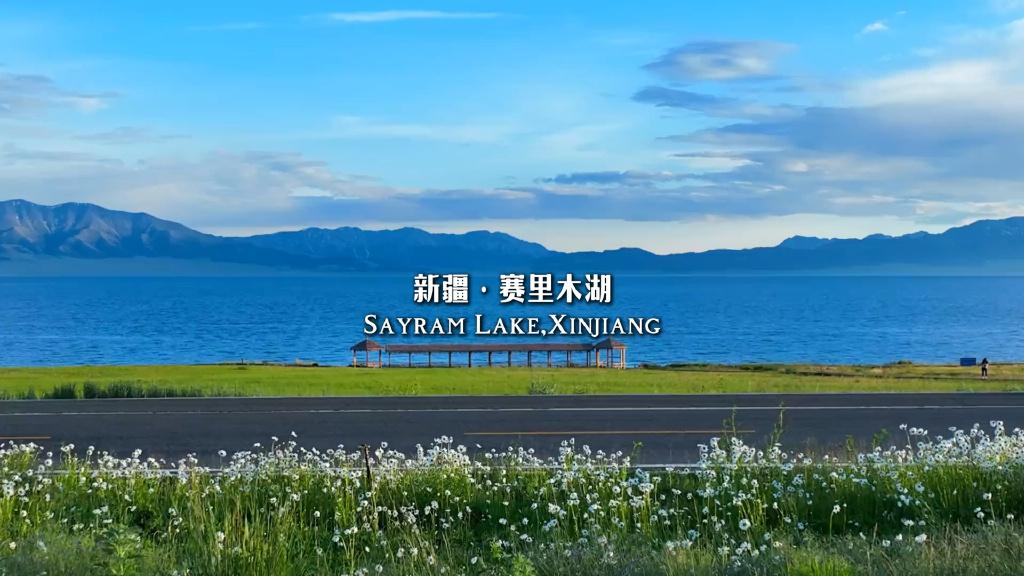
The road hugs the shore for most of its length, which sounds simple until you realise the lake is 30 km across and the light changes completely depending on which side you are on. I start clockwise from the North Gate because the morning sun then sits behind me on the east shore, where the water goes that deep cobalt colour people come here for.
The east shore is the busiest section. Parking bays are marked, there are toilets roughly every 8 to 10 km, and in summer you will pass Kazakh families running horse-riding stands. I paid 100 CNY for a 20-minute ride in 2024 after some polite haggling from an opening ask of 150. Ask before you sit on the horse, not after.
The south shore is where the loop earns its reputation. The road climbs slightly, the crowds thin out, and you get the classic composition of water in front and snow-streaked ridges behind. This is also where I have seen the most livestock on the tarmac. Twice I have rounded a curve to find forty sheep occupying both lanes. Drive at 40 to 50 km/h here and you will be fine.
The west shore feels different again: more marsh, more birdlife, fewer facilities. In June I counted ruddy shelducks and a pair of black-necked cranes within twenty minutes of stopping. If you are the sort of traveller who likes empty roads, this is your section. It is also the stretch where my phone signal dropped to nothing for about 15 km, so download your maps before you enter the gate.
The north shore closes the loop and holds most of the yurt camps and the main visitor infrastructure. By the time I come back around here I am usually hungry, and there is a cluster of small restaurants near the North Gate that stay open late in summer. For a wider look at the lake itself rather than the road, my longer Sayram Lake travel guide covers the shoreline walks and viewpoints in more detail.
How to Get There
From Urumqi (approx. 550 km, 6 to 7 hours): take the G30 Lianhuo Expressway west via Jinghe. The expressway runs close to the lake’s northeast corner, so the turn-off is obvious. I have done this drive in a single day and it is long but not difficult. High-speed trains from Urumqi to Jinghe West take around 3.5 hours; from Jinghe you still need a taxi or bus, and I have paid 300 to 400 CNY for a car from the station to the lake.
From Yining (approx. 130 km, 2 to 2.5 hours): this is the scenic approach. You climb through Guozigou Valley and cross the Guozigou Bridge, a viaduct that curls through the mountains and is worth a stop at the marked pull-off. Shared cars from Yining bus station cost me 80 CNY per seat in 2024. Many travellers combine the lake with the Ili valley grasslands, and if that is your route, the Nalati Grassland travel guide pairs neatly with this one.
From Bole (approx. 90 km, 1.5 hours): the shortest run, and where I now base myself when I want an early start. Bole has a small airport with flights to Urumqi.
Car rental: I rent in Urumqi or Yining for 200 to 350 CNY per day for a compact sedan. A regular car handles the entire ring road. You do not need a 4×4 unless you plan to leave the sealed surface, which the park does not permit anyway. Foreign licence holders need a temporary Chinese permit, so arrange that before you land.
Best Time to Visit
Spring (April to May): the ice breaks up, usually finishing by late April. Days run 5 to 15°C, nights still dip below zero, and the grass has not greened up. Fewer people, and hotel rates roughly a third of peak. Some yurt camps have not opened yet.
Summer (June to August): peak season, and rightly so. Mid-June to mid-July brings the wildflower bloom across the south and west shores, with daytime highs of 18 to 24°C. Nights still drop to 5 to 10°C at this altitude, which catches people out every year. Late July and August bring the domestic holiday crowd, and the east shore parking bays fill by 11am.
Autumn (September to October): my quiet favourite. September gives you clear air, sharp reflections, and highs around 12 to 18°C. By mid-October the first snow usually dusts the peaks while the road stays open.
Winter (November to March): the lake freezes and the blue ice forms, typically strongest from late January into February. It is genuinely cold, with daytime highs of minus 10 to minus 18°C and wind that makes it feel worse. Sections of the ring road can close after heavy snow, so check with your hotel the night before.
My recommendation: late June for flowers plus long daylight, or the second week of September if you prefer space over colour. I would only attempt February if you have winter driving experience or hire a local driver. If you want month-by-month weather detail before committing, see the dedicated best time to visit Sayram Lake breakdown.
Where to Stay
Budget (80 to 200 CNY): yurt camps along the north and east shores. Mine in June 2025 cost 160 CNY including breakfast, with shared toilets and a stove. Warm bedding, thin walls, and a genuinely good chance of a shared meal with the owners. Do not expect hot showers.
Mid-range (300 to 600 CNY): guesthouses and small hotels near the North Gate and in Sayram town. Private bathrooms, reliable heating, parking. I paid 420 CNY for a twin in September. This is the sweet spot for most travellers.
Upper (700 to 1,500 CNY): a handful of resort-style properties near the lake, plus better business hotels in Bole and Yining. Peak-season rates around the July holiday can double, so book six weeks out. If you would rather sleep in a city and day-trip, Yining is the more comfortable base.
Food
Eating around the lake is simple and mostly excellent. A plate of hand-pulled laghman (拌面) ran me 25 to 35 CNY at the North Gate restaurants. Lamb skewers were 5 to 8 CNY each, and I have never managed to stop at fewer than six. A whole roast lamb leg at a yurt camp was 180 CNY and fed three of us with leftovers.
Fish from the lake appears on menus as cold-water whitefish, usually grilled or stewed, at 80 to 150 CNY depending on size. It is farmed rather than netted from the lake these days. Milk tea with salt (naicha) is 10 CNY a bowl and is the correct order when the wind picks up. Bring your own snacks and water for the loop itself: between the east and west shores there are long gaps with nothing at all.
Practical Tips
- Fill your tank before entering. There is no fuel station on the ring road, and the nearest reliable pumps are in Sayram town or on the G30 service area.
- Download offline maps. Signal drops out for roughly 15 km on the west shore.
- Bring a windproof layer even in July. The wind across open water at 2,070 m is the single thing most visitors underestimate.
- Carry your passport. Xinjiang has routine checkpoints on approach roads, and you will be asked for it.
- Budget 5 hours minimum for the loop with stops, 7 if you want sunset on the south shore.
- Do not fly drones without checking current rules at the gate. Enforcement varies and fines are real.
- Sunscreen and sunglasses are not optional. The UV at this altitude is fierce even on cool days.
- If you take the shuttle instead of driving, note that the last bus back typically leaves around 8pm in summer and much earlier in winter. Confirm the time when you buy the ticket.
- Toilets exist but paper often does not. Carry your own.
- Cash of 200 to 300 CNY covers horse rides and small stalls where mobile pay occasionally fails.
Sample Itinerary
This is the day I would repeat, and it is the version of the Sayram Lake Ring Road Guide route I now recommend to friends: a June visit with a rental car and no fixed dinner reservation.
- 07:00 Leave Bole after breakfast. Coffee is scarce ahead, so caffeinate now.
- 08:30 Arrive North Gate, buy tickets, start clockwise.
- 09:00 to 10:30 East shore. Three photo stops, morning light on blue water, horse-riding stand if you want it.
- 11:00 South shore climb. The wide pull-off with the ridgeline backdrop is the best single view on the loop.
- 12:30 Picnic lunch on the south shore, or backtrack for a hot meal.
- 14:00 to 16:00 West shore. Birdwatching, marshland, almost no traffic. Slow section by design.
- 16:30 North shore yurt camps. Milk tea stop.
- 18:00 Optional: drive the south shore again for evening light. This is what turned my first visit into a six-hour affair, and I have no regrets.
- 20:30 Dinner near the North Gate, then Bole or a lakeside guesthouse.
FAQ
Can I drive my own rental car on the ring road, or must I take the shuttle?
Private cars were permitted on the loop on all four of my visits, with the entry fee paid at the gate. Rules have tightened at other Xinjiang parks, so confirm at the gate on the day. The shuttle is the fallback and covers the main stops.
How long does the full loop take?
Two hours of pure driving. Realistically 5 to 6 hours with stops, meals and photographs. Do not schedule anything tight for the same evening.
Is altitude sickness a concern at 2,070 m?
For most people, no. You may notice mild breathlessness walking uphill. It is far gentler than Karakul Lake in the Pamirs. Drink water and take the first hour slowly.
Is Sayram Lake worth visiting in winter?
Yes, if you are equipped for it. The blue ice formations in February are the reason photographers come. Expect minus 15°C, possible road closures, and much reduced services. Hire a local driver rather than self-driving.
Can I combine Sayram Lake with other destinations?
Easily. Yining and the Ili valley sit two hours south, and the Guozigou Bridge is on the way. Many people run Sayram, Nalati and the Duku Highway as one week-long circuit. Browse more options in the Xinjiang attractions archive.
Are there ATMs or reliable mobile payment?
Mobile payment works at the gates and most restaurants. ATMs are in Sayram town and Bole, not on the loop. Carry some cash.
Disclaimer
Entrance fees, shuttle prices, accommodation rates, food costs and transport schedules quoted here reflect what I paid or was quoted on visits between 2024 and mid-2025. Prices in Xinjiang change season to season, and access rules, permit requirements, drone regulations and road closures can change with little notice. Verify current fees, opening hours and entry conditions with the official Sayram Lake scenic area management, your accommodation, or your local operator before you travel. Nothing here is a guarantee of price or availability.