

Published: 2026-07-31 | Author: Karl Huang
My first Sunday in Kashgar was 15 October 2017, and I got the timing completely wrong. I walked to the East Gate Bazaar at 09:20 Beijing time expecting a crush of people and found maybe a fifth of the stalls open, a man asleep on a stack of carpets, and two women setting out plastic basins of dried apricots. Nobody was in a hurry. What I had not understood yet is that Kashgar keeps two clocks: official Beijing time, and an unofficial local time two hours behind it that almost everyone actually lives by. A shopkeeper who says “we open at nine” usually means eleven on your phone. This Kashgar Sunday Bazaar Guide is built around that single fact, because getting the hour right is the difference between a market and an empty shed.
I have been back three times since, most recently in September 2024. The bazaar has changed. Parts of it are tidier and more managed than they were, the livestock market has moved further out, and mobile payment has replaced the fat rolls of cash people used to carry. The trading itself has not changed much at all. Most of the hour-by-hour detail below is the kind of thing a general Xinjiang travel guide skips.
Quick Reference
| Item | Detail |
|---|---|
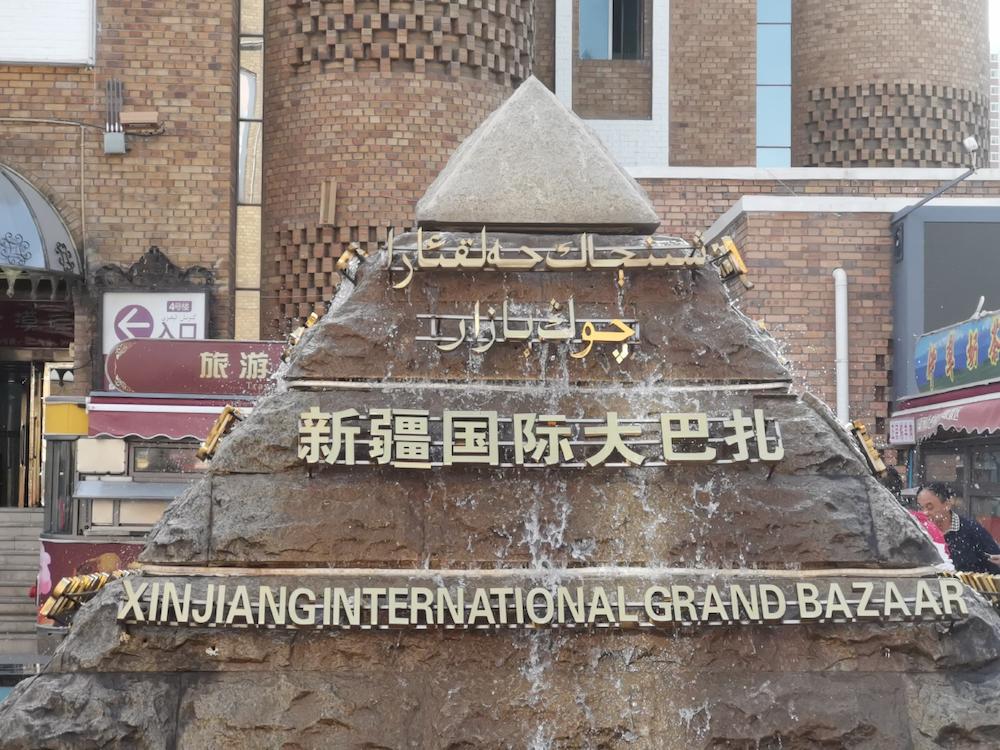
| Location | Kashgar (Kashi), southwestern Xinjiang. Two separate markets: the Grand Bazaar (Central and Western Asia International Trade Market, “East Gate Bazaar”) on the east side of the old city by the Tuman River; the Sunday livestock market roughly 10 km northeast of the centre |
| Entry fee | Free at both. Parking around 5–10 RMB. Some private courtyard teahouses charge 10–20 RMB for a seat and tea |
| Opening hours | Grand Bazaar daily, roughly 10:00–19:30 Beijing time, Sunday busiest. Livestock market Sunday only, roughly 08:00–15:00 Beijing time, peak 11:00–13:30 |
| Best time | Sunday, arriving at the livestock market by 10:30 and the Grand Bazaar after 12:00. Best months: April–June and September–October |
| Elevation | About 1,290 m. No altitude issues in the city itself |
| Time needed | Half a day minimum, a full Sunday if you want both markets plus lunch |
| Role | The oldest continuously working trade hub on the southern Silk Road; still a functioning wholesale and livestock market rather than a staged attraction |
What the Sunday Bazaar Actually Is
People arrive expecting one enormous weekly market. There are two, in different parts of town, and they serve different purposes. Any useful Kashgar Sunday Bazaar Guide has to separate them, because visitors who only find the covered complex often leave thinking the whole thing was overrated.
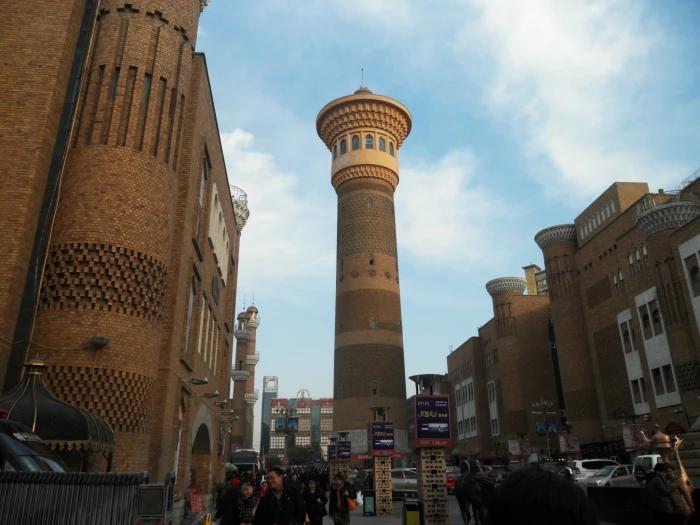
The Grand Bazaar is a permanent covered complex, open every day of the week. On Sundays it swells: rural traders come in, the aisles fill, and stalls that stay shuttered midweek open up. Inside it is organised by trade, which makes it easier to navigate than it first looks. One corridor is nothing but doppa, the square embroidered caps, priced from about 30 RMB for a machine-stitched tourist version to 300 RMB and up for hand embroidery on velvet. Another is copper and enamel: teapots, basins, long-spouted ewers. Then knives, then atlas silk in those wavy dyed patterns, then carpets, then a long dried-fruit and spice section where the smell of cumin sits in the air permanently.
The livestock market is the other half, and it is the one I would not skip. Sheep, cattle, donkeys, the occasional camel, all trucked and walked in before dawn. Men in worn suit jackets run their hands down a sheep’s back, argue, walk away, come back. Deals close with a handshake and a fold of notes. There is no ticket, no viewing platform, no explanatory signage. You are standing in a working sale yard, and you have to watch where you put your feet. If you want the full breakdown of that specific market I wrote a separate Kashgar Livestock Market Guide covering its layout and the sheep-tail-fat economics behind the prices.
On my 2024 visit I spent about two hours there and bought nothing except a bowl of noodles from a cart at the edge. That was the right ratio. It is a place to watch, not to shop.
How to Get There
Kashgar sits far from everything, which is part of why the bazaar exists at all, and why this Kashgar Sunday Bazaar Guide starts with getting there rather than with what to buy. From Urumqi, flights to Kashgar Airport (KHG) take about 1 hour 45 minutes and typically run 700–1,500 RMB one way depending on season, with the July–August peak at the top of that range. The airport is roughly 10 km north of the centre, 30–50 RMB by taxi. The overnight train is the cheaper option: sleeper berths on the Urumqi–Kashgar route usually cost 280–520 RMB and the trip runs 17 to 24 hours depending on the service. I have done it twice and slept badly both times, but you arrive with money left over.
From Hotan, the train along the southern rim takes about 7 hours. From Tashkurgan on the Pakistan border, it is a 5 to 6 hour drive back down the Karakoram Highway, and that route needs a border permit arranged in advance. Broader route planning for the region is covered in my Kashgar Travel Guide, which goes into the checkpoints and registration procedures in more detail than I can here.
Within the city, taxis start around 6 RMB and almost nothing inside the ring road costs more than 20 RMB. Getting to the Grand Bazaar from Id Kah Mosque is a 15 minute walk east. The livestock market is further: budget 30–45 RMB and 25 minutes each way by taxi or DiDi, and agree with the driver on a return pickup, because getting a car back from the sale yard at midday is genuinely hard. Local buses run to the Grand Bazaar for 1–2 RMB but not usefully to the livestock market.
Best Time to Visit: What This Kashgar Sunday Bazaar Guide Recommends
Spring (April to early June) is the strongest window. Daytime temperatures sit around 18–28°C, the fruit stalls start filling with the first apricots, and the dust storms of March have mostly settled. Late May is my favourite week of the year here.
Summer (July to August) gets hot, 33–38°C most afternoons, and the covered aisles trap it. The upside is melons: Hami melon and watermelon at 2–4 RMB per jin, sold from the back of trucks. If you come in summer, do the livestock market early and retreat to a teahouse by two in the afternoon.
Autumn (September to October) is the other good window and arguably the better one for the markets specifically. The harvest is in, so the dried-fruit and nut sections are at their fullest, walnuts and figs and pomegranates everywhere, and temperatures land around 15–25°C. This is when I would come if I had one trip to spend.
Winter (November to March) is cold, down to minus 5 or lower at night, and the Grand Bazaar thins out noticeably. The livestock market keeps running, and honestly it looks more striking in winter, breath steaming, men in fur-lined hats. But it is a harder day.
Anyone searching for the best time to visit Kashgar Sunday Bazaar should also think in hours, not just months. Reach the livestock market between 10:00 and 11:00 Beijing time, leave by 13:30 when it winds down, then hit the Grand Bazaar in the afternoon when it is at full strength. Doing it in the reverse order, which is what most day tours seem to do, means arriving at the sale yard after the good animals have gone.
Where to Stay
Budget (80–180 RMB): hostels and small guesthouses in and around the old town. Beds in a dorm run 60–90 RMB, basic private rooms 120–180 RMB. Check before booking that the property is licensed to accept foreign passports, because many are not, and being turned away at 23:00 is a miserable way to start a trip.
Mid-range (250–450 RMB): renovated courtyard guesthouses inside the old city, and business hotels along Renmin Road. The courtyard places are the better experience by some distance, with carved wooden balconies and breakfast on the roof. I stayed in one near the Kashgar Old Town for 320 RMB a night in 2024 and would go back. My separate Kashgar Old Town Travel Guide covers that neighbourhood in full.
Upper (500–1,200 RMB): a handful of international-standard hotels near the new city and the Tianbaihui commercial area. Reliable air conditioning, reliable hot water, no character. Fine after a long overland stretch.
Food
Eat at the market. The food carts around both bazaars are better than most restaurants in the new city, and the prices are what locals pay.
- Lamb kebab (kawap): 5–8 RMB per skewer at the market, 10–15 RMB for the thick “meat mountain” cut. Three skewers and a nan is a proper lunch.
- Samsa (baked lamb pastry): 5–8 RMB each, pulled straight off the tandoor wall. The pumpkin version, kawa samsa, is 4–6 RMB and better than it sounds.
- Laghman (pulled noodles): 20–30 RMB. Ask for it stir-fried rather than in broth if you want the version most people mean.
- Polo (pilaf): 20–28 RMB a plate, sold from huge cast-iron pans. Usually gone by 14:00.
- Nan bread: 2–6 RMB depending on size and whether it has sesame and onion baked in.
- Ice yogurt with shaved ice: 6–10 RMB. Sharp, thick, no sugar unless you ask.
- Pigeon soup: 25–40 RMB, sold near the livestock market. Considered a tonic. It tastes like clean chicken broth.
Almost everything is halal. Alcohol is not sold at the markets and I would not go looking for it there.
Practical Tips
- Set two clocks. Beijing time is official and used for flights, trains, and hotel check-in. Local time, two hours behind, governs when shops actually open and when people eat. Confirm which one someone means before agreeing to a meeting time.
- Carry your passport. There are ID checkpoints around the city and at some market entrances. A photocopy is not enough.
- Ask before photographing people. A gesture at the camera and a raised eyebrow works. Older women in particular often decline, and that should be the end of it. Photographing animals and goods is no problem.
- Bargain, but modestly. Opening prices on tourist goods run 30–50% above the real price. On dried fruit, spices, and anything a local would buy weekly, the marked price is close to fair and hard haggling just looks rude.
- Bring some cash. WeChat Pay and Alipay dominate, but older traders at the livestock market still deal in notes, and a foreign-registered payment app sometimes fails on smaller merchant accounts. Two hundred RMB in small bills solves most problems.
- Knives are complicated. Yengisar knives are a genuine local craft, but you cannot take one on a plane or a train, and posting them is restricted. Buy a letter opener or accept you are buying a souvenir you will need to ship through a shop that handles the paperwork.
- Wear closed shoes at the livestock market. The ground is churned mud and manure. I ruined a pair of canvas sneakers learning this.
- Watch for moving animals. Sheep get driven through gaps in the crowd at speed and nobody will warn you. Stand at the edge of an aisle, not in the middle.
- Friday is different. Midday prayers empty the market for an hour or two. It is not a good day to plan around, which is another argument for Sunday.
- Sun protection. Kashgar is dry and bright at 1,290 m. Hat, sunglasses, lip balm. The dust will also find your camera sensor, so change lenses indoors.
Sample Itinerary
A full Sunday, all times in Beijing time:
- 08:00 Breakfast at your guesthouse or a nan and tea stall. Do not skip it; lunch will be late.
- 09:30 Taxi to the livestock market, roughly 25 minutes. Ask the driver for a mobile number and a pickup time.
- 10:00–12:00 Walk the sale yard. Sheep and goats at one end, cattle and donkeys at the other, feed and tack sellers around the perimeter. Buy a bowl of soup from a cart.
- 12:30 Return to the city. Lunch near Id Kah Mosque: polo or laghman, 25–30 RMB.
- 14:00–17:00 Grand Bazaar. Start upstairs with textiles and carpets, work down through copper and knives, finish in the dried-fruit hall where you will end up buying more apricots than you can carry.
- 17:30 Tea in a courtyard teahouse in the old town. 10–20 RMB, and nobody will rush you.
- 19:30 Sunset over the old city walls, then kebabs at a night stall.
If you only have half a day, take the livestock market and skip the Grand Bazaar, which is open all week anyway. For fitting this into a longer regional route, my broader Xinjiang attractions archive lists the other southern Silk Road stops that pair well with a Sunday here.
FAQ
Is the Sunday Bazaar only open on Sundays?
The livestock market, yes, Sunday only. The Grand Bazaar is open every day but is noticeably fuller and more interesting on Sunday, when rural traders come in.
Is there an entrance fee?
No. Both markets are free to enter. You may pay 5–10 RMB for parking, and a teahouse seat costs 10–20 RMB with tea included.
Can foreign visitors go?
Yes, both markets are open to everyone. Carry your passport for ID checks, and make sure your hotel is registered to receive foreign guests. Some nearby areas such as Tashkurgan need a separate border permit; Kashgar city itself does not.
How much time do I need?
Two hours at the livestock market and two to three at the Grand Bazaar. The sample day in this Kashgar Sunday Bazaar Guide assumes a full Sunday, which leaves room to eat properly and sit down between the two.
Is it safe to walk around alone?
In my experience yes, including as an obvious outsider with a camera. Ordinary market-crowd caution applies: watch your bag, watch where livestock is moving. The bigger risks are sunburn and getting stuck without a taxi.
What is genuinely worth buying?
Dried apricots, walnuts, saffron, and cumin. Hand-embroidered doppa if you find one with uneven stitching, which means it was made by hand. Atlas silk by the metre. Skip the mass-produced “Silk Road” trinkets near the main entrance.
Disclaimer
Prices, opening hours, transport schedules, and permit rules in Xinjiang change, sometimes at short notice and sometimes seasonally. Every figure in this Kashgar Sunday Bazaar Guide reflects what I paid or was quoted on visits between 2017 and September 2024, and should be treated as a planning estimate rather than a guarantee. Verify current details with official sources, your hotel, or a licensed local operator before you travel, particularly for border permits, foreigner registration, and anything involving the transport of knives. Nothing here is a substitute for checking the current rules yourself.