

Published: 2026-07-31 | Author: Karl Huang
I have been to the Huocheng lavender fields four times, and only twice did I arrive at the right moment. That is the whole problem with this place, and it is why I wrote this Huocheng Lavender Fields Guide instead of another gallery of purple photos. My first visit was on 2 July 2018. I paid 40 CNY to enter a garden near Qingshuihe Town, walked through the gate, and found roughly a third of the rows already cut, the stalks lying in green heaps waiting for the distillery truck. Nobody at the ticket window had mentioned it. The second time, 14 June 2021, I got it right: full rows, bees everywhere, the smell strong enough that it stayed in my jacket for two days.
Huocheng County sits in the Ili Valley, about 50 km west of Yining, close enough to the Kazakhstan border that you will pass a checkpoint or two. Local officials like to say this is one of the world’s four major lavender production regions alongside Provence, Hokkaido, and parts of the Mediterranean. Treat that as marketing with a kernel of truth: the county genuinely grows a large share of China’s lavender, and the essential-oil industry here is real, not a photo prop. What visitors see is the working edge of that industry, dressed up with a few ticket gates.
Quick Reference
| Item | Detail |
|---|---|
| Location | Huocheng County (霍城县), Ili Kazakh Autonomous Prefecture, roughly 50 km west of Yining |
| Main viewing areas | Qingshuihe Town belt, 65th Regiment (Sixty-Fifth Tuan) farm blocks, Sangong Township, Princess Jieyou Lavender Garden |
| Entry fee | Free at roadside farm plots; 30–60 CNY at ticketed gardens (Jieyou Garden was 50 CNY in 2024) |
| Best time | 5–25 June for the main bloom; peak usually 10–20 June. A weaker second bloom appears in early-to-mid September |
| Elevation | Around 600–900 m, low by Xinjiang standards, so no altitude issues |
| Time needed | Half a day is enough; a full day if you add a distillery visit or the Guozigou viewpoints |
| Nearest base | Yining city (1 hour) or Huocheng county town (20 minutes) |
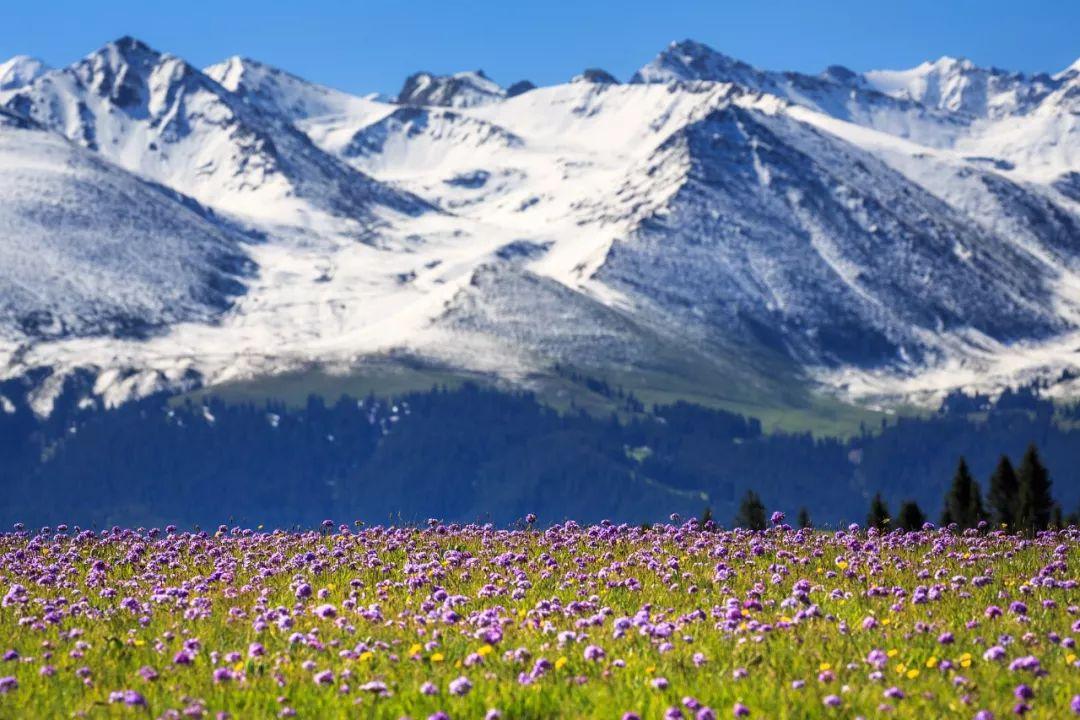
If you only remember one line from this Huocheng Lavender Fields Guide, remember the date range. Everything else can be improvised. Bloom timing cannot.
Huocheng Lavender Fields Guide: What the Fields Are Actually Like
Do not picture a single vast purple plateau. The Huocheng lavender fields are a scatter of plots, some a couple of hectares, some larger, spread along the road between Sangong Township and Qingshuihe, with wheat, corn, and sunflowers filling the gaps. Between two lavender blocks you may drive three minutes past nothing purple at all. The famous wide shots you see online are taken with a long lens from a low angle, compressing three rows into what looks like a horizon.
That said, when the timing lands, it is genuinely good. In June 2021 I stood at the edge of a 65th Regiment block just after 8 a.m. Beijing time, which is around 6 a.m. by the sun here, and the field was still cool and wet. The scent is different from the dried sachets people buy: sharper, a little medicinal, with a green edge underneath. Bees work the rows hard in the morning, and if you are allergic or nervous around them, walk the outer margins rather than the inner paths.
The ticketed gardens are a mixed proposition. Princess Jieyou Lavender Garden, the best known, adds windmills, a wooden bridge, swings, and heart-shaped frames for photographs. On a June weekend you will queue for the popular props. Foreign visitors who came for landscape usually find the free roadside plots more satisfying. My honest recommendation: pay for one garden so you have clean paths and a toilet, then spend the rest of your time on the farm roads.
One practical warning about those farm roads. These are working fields, and the plots belong to somebody. Walking into a row to pose flattens plants that are worth money at harvest. I have watched farmers chase people out with real anger, and they were right to. Shoot from the edge, or ask, or pay the small fee some families collect at the head of their plot, usually 10 to 20 CNY. If you want more context on the wider county before you go, the Huocheng travel guide covers the towns, checkpoints, and border zone rules in more detail.
How to Get There
From Yining (Ghulja). This is the normal base. Yining to Qingshuihe is roughly 50 to 60 km depending on which plots you target, about one hour by car. A private car with driver for a half-day ran 300 to 400 CNY in 2024, and drivers who know the area will take you to whichever blocks are blooming rather than the one garden everyone else visits. Public buses run from Yining to Huocheng county town frequently, around 10 to 15 CNY, but from the county town you still need a taxi to reach the fields, so you save less than you expect. Didi coverage in Yining is decent; in the fields themselves, expect long waits, so keep your driver.
From Urumqi. Fly to Yining Airport, about 1 hour 20 minutes, with fares commonly 500 to 900 CNY in June. Or take the overnight train, roughly 11 to 13 hours depending on service. The Urumqi to Yining road trip via the Guozigou Bridge is spectacular but long, around 700 km, and most people break it at Sayram Lake. If that is your plan, note that Sayram sits east of Huocheng, so you can chain the two on the same route; the Sayram Lake stretch is worth a night of its own.
From Sayram Lake. Descend the Guozigou valley, then continue west. Roughly 2 hours to the lavender belt. This is the most efficient way to see both without backtracking.
Documents. Huocheng is a border county. Carry your passport, expect ID checks at road checkpoints, and allow extra time on busy days. Some plots close to the border line are off-limits without a permit, and no ticket seller will warn you in advance. If a soldier waves you back, turn around and do not argue.
Best Time to Visit Huocheng Lavender Fields
Late May. Early buds, green fields with purple showing through in patches. Fine if you are already in the area, not worth planning a trip around. Weather is pleasant, roughly 18 to 26°C.
1–10 June. Colour builds fast. By around 8 June most years the main varieties are showing well. Crowds are still moderate, prices at guesthouses have not spiked, and light is good. This is my preferred window if I want photographs without queues.
10–20 June. Peak. Full rows, strong scent, and every hotel in Huocheng and Yining charging more than it should. Weekends are heavy with domestic tour groups. Go on a weekday if you can.
Late June to early July. Harvest begins. This is the trap I fell into in 2018. Cutting is staggered, so some blocks still look perfect while their neighbours are stubble. Arriving on 1 July is a coin flip, and by 10 July you are mostly looking at bare ground.
September. A second, thinner bloom appears on some varieties, usually early to mid-month. Colour is patchier, but there are almost no tourists and hotels are cheap. I would not fly in for this alone, but it is a real bonus if you are visiting anyway.
Winter. Nothing to see. The fields are cut back and often snow-covered, and most photo gardens close.
My recommendation: target 10 to 18 June, arrive with one flexible day in your schedule, and check current conditions the week before you go. Ask your Yining guesthouse to look at local social media posts, since Chinese travellers post dated field photos constantly in bloom season and that is the most reliable signal you will get. For broader seasonal planning across the county, see my notes on the best time to visit Huocheng.
Where to Stay
Budget (80–180 CNY). Guesthouses in Huocheng county town and Qingshuihe. Simple rooms, hot water usually fine, breakfast rarely included. In June these fill early and owners raise prices freely. Book at least a week ahead for peak dates. Some farm families near the fields run informal homestays with three or four rooms; these are pleasant and cheap, but almost none have English-speaking staff.
Mid-range (250–500 CNY). Yining city has the best value in this bracket. Chain hotels near Ili River Bridge and the Hanbin area are clean and predictable, and you gain restaurants, ATMs, and easy taxi access at the cost of a one-hour drive each morning. This is what I book when travelling with people who care about comfort. The Yining travel guide lists specific districts worth staying in.
Upper (600–1,200 CNY). A handful of resort-style properties operate near the larger lavender gardens, marketed heavily at domestic honeymoon travellers. Rooms are comfortable, but value is questionable outside bloom season, since you are paying for a view of a field that may be brown.
Food
Ili Valley food is Uyghur and Kazakh at its base, with strong Hui and Russian influence in Yining. Around the fields, options are thin, so eat properly before you head out or plan a late lunch in Huocheng town.
- Laghman (拌面) 25–35 CNY. Hand-pulled noodles with a stir-fried topping. The standard working lunch.
- Lamb kebabs 5–8 CNY per skewer. Ili lamb has a reputation and mostly deserves it. Six skewers plus nan makes a decent meal.
- Nan bread 3–6 CNY. Sold everywhere, best straight from the oven in the morning.
- Big plate chicken (大盘鸡) 80–120 CNY. Feeds two to three people. Order the half portion if there are two of you.
- Ili grapes and apricots, seasonal, 8–20 CNY per jin. Roadside stalls in summer. Wash them.
Lavender-flavoured products are sold at every garden exit: honey, tea, essential oil, soap, dried sachets, ice cream. Quality varies enormously. Small bottles of oil at 30 to 50 CNY are often heavily diluted. If you want the real thing, buy from a distillery shop rather than a roadside table, and expect to pay considerably more for a genuine 10 ml bottle.
Practical Tips
These are the ten things I wish someone had told me before my first trip, and they are the working core of this Huocheng Lavender Fields Guide.
- Check bloom status within seven days of travel. Ask your hotel to search dated Chinese social posts. Do not rely on tour brochures or last year’s photos.
- Go early. Between 8 and 10 a.m. Beijing time the light is soft, the scent is strongest, and the tour buses have not arrived. By noon the sun is flat and harsh.
- Xinjiang runs on Beijing time officially, but life runs about two hours later. Shops open around 10 a.m., dinner starts at 8 or 9 p.m. Plan accordingly.
- Carry cash. Mobile payment dominates, but small farm plots and rural stalls sometimes cannot take a foreign-issued card-linked wallet. Keep a few hundred CNY in small notes.
- Passport at all times. Border county, frequent checkpoints, hotel registration required. A photocopy is not enough.
- Respect the crop. Shoot from row ends and paths. Do not trample plants for a photo.
- Bees and pollen. Heavy in peak bloom. Bring antihistamines if you are sensitive.
- Sun protection. Little shade, dry air, and long summer days. Hat, sunscreen, and more water than you think you need.
- Hire a driver rather than self-driving on your first visit. Plot locations shift year to year with crop rotation, and a local driver knows which blocks are open.
- Book June accommodation early. Two weeks minimum, more for the peak weekend.
Sample Itinerary
A realistic single-day plan based out of Yining, mid-June:
- 06:30 Leave Yining. Early start is the whole trick.
- 07:40 Arrive at the first roadside plots near Sangong Township. Free, quiet, good light. Spend 40 minutes.
- 08:40 Drive to the Qingshuihe belt, stopping wherever the colour looks strongest.
- 09:30 Enter one ticketed garden (Princess Jieyou or a 65th Regiment garden). Roughly 90 minutes covers it, including the shop.
- 11:15 Optional distillery or essential-oil workshop visit. Ask your driver; several accept walk-ins during harvest.
- 12:30 Lunch in Huocheng county town. Laghman or big plate chicken.
- 14:00 Either return to Yining for the Han Chinese and Uyghur old quarters, or continue east toward Guozigou and Sayram Lake if you are moving on.
- 16:00 Back in Yining. Late afternoon at the Ili River bridge is a good way to close the day.
If you have two days, add a morning in the Sangong hills for wider views and spend the second afternoon on the Ili River instead of rushing back. Travellers combining this with other spring and early-summer bloom sites often pair it with the apricot valleys further east; though note those bloom in late March and early April, months before lavender.
FAQ
When exactly do the Huocheng lavender fields bloom?
Main bloom runs from roughly 5 to 25 June, with the strongest colour usually between 10 and 20 June. Harvest starts in late June and can strip a field within days. A second, weaker bloom appears on some varieties in early to mid September.
Do I have to pay to see the lavender?
No. Many plots sit directly along public roads and cost nothing. Ticketed gardens charge roughly 30 to 60 CNY and offer paths, props, toilets, and parking. Most visitors are happy paying for one and viewing the rest for free.
Can I visit as a day trip from Yining?
Yes, and that is what most people do. One hour each way by car, with half a day in the fields. A private car for the half-day was around 300 to 400 CNY in 2024.
Is Huocheng suitable for foreign travellers?
Yes, with the usual Xinjiang caveats. Carry your passport, expect checkpoint stops, and stay with hotels licensed to accept foreign guests, which in practice means Yining or the larger Huocheng town properties rather than farm homestays.
What if I arrive after the harvest?
Shift your plan. Sayram Lake, the Guozigou valley, the Ili River, and the grasslands south of Yining are all strong in late June and July. Browse other options in the Xinjiang attractions archive rather than staring at cut fields.
Is the lavender essential oil sold there genuine?
Some of it. Huocheng has a real distillation industry, but roadside bottles at very low prices are usually diluted. Buy from a factory outlet or a reputable shop, check for a proper label, and be suspicious of anything under 30 CNY for 10 ml.
Disclaimer
Prices, opening hours, ticket policies, transport options, and border-zone access rules in Xinjiang change frequently and sometimes without notice. Every figure in this Huocheng Lavender Fields Guide reflects what I paid or was quoted on my own visits between 2018 and 2024, and should be treated as a rough guide rather than a guarantee. Bloom dates vary by year with weather and by plot with variety and planting date. Verify current conditions with official sources, your accommodation, or a licensed local operator before travelling, and follow all instructions given at checkpoints.