

Published: 2026-07-29 | Author: Karl Huang
When readers ask me to build a Xinjiang Public Holidays and Festivals Guide, they usually want one practical thing: a calendar that tells them which week to book and which week to avoid. I have planned trips around both the Islamic holidays and the national breaks for eight seasons, and the difference between a calm, local experience and a crowded, sold-out one often comes down to ten days on the calendar. This guide lays out the real dates, what actually happens on the ground, and how to shape a Xinjiang travel plan around them.
Quick Reference
| Festival / Holiday | Main Location | Typical Timing | Cost & Significance |
|---|---|---|---|
| Spring Festival (Chinese New Year) | Urumqi and all cities | Late Jan to mid-Feb, 15 days | Free to watch; family reunions, some shops close |
| Qingming | Across the region | Apr 4-6 | Free; tomb-sweeping, mild spring weather |
| Labor Day (May Day) | All cities | May 1-5 | Free; domestic travel surge, busy roads |
| Eid al-Fitr (Roza Heyt) | Kashgar, Hotan, Yining | 1 Shawwal, shifts ~11 days yearly | Free; dawn prayers, shared sweets and naan |
| Eid al-Adha (Kurban Heyt) | Kashgar, Hotan, Aksu | 10 Dhu al-Hijjah, lunar | Free; animal sacrifice, large family feasts |
| Nowruz | Turpan, Kashgar (Uyghur, Tajik) | March 21 | Free; wheat-sprout ritual, music and dance |
| Dragon Boat Festival | Han-majority towns | June (lunar 5th month) | Free; zongzi rice parcels, occasional races |
| Mid-Autumn Festival | All cities | Sep or Oct (lunar 8th month) | Free; mooncakes, evening gatherings |
| National Day Golden Week | Everywhere | Oct 1-7 | Free entry to many sites; peak crowds and prices |
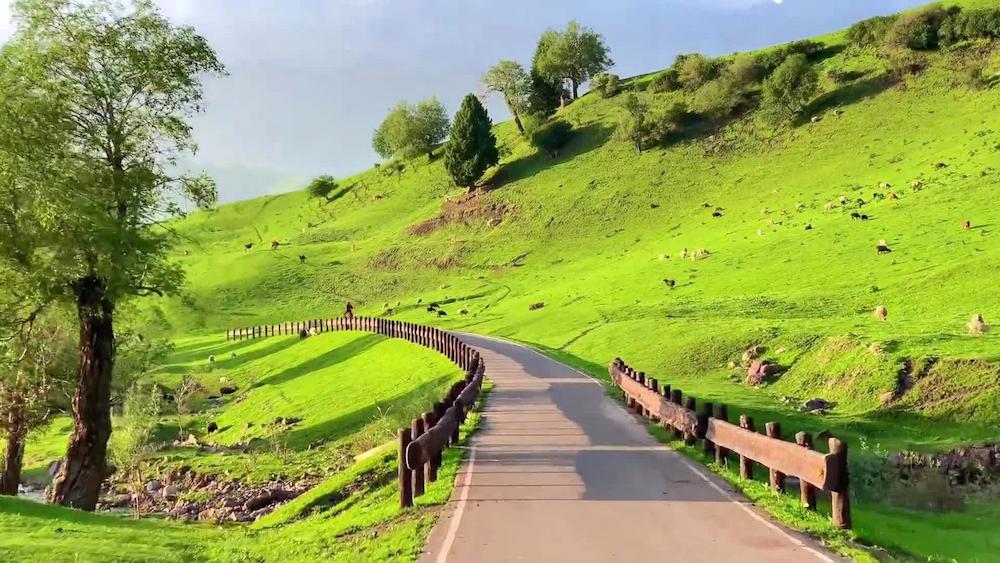
This Xinjiang Public Holidays and Festivals Guide groups the regional and national breaks so you can see the whole year at a glance. Pair it with our broader Xinjiang travel guide if you also need transport and route planning between cities.
A First-Hand Look at Xinjiang’s Festivals
I landed in Kashgar on a Tuesday in June 2023, three days before Kurban Heyt. The Old City was already busy by the time I walked in at 8 a.m. By 7:40 that Friday morning the square in front of the Id Kah Mosque held thousands of worshippers, and the call to prayer rolled across the rooftops as the sun came up. After the service, neighbors handed out naan and dates to strangers. I paid 3 yuan for a lamb skewer from a cart on Renmin Road and watched families walk the lanes in new clothes.
The following March I caught Nowruz in Turpan. Local families set out plates of sprouted wheat on their windowsills, and a band played dutar music outside the bazaar by 11 a.m. A bowl of laghman at a corner noodle shop cost me 22 yuan. These are not staged shows for visitors. The timing is what matters: show up on the right morning and you see the region’s daily life at full volume.
How to Get There
Most festival travel starts from Urumqi, the regional hub. Direct flights reach Kashgar in about 2 hours and Turpan in 1 hour. From Beijing, a non-stop flight to Urumqi runs roughly 4.5 hours and cost me 1,900 yuan last spring; from Shanghai it is closer to 5.5 hours. Trains are slower but scenic: the Urumqi-to-Kashgar rail link takes around 24 hours on the fast service, with a soft-sleeper berth near 700 yuan.
Once you are in the south, Kashgar links to Hotan and Aksu by bus and shared car. For Nowruz in Turpan, the high-speed line from Urumqi gets you there in under an hour. Book intercity tickets at least two weeks ahead if your dates overlap with a national holiday, because the trains fill first.
Best Time to Visit for Xinjiang Public Holidays and Festivals
The best time to visit Xinjiang public holidays and festivals depends on what you want. Spring (March to May) is the season for Nowruz and the milder edges of the Islamic calendar, with comfortable temperatures around 15-22°C. Early summer brings Eid al-Fitr and green landscapes before the heat arrives.
Autumn is the busiest window. National Day Golden Week in early October draws the largest domestic crowds of the year, and Kurban Heyt often falls in late spring or summer. If your goal is a calm, local festival feel, target Nowruz in March or Eid al-Fitr in spring. If you want the full energy of a national break and do not mind crowds, October works, but lock in hotels early. Winter holidays around Spring Festival are quiet and cold, with some mountain roads closed by snow.
Where to Stay
Budget travelers can find hostels and guesthouses inside the Kashgar Old City for 80-120 yuan per night; I stayed at one near the Id Kah gate for 95 yuan and walked everywhere. Mid-range three- and four-star hotels in the city center run 300-500 yuan, and they fill fast during Eid and Golden Week. Upper-end options such as international chain hotels in Urumqi and Kashgar sit around 700-1,200 yuan per night, with the premium justified by heating, location, and reliable booking systems during peak weeks.
In Turpan, small courtyard stays near the bazaar cost 120-200 yuan and put you close to Nowruz activities on foot. Book through a platform you can cancel, because holiday availability shifts as dates are confirmed.
Food
Festivals are built around food, and Xinjiang delivers. A plate of polo (lamb and carrot pilaf) ran me 25 yuan in Kashgar, and a bowl of hand-pulled laghman with tomatoes and lamb was 20-30 yuan depending on the meat. Samsa baked in a tandoor cost 5 yuan each, naan was 2-3 yuan a piece, and fresh mutton kebabs were 3-5 yuan on the street. During Eid, families share large trays of hand-pulled noodles and boiled mutton; in the bazaars you will also find dried apricots, walnuts, and raisins by the kilo.
For a deeper read on what to eat and where, see our Xinjiang food tour guide, which maps the dishes by city and season. Sweet treats peak during holidays: baursak (fried dough) and nut pastries appear on almost every visited household’s table in the south.
Practical Tips
- Check the lunar dates early. Eid al-Fitr and Eid al-Adha shift about 11 days each year, so confirm the exact day through a current Islamic calendar before booking flights.
- Reserve transport and lodging two to three weeks ahead for Golden Week and for the three days around a major Eid, when domestic demand spikes.
- Dress modestly near mosques during prayers. Women should carry a scarf, and both men and women should avoid short shorts and sleeveless tops inside the compounds.
- Carry cash. Old City bazaars and roadside kebab carts often take only paper money or local payment apps, and card readers are unreliable at small stalls.
- Expect government offices and some banks to close on national holidays, while major attractions and markets generally stay open with longer hours.
- Learn a few greetings. A simple “Eydingiz kewrilik bolsun” (happy holiday) in Uyghur opens far more conversations than English at a festival gathering.
Sample Itinerary
This six-day plan works if you time your visit to Kurban Heyt in Kashgar, with a Turpan add-on:
- Day 1: Fly into Urumqi, visit the Xinjiang Regional Museum, overnight train or morning flight south.
- Day 2: Arrive Kashgar, walk the Old City, confirm Eid prayer times at Id Kah Mosque.
- Day 3: Dawn prayers at Id Kah, then a slow day of family feasts, bazaar food, and rooftop tea.
- Day 4: Day trip to Karakul Lake on the Pamir road; return for evening music in the lanes.
- Day 5: Fly to Urumqi, transfer to Turpan by high-speed rail for local markets.
- Day 6: Morning at Jiaohe ruins, afternoon flight home.
FAQ
Do shops close during Eid in Xinjiang?
Many small family shops close for the first day of Eid, especially in the south. Large supermarkets, hotels, and major restaurants stay open. The bazaars are actually busier than usual on days two and three.
When is the best festival to see in Xinjiang?
For local culture, Kurban Heyt in Kashgar and Nowruz in Turpan are the strongest experiences. For sheer scale, National Day Golden Week shows the region at its most crowded and decorated.
Are the holiday dates the same every year?
National holidays like Labor Day and National Day are fixed on the Gregorian calendar. The two Eids follow the lunar Islamic calendar and move earlier by roughly 11 days each year, so always verify the current year’s dates.
Is it safe to travel during Golden Week?
Yes, it is safe, but expect full trains, higher hotel rates, and packed scenic spots. Build extra buffer time into transfers and book the key nights first.
Do I need a permit for festival trips?
Standard city and festival visits do not require a special permit. If your plan extends to border areas such as Tashkurgan or the Khunjerab Pass, you will need a border travel permit, which is separate from holiday timing.
What should I wear to a mosque during Eid?
Cover shoulders and knees, and bring a headscarf if you are a woman entering the prayer area. Remove shoes before stepping onto the carpeted sections, and keep a respectful distance from worshippers during the service.
Used well, this Xinjiang Public Holidays and Festivals Guide turns a random trip into a timed one, where you arrive for the music and the meals instead of after they end.
Disclaimer
Prices, festival dates, permit rules, and opening hours change. Islamic holiday dates depend on moon sightings and can shift by a day. Train and hotel rates vary by season and availability. Always confirm current details with official tourism boards, the mosque or event organizers, and your booking platform before you travel. This article reflects the author’s personal visits and is meant as practical guidance, not a guarantee of any specific cost or schedule.