

Published: 2026-07-25 | Author: Karl Huang
My first Xinjiang Road Trip Duku Highway Guide was written after I drove the 561 km route from Dushanzi to Kuqa in late June 2023. I left Dushanzi at 7:40 a.m. with a full tank and a thermos of milk tea, and reached Kuqa past 8 p.m. after five photo stops and a two-hour wait at the Qiaolma checkpoint. That single day showed me why this road is the best way to cross the Tianshan without adding 1,000 km to your northern-southern loop, and why you should plan your Xinjiang Itinerary around the Duku season.
Quick Reference
| Field | Detail |
|---|---|
| Location | Dushanzi (north) to Kuqa (south), crossing the central Tianshan range |
| Length / Fee | 561 km, no toll on the highway itself; fuel for a full crossing runs roughly 500-600 RMB |
| Best time | Late May to early October; most years the gates open June 1 and close around October 10 |
| Max elevation | Hashilegen Pass at about 3,400 m |
| Role | Scenic through-route linking northern and southern Xinjiang in one day |
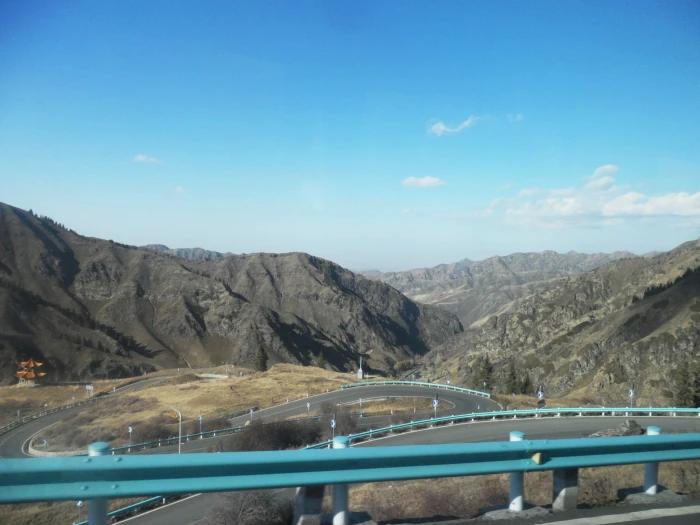
This Duku Highway Travel Guide angle is worth knowing before you read further: the road is not a highway in the fast-lane sense. The name comes from Dushanzi (Du) and Kuqa (Ku). It is a two-lane mountain road with a 40-60 km/h limit in most stretches, and it is the only paved link that cuts straight through the Tianshan instead of going around it. The Xinjiang Road Trip Duku Highway Xinjiang corridor usually closes by early November and stays shut until the snow clears the following late spring.
The Xinjiang Road Trip Duku Highway Guide, Mile by Mile
This Xinjiang Road Trip Duku Highway guide is built on three personal crossings of the pass, including one in heavy September rain that turned the Bayinbuluke bends to silver. The north end begins in Dushanzi, a small industrial city on the edge of the Junggar Basin. I fueled at the Sinopec station on the town’s western exit and paid 420 RMB to fill a near-empty tank in 2023; prices have moved since, so treat that as a baseline rather than a quote.
Within 30 minutes the road climbs toward the Dushanzi Grand Canyon, a slash of grey and rust cliffs where I paid 30 RMB to park at the viewing platform. From there the real climbing starts. By late morning I reached the Hashilegen Pass, where snow walls three to four meters high line the road even in June. Driving between those walls with the heater on, then descending into a green valley an hour later, is the kind of contrast you do not forget.
Qiaolma is the emotional center of the trip. A monument there honors the 168 soldiers who died building the road between 1974 and 1983, a ten-year effort that cost more lives than almost any other civilian project in the region. I stopped for twenty minutes, as I do every time, and bought a 10 RMB bag of dried apricots from a vendor outside the gate.
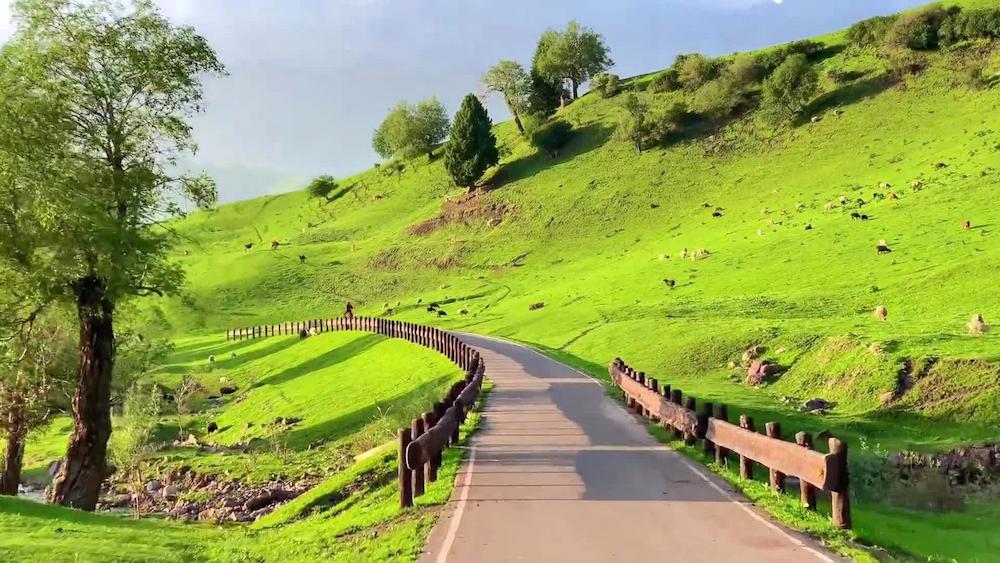
South of Qiaolma the road drops into the Nalati grasslands, then rolls on to Bayinbuluke, where the Kaidu River makes its famous nine bends. The final descent toward Kuqa opens into the red sandstone of the Tianshan Grand Canyon. When I arrived that first evening, the cliffs were lit orange and the temperature read 31°C, a full 20 degrees warmer than the pass at noon. Every version of this Xinjiang Road Trip Duku Highway Guide I have drafted keeps that temperature swing as the headline warning, because visitors dressed for the pass arrive in Kuqa sweating.
How to Get There
Most travelers reach the Duku from one of two hubs. From Urumqi, drive the G30 expressway west to Dushanzi, about 250 km and three hours, then begin the highway the next morning. From the south, fly or train to Kuqa (Qiuci Airport has limited flights; the railway from Aksu or Korla is reliable) and drive north. I usually tell first-timers to start in the north so the canyon reveal at the southern end lands as the payoff.
If you are already in Kashgar, the Kuqa side is roughly 720 km away by the G3012, a long but easy run on good tarmac. Do not try to combine the whole Kashgar-to-Urumqi corridor and the Duku in a single day; the Duku alone deserves two. The Xinjiang Self-Driving Guide on our site covers the wider loop if you want the full northern-and-southern plan.
Best Time to Visit
Spring (May) is unreliable. The north gate often stays shut until late May while crews clear snow at the pass, and I have stood at a closed barrier in Dushanzi on May 20 with no opening date posted. Summer (June to August) is the safe window: valleys are green, services are open, and the pass is clear. It is also the busiest, with occasional afternoon rain that turns pull-offs slick.
Autumn (September to early October) is my favorite. The grasslands go gold, the air is clear, and the tour buses thin out after the school holidays. Winter closes the road completely, usually from early November until the following late May or June, and no amount of planning opens it early. For a solid first trip, I recommend the last week of August through late September.
For a season-by-season breakdown tied to gate dates, see the Best Time to Visit Duku Highway page, which I update each spring once the official opening announcement lands.
Where to Stay
Budget travelers can sleep well in Dushanzi hostels and basic hotels for 150-220 RMB a night, or take a yurt near Nalati for 200-350 RMB if you do not mind shared bathrooms and an early rooster. Mid-range options include Nalati town hotels at 400-700 RMB and Kuqa business hotels at 300-500 RMB, both with reliable hot water and parking.
Upper-end stays run 700-1,200 RMB for a four-star in Kuqa and 800 RMB or more for a resort cabin near Bayinbuluke with valley views. Book these a week ahead in July and August; the stronger hotels sell out on weekends. I learned that the hard way in 2024 when I ended up 40 km from Nalati after everything inside town was full.
Food
The road feeds you better than you might expect. In Dushanzi I start with big plate chicken (dapanji), a stew of chicken, potatoes, and wide noodles that runs 68-98 RMB for a portion that feeds two. At roadside stops near Nalati, lagman (hand-pulled noodles with toppings) costs 25-35 RMB, and mutton kebabs are 5-8 RMB each, priced by the skewer. Fresh naan from a tandoor is 5-10 RMB, and a hot samsa pastry is 8-12 RMB.
In Kuqa, the bazaar sells roasted lamb by weight and whole lamb (kaoquanyang) by advance order for 1,200-1,800 RMB if you are traveling with a group. I keep a rule on every trip: eat the kebab within ten minutes of it leaving the coals, because the cold mountain air kills the flavor fast once it sits.
Practical Tips
- Fill the tank in Dushanzi or Kuqa before entering. Fuel stations along the route are few, and the ones at Qiaolma and Bayinbuluke can run dry in peak season.
- Check the daily open status. The gates open and close on short notice for weather or road work; local travel accounts post updates each morning.
- Carry your ID at all times. There are police checkpoints, and foreign travelers should review the Xinjiang Visa and Permit Guide for side routes that need a border permit.
- Watch vehicle limits. Cars and small vans are fine, but vehicles longer than about 6 meters are banned, and caravans are restricted in peak months. The rules are detailed in our broader driving write-up, and they apply to the Duku the same way they apply to any mountain route.
- Pack for two climates. The pass can sit at 8-10°C while Kuqa bakes at 32°C; I keep a fleece and a sun hat in the same bag.
- Start before 8 a.m. There are no street lights, some checkpoints close at night, and you want daylight for the canyon descent.
- Download offline maps. Cell coverage drops for long stretches between Qiaolma and Bayinbuluke, and a dead map at a fork is no joke.
Sample Itinerary
This two-day plan is what I give friends who want the full experience without a punishing schedule. The Xinjiang Road Trip Duku Highway Guide timing below assumes you sleep once rather than attempt the full crossing in a single push.
Day 1 (north to middle): Dushanzi departure 7:30 a.m. → Dushanzi Grand Canyon 9:00 → Hashilegen Pass 11:00 → Qiaolma monument 13:00 (lunch) → Nalati grasslands 16:00 → overnight in Nalati town.
Day 2 (middle to south): Nalati 9:00 a.m. → Bayinbuluke nine-bend river 11:00 → Tianhu lakeside stop 14:00 → Tianshan Grand Canyon 17:30 → Kuqa arrival 19:00. Total moving time is about nine hours across both days, with stops spread out so nobody naps at the wheel.
FAQ
How long does the Duku Highway take to drive?
A non-stop run is 10-12 hours, but I recommend two days. The stops are the point, and rushing them turns a great drive into a tiring one.
Is the Duku Highway open in winter?
No. It is closed from roughly early November to late May or early June because snow blocks the high passes. Exact dates change each year with the weather.
Can foreign travelers drive the Duku?
Yes, with a valid license and the right paperwork. The road itself needs no special permit for most travelers, but side trips toward the Pamir border zones do, so check before you branch off.
Is the drive safe?
The surface is paved and maintained, but weather changes fast at altitude and some pull-offs are narrow. Drive the posted limit, and you will be fine.
Does the Duku Highway have tolls?
The Duku itself carries no toll. The expressways that bring you to Dushanzi or Kuqa do charge, so budget for those separately.
Which direction is better?
I prefer north to south (Dushanzi to Kuqa) because the southern red canyons hit you at the end as a finale. South to north works too if your loop starts in Kashgar.
Disclaimer
Prices, gate dates, fuel costs, and checkpoint rules listed here reflect my own trips and public announcements up to 2025, and they change. The Duku opening window shifts with snow and funding each year, and hotels reprice by season. Always confirm the current status with the official road accounts and verify permits with local public-security offices before you travel. Nothing here is a guarantee of cost or access.