

Published: 2026-07-20 | Author: Karl Huang
I drove into Hejing County for the first time in late June, after a night in Korla where I paid 180 yuan for a clean room at a small family hotel on Tuanjie Road. The road south climbed through the Tianshan front ranges, and within two hours the desert floor gave way to green river valleys. By the time I reached the county town of Hejing, the air felt different: cooler, thinner, and full of the smell of irrigated wheat. This is the gateway to one of the largest counties in China, and to the high grasslands of Bayinbuluke that most foreign visitors never reach. If you want to know the best time to visit Hejing, the short answer is June through September. The longer answer is below.
Best Time to Visit Hejing: Quick Reference
| Item | Detail |
|---|---|
| Location | Hejing County, Bayingolin Mongol Autonomous Prefecture, northern Xinjiang, on the south slope of the Tianshan Mountains |
| County seat elevation | About 1,100 m; Bayinbuluke Grassland sits near 2,500 m |
| Main entry fee | Bayinbuluke scenic area about 140 yuan entry plus 75 yuan mandatory shuttle (prices change, verify on site) |
| Best time to visit | June to September for grassland and swans; the Duku Highway is open then |
| Role on a trip | Base for Bayinbuluke Grassland, Swan Lake, and the Kaidu River source |
What a Trip to Hejing Actually Feels Like
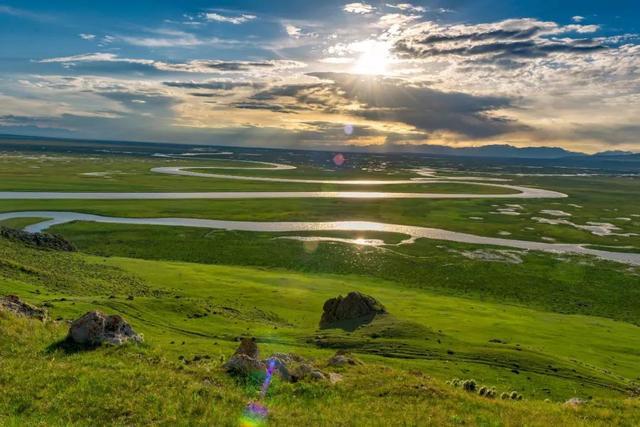
My first real look at the place came on the second afternoon, when I left the county town and followed the mountain road toward the Bayinbuluke Grassland. The drive took about three and a half hours, and the landscape kept changing: orchards, then spruce forest, then open alpine meadow. I paid 260 yuan for a night in a heated yurt near the grassland edge, and dinner was included: a plate of roasted lamb, a bowl of hand-pulled noodles, and weak milk tea that tasted better than it sounded.
The next morning I took the shuttle to the Kaidu River sunset platform, known locally as the “nine bends and eighteen turns.” I went up at eight in the evening in early July and the light held until half past nine. On Swan Lake I counted six whooper swans drifting between the reed beds. None of this is on the standard China Travel Guide circuit, which is exactly why it stayed with me. If you are building a Xinjiang Itinerary around quiet, big-sky country, Hejing earns a spot.
How to Get There
Most travelers reach Hejing through Korla, the prefecture seat. A fast train or a four- to five-hour drive from Urumqi gets you to Korla; from there it is roughly 95 km south to Hejing on the G218, about ninety minutes by car. Flights land at Korla airport (KRL) from several major cities if you would rather skip the long road stretch.
From Korla long-distance bus station there are also direct coaches to Hejing for around 40 yuan and two hours. Once in Hejing town, you need a car or a hired driver for the final leg to Bayinbuluke, because public transport into the scenic area is limited and the road is long. In summer you can also approach from the north or west on the Duku Highway, which links Dushanzi and the Nalati area with the Bayinbuluke region. That route is spectacular but seasonal.
If you want more context on the prefecture seat itself, the Korla travel guide covers where to sleep and eat before you head up the mountain.
Best Time to Visit Hejing
The county spans a huge elevation range, so the “best” window depends on what you came to see. For the grassland and the swans, the clear winner is summer.
Spring (April to May). The lower valleys green up and orchard blossoms appear, but the high meadow is still brown and the Duku Highway normally stays closed until around June 1. Nights are cold. This is a shoulder period with few tourists.
Summer (June to August). This is the prime season. Bayinbuluke turns fully green, wildflowers spread across the slopes, and the whooper swans are nesting on Swan Lake. Daytime highs at altitude run 18 to 26 degrees Celsius, while nights drop to 8 to 12. The Duku Highway is open, so you can loop through on a north-south crossing. July and August draw the biggest crowds and the highest lodge prices.
Early autumn (September). The grass goes gold, the light gets sharp, and the tour groups thin out. By late September the first snow can appear on the surrounding peaks. It is my favorite window for photography and quiet.
Winter (October to March). Expect minus 15 to minus 30 degrees Celsius up on the grassland. The Duku Highway is closed, many yurts and lodges shut, and only hardy travelers make the trip. The county town stays reachable, but the headline attractions are largely off limits.
My recommendation: aim for early July to late August if the grassland and swans are the goal, or mid-September if you want golden meadows and fewer people. Avoid planning a Bayinbuluke visit around the Duku closure dates.
Where to Stay
Budget. In Hejing town, family hotels along Tuanjie Road and the main drag run 120 to 200 yuan a night for a clean double. Inside the Bayinbuluke scenic area, basic guesthouses start around 150 to 220 yuan.
Mid-range. Heated yurts and standard hotels near the grassland cost 260 to 400 yuan, often with a meal included. Book ahead in July and August, because capacity is limited and fills fast.
Upper-range. If you would rather base from the city, Korla has comfortable business hotels at 300 to 600 yuan. A premium yurt with solid heating and a private bath near Bayinbuluke can reach about 500 yuan in peak season. For a wider list of bases across the region, see the Xinjiang cities archive.
Food
Hejing sits at the meeting point of Han, Uyghur, and Mongol food cultures, and the plates reflect it.
- Hand-pulled noodles (laghman): 18 to 28 yuan, with tomato, pepper, and lamb.
- Roasted lamb skewers (kawap): 3 to 5 yuan per stick, fresh off the coal grill.
- Pilaf (polu): 25 to 35 yuan, with carrot, raisin, and a chunk of lamb.
- Mare’s milk and kumis from Mongol herders: about 10 to 15 yuan a cup, sour and fizzy.
- Whole roasted lamb for a group: 800 to 1,200 yuan, ordered a few hours ahead.
- Naan bread: 3 to 5 yuan at any corner bakery.
Practical Tips
- Watch the altitude. Bayinbuluke sits near 2,500 m. Walk slowly on your first day and drink more water than usual.
- The Duku Highway is seasonal, roughly open June 1 to September 30. Confirm the exact dates before you build a route around it.
- Buy Bayinbuluke tickets online during peak season. Internal shuttles are mandatory, and the sunset platform is shuttle-only.
- Pack layers even in summer. A warm jacket is essential for the evening platform, where winds drop the felt temperature fast.
- Carry your ID. Domestic travelers pass routine checks, and foreign visitors should confirm current Xinjiang entry rules before travel, as they change.
- Fuel up in Hejing. Gas stations thin out on the mountain road to Bayinbuluke, so leave town with a full tank.
- Bring some cash. Small yurt camps and roadside stalls may not take cards or mobile pay reliably.
Sample Itinerary
Day 1. Morning train or drive from Urumqi to Korla. Pick up a car and drive 95 km to Hejing (about 90 minutes). Lunch in town, then continue toward Bayinbuluke and check into a yurt for the night.
Day 2. Full day on the grassland: Swan Lake in the morning, the Kaidu River sunset platform in the evening. Either return to Korla or, in summer, push west on the Duku Highway toward Nalati and the Ili Valley.
FAQ
Is Hejing worth it if I only have a week in Xinjiang? If your week centers on the north or the Ili Valley, yes: it adds a high-altitude grassland that few itineraries include. If you are focused on the south (Kashgar, the Pamirs), it is a longer detour.
Do I need a permit for Bayinbuluke? Domestic travelers do not need a special permit beyond standard ID checks. Foreign visitors should verify current entry requirements, because Xinjiang access rules shift.
Can I visit in winter? The county town is reachable year-round, but the grassland road and many lodges close, and the Duku Highway shuts. Winter here means town wandering, not alpine meadows.
How far is it from Urumqi? About 500 km. Doing it in one day is possible by car but tiring; basing from Korla cuts the final drive to ninety minutes.
Are the swans there all year? No. Whooper swans arrive in spring and leave in autumn. Summer is the reliable window to see them on Swan Lake.
Is the Duku Highway the only way in? No. The G218 and G3012 from Korla reach Hejing and stay open through the year, while the Duku is the scenic summer option.
Disclaimer
Prices, entry fees, road opening dates, and access rules mentioned above change without notice. The Bayinbuluke ticket, shuttle, and Duku Highway season figures are based on recent visits and may differ when you travel. Always confirm current details with official sources and your accommodation before you set out.