

The question Xinjiang vs Yunnan comes up constantly with clients planning a first trip deep into China, because both are huge, both are ethnically rich, and both sit far from Beijing and Shanghai. But they deliver completely different trips. Xinjiang is the dry, dramatic northwest — deserts, grasslands, snow mountains, and Silk Road history you reach by long road drives. Yunnan is the temperate southwest — karst, rice terraces, and two dozen ethnic groups packed into towns you can hop between by train. Below is the practical comparison I give anyone stuck between them.
Landscape: desert drama versus green variety
Xinjiang is continental and extreme. The Taklamakan Desert covers the south, the Tianshan split the region, and the north holds the Kanas lakes and Ili grasslands. Snow peaks — the Tian Shan, the Pamir — sit above 7,000 meters. It is a landscape of scale: distances between sights are measured in hundreds of kilometers, and the light is hard and bright. The reward is the “big country” feeling you get nowhere else in China. I tell clients to picture a day that starts at a desert oasis and ends at a glacial lake — that compression of environments is the whole point of going north rather than south.
Yunnan is softer and more layered. The north has the old towns of Lijiang and Dali and the Tibetan edge at Shangri-La; the center rolls through karst and terraced rice fields; the far south near Xishuangbanna turns tropical. You can stand in a alpine meadow in the morning and a banana plantation by afternoon if you drive far enough, but the average town-to-town hop is short and the green is constant.
For a sense of the range on the Xinjiang side, our Xinjiang attractions list runs from desert to glacier without leaving one region.
Scale and travel style: road trips versus town-hopping
This is the decisive practical difference. Xinjiang is enormous — about 1.66 million square kilometers, a quarter of China’s landmass. You will spend real time in a car or on an overnight train. The upside is the Duku Highway road trip and routes like it: a single day’s drive crosses canyon, snow pass, and grassland. The downside is that you cover less “destinations” per day and need a proper itinerary.
Yunnan is compact by comparison and built for easy movement. High-speed rail and frequent buses connect Kunming, Dali, Lijiang, and Shangri-La, so you can base in a town and do day trips. Backpacker infrastructure — hostels, cafes, English menus — is far more developed. If you want to wander without a driver, Yunnan is the lower-friction choice.
| Factor | Xinjiang | Yunnan |
|---|---|---|
| Region size | ~1.66 million km², vast | Much smaller, compact |
| Main transport | Car / long train drives | High-speed rail, buses |
| Base-and-daytrip? | Rarely; point-to-point | Yes, easy |
| Foreigner infrastructure | Thinner, driver helpful | Strong, backpacker-friendly |
Culture: Central Asian Islam versus 25 ethnic groups
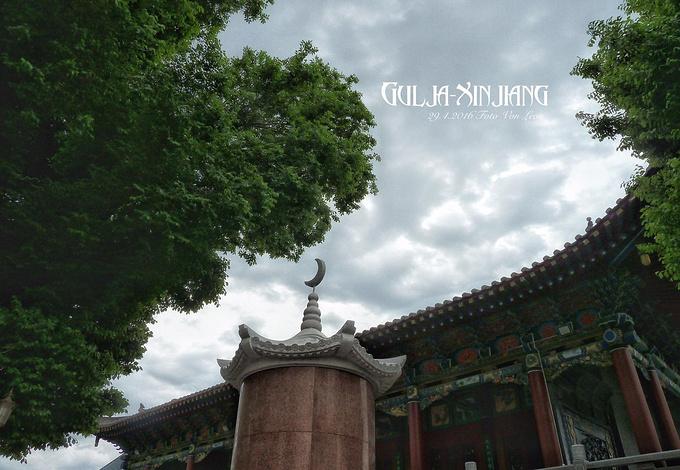
Xinjiang’s culture is Central Asian and Islamic. Uygur, Kazakh, Hui, Kyrgyz, and Tajik communities run the bazaars, the mosques, and the kebab stalls. The feel in Kashgar’s old town is closer to Samarkand than to anywhere Han Chinese. It is cohesive — one dominant cultural world with deep Silk Road roots. The weekly markets (especially the Sunday livestock market in Kashgar) are the best window into it, and the rhythm of the day follows the call to prayer more than the clock. In the Xinjiang cities I send clients to, that market life is the real attraction, not the museums.
Yunnan is a patchwork. Officially it is home to 25 of China’s ethnic minorities. The Bai around Dali, the Naxi in Lijiang, the Tibetan in Shangri-La, and the Dai in the tropical south each have distinct languages, dress, and festivals. You get more cultural “samples” in a shorter distance, though each is shallower than Xinjiang’s deep single tradition. The practical upside is that Yunnan’s ethnic life is staged for visitors — dance shows, paid village visits, craft demonstrations — which makes it easy to witness but sometimes feels performed. Xinjiang’s bazaars, by contrast, are working markets first and tourist sights second.
Season: a tight window versus year-round
Xinjiang’s comfortable season is June through October. Summer greens the grasslands and opens the high passes; September and October bring the Kanas and poplar autumn that draws photographers from across Asia. Outside that window, winter is severe and mountain roads close.
Yunnan travels well almost all year. Spring (March–May) and autumn (September–November) are best, with mild temperatures and clear air. The south stays warm even in winter, which is exactly why so many domestic travelers flee there in January. The northern towns (Shangri-La, Lijiang) get cold, but they rarely shut down. Packing is simpler too: a light jacket covers most of the year in the center and south, and only Shangri-La calls for real cold-weather gear.
| Element | Xinjiang | Yunnan |
|---|---|---|
| Best months | Jun–Oct | Mar–May, Sep–Nov |
| Winter travel | Hard, roads close | Good in the south |
| Signature scene | Autumn Kanas, Ili summer | Terraces, old towns, spring blooms |
Food: lamb and naan versus mushrooms and noodles
Xinjiang food is hearty and Central Asian: lamb kebabs (kawap), hand-pulled laghman noodles, pilaf (polo), freshly baked naan, and dairy from Kazakh and Kyrgyz herders. Meals are meat-forward and eaten late, often in lively night markets. It is some of the most distinctive food in China and a highlight in its own right.
Yunnan food is lighter and more varied. Cross-bridge rice noodles (guoqiao mixian) are the staple; wild mushrooms in summer are a serious local obsession; the Dai in the south bring sour, herbal, and sticky-rice dishes. Vegetarians do far better in Yunnan, and the spice level is gentler than Sichuan but more interesting than plain northern fare. In the north, around Shangri-La, the food tilts Tibetan — butter tea, yak meat, barley — which is a useful preview if you are eventually heading toward the plateau.
Logistics and access
Both are open to foreign travelers on a standard Chinese visa, with no special regional permit for the main routes. Xinjiang’s only paperwork wrinkle is the Border Permit for the Pamir (Tashkurgan), a quick local application. The bigger Xinjiang challenge is distance: a proper loop takes 10–14 days minimum to feel worthwhile, and a private driver or tour car is the realistic way to cover it, which sets the daily floor around RMB 600–900 per person once fuel, driver, and rooms are pooled. Yunnan’s costs are lower and more flexible: a guesthouse bed runs RMB 80–150, a train hop RMB 50–120, and meals RMB 25–50, so a comparable week can come in well under Xinjiang’s for the same number of days.
Yunnan is the easier region to land in and move around. Flights into Kunming and Lijiang are plentiful, and the rail network means you can build a flexible, low-commitment route. For a traveler nervous about remote China, Yunnan is the reassuring choice, and our Xinjiang travel guide explains why the northwest asks more of your planning time.
A week in each: what the days actually look like
Concrete days settle the debate faster than adjectives. A Yunnan week might run: fly into Kunming, train to Dali (walk the old town, cycle the lake), train to Lijiang (Jade Dragon Snow Mountain day trip), bus up to Shangri-La (monastery, Tibetan village), then back. You change beds every one or two nights, but each move is two hours or less, and you never need a private car.
A Xinjiang week reads differently: arrive Urumqi, drive to Turpan (ruins, grape valleys), fly or train to Kashgar (old town, Sunday market), then a two-day Pamir drive to Tashkurgan and back, then north to the Ili grasslands or a Duku Highway crossing. You cover enormous ground, see maybe five “headline” places, and spend more time in transit — but each arrival is a genuine destination, not a stopover. A balanced Xinjiang itinerary treats the driving as part of the experience rather than a cost of it.
Verdict: which is right for your trip?
Choose Xinjiang if you want epic, sparse landscapes, a real road trip, and Central Asian Silk Road culture — and you have the time and patience for big distances. Choose Yunnan if you want cultural variety, milder weather, easier trains between towns, and a gentler first deep-China experience.
My rule of thumb: a first trip to China where you want variety plus comfort → Yunnan. A trip built around adventure, driving, and dramatic empty space → Xinjiang. If you have three weeks and want both, do Yunnan first to acclimate to China’s scale, then fly north to Urumqi for the real frontier.
Frequently asked questions
Which is better for a first trip to China?
Yunnan. The towns are connected by fast trains, English signage and backpacker services are common, and the climate is forgiving. Xinjiang is more rewarding but demands more planning and longer drives, which can overwhelm a first-timer.
Which has the more dramatic scenery?
Xinjiang, by a wide margin, if “dramatic” means deserts, snow peaks, and endless grassland. Yunnan is prettier in a gentle, green way — terraces, lakes, old towns — but it does not have the raw scale of the Taklamakan or the Pamir.
Is Yunnan easier to travel on a budget?
Yes. Frequent buses and trains, cheap guesthouses, and a dense backpacker network keep Yunnan costs down and flexible. Xinjiang’s distances mean fuel or a driver is a fixed cost, raising the daily floor.
Which is better for photography?
Different strengths. Xinjiang gives you vast, high-contrast landscapes and autumn color that is hard to beat. Yunnan gives you human scenes — markets, festivals, terraces, and old-town life — plus the occasional snow mountain behind a lake.
Can I visit both in one trip?
Yes, with three weeks or more. Fly into Kunming, loop Yunnan (Dali–Lijiang–Shangri-La), then fly to Urumqi and drive a Xinjiang route. They are far apart, so treat them as two separate blocks rather than a continuous drive.
Which is more foreigner-friendly day to day?
Yunnan, especially the tourist towns, where English and card payment are normal. In Xinjiang’s big cities and Kashgar you are fine, but smaller stops expect cash and Mandarin, and a local driver smooths everything.