

Published: 2026-07-08 | Author: Karl Huang
The first time I reached Dushanzi Grand Canyon the light was flat and the wind was honest; the second time, in the right season, it was a different place. This guide to Best Time to Visit Dushanzi Grand Canyon pulls together what I tell clients after eight seasons on the road in Northern oil region (Karamay / Dushanzi) — the practical stuff that actually changes a trip: when to go, how to get there, where to sleep, and what to eat when the wind comes up.
Quick Reference
| Item | Detail |
|---|---|
| Location | Northern oil region (Karamay / Dushanzi) |
| Best time | June to September. The Duku Highway typically opens June 1 and closes by early October (snow). |
| Elevation | 1,000 m |
| Ticket / cost | ¥30 |
| Base hub | Karamay Airport (KRY); Dushanzi is the northern gate of the Duku Highway |
Why Dushanzi Grand Canyon Earns a Place on the Route
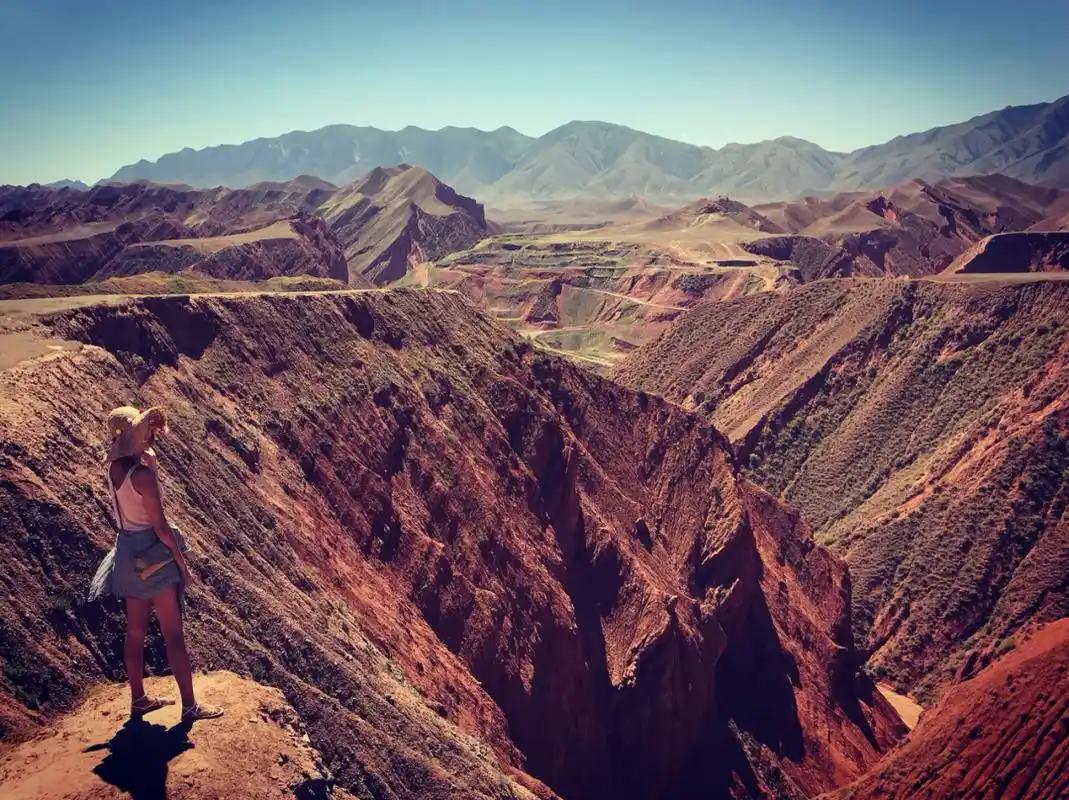
A deep red canyon cut by the Kuitun River at the northern foot of the Tianshan, with a glass walkway and the Duku Highway trailhead nearby.
What stays with me is the scale. Xinjiang does not do small, and Dushanzi Grand Canyon is no exception — you feel the distance in your shoulders by midday.
What stays with me is the scale. Xinjiang does not do small, and Dushanzi Grand Canyon is no exception — you feel the distance in your shoulders by midday.
The sensory memory I keep is specific: the dry cold of the morning, the smell of smoke from a roadside grill, the way a distant range changes colour as the sun clears the ridge. Dushanzi Grand Canyon is not a postcard you tick off; it is a place that asks for a little patience and repays it.
Highlights Worth the Stop
- Often the first stop on a Duku drive. Windy and exposed — hold onto hats.
- The surrounding Northern oil region (Karamay / Dushanzi) gives Dushanzi Grand Canyon its context — nearby passes, lakes and villages worth a detour.
- Local life runs on the market clock; timing a visit around a bazaar or a festival day changes the whole feel.
How to Get There
Karamay/Dushanzi is where the epic Duku Highway begins. No border pass needed for the highway itself.
From Urumqi. Most routes start here. Depending on the region that is a 1-hour flight, a 5-10 hour train, or a long highway drive. I treat the Urumqi-to-hub leg as fixed and the hub-to-Dushanzi Grand Canyon leg as the variable I plan around.
From the regional hub. Karamay Airport (KRY); Dushanzi is the northern gate of the Duku Highway. The final approach to Dushanzi Grand Canyon is usually a scenic-area shuttle or a hired car — budget the transfer as a half-day, not an hour. Xinjiang distances are not European, and the last stretch is often the slowest.
By road. Self-driving works where the roads are open (the Duku Highway and the desert highways are seasonal). Otherwise a local driver saves the headache of parking, permits and the long empty stretches between services.
Getting Around Locally
Inside the scenic areas, electric shuttles and fixed-route buses do the work — you rarely need your own wheels once you are in. Between towns, the gap is filled by hired cars and the occasional intercity bus. I pre-arrange drivers through the hotel; it costs a little more than flagging one down but removes the guesswork at 7am.
What to book first. Lock the long-haul flight or train into Xinjiang, then the regional hop to Northern oil region (Karamay / Dushanzi), then the hotel. Tickets to the headline sights sell at the gate, but the transport sells out. I have missed a connection by a day more than once by leaving the booking late in July and October — those are the weeks to be early.
Best Time to Visit
Continental, windy. Warm summers, cold winters. The Ghost City is sculpted by relentless wind.
| Season | What to expect | My take |
|---|---|---|
| Spring (Apr-May) | Apricot blossoms in the Ili valleys, mild desert days, some high passes still closed | Quiet and green; a favourite |
| Summer (Jun-Aug) | Alpine meadows at their peak, long daylight, the July-August domestic peak | Best scenery, heaviest crowds |
| Autumn (Sep-Oct) | Golden forests and Populus, cool clear days, the headline photo window | The best all-round month |
| Winter (Nov-Mar) | Snow scenery, frozen lakes, skiing, many guesthouses shut | Great for photography, check access |
My recommendation: June to September. The Duku Highway typically opens June 1 and closes by early October (snow). If your dates are fixed, build the rest of the route around the season rather than fighting it.
Where to Stay
Karamay city hotels; Dushanzi has basic hotels before the Duku drive.
- Budget (¥120-220/night). County-town hotels and hostels; clean and functional, often with a great local breakfast nearby.
- Mid-range (¥250-500/night). The comfortable choice — reliable heating, an English-friendly front desk, and a location that saves a transfer.
- Upper (¥600+/night). Lakeside or old-town properties with character; worth it for a quiet morning you cannot get elsewhere.
For Dushanzi Grand Canyon I look for three things: heating that works in the cold months, a driver who knows the morning light, and a location that saves me an hour of transfer at dawn. The cheapest room and the best room are rarely the same one.
Food
Oil-town grills, laghman, naan, and the same northern Xinjiang lamb found across the region.
Dishes I actually order in this part of Xinjiang:
- Polu (hand-grabbed rice) — lamb, carrot and rice cooked together, ¥25-40 a plate.
- Dapanji (big-plate chicken) — chicken, potato and wide noodles in a savoury sauce, ¥50-80 for two.
- Naan & kebabs — fresh from the tandir and the grill, ¥3-8 each.
- Laghman — hand-pulled noodles with stir-fried topping, ¥20-35.
- Bazaar sweets & dried fruit — raisins, apricot kernels, rose jam, ¥10-30 a bag.
A typical casual meal runs ¥30-60; a sit-down dinner for two is ¥80-150. The bazaar snacks are the cheapest joy in the region, and the best way to meet people.
Typical Daily Budget (per person)
| Tier | Lodging | Food | Transport & tickets | Total/day |
|---|---|---|---|---|
| Budget | ¥120-220 | ¥60-90 | ¥80-150 (shared car, shuttle) | ¥260-460 |
| Mid-range | ¥250-500 | ¥100-150 | ¥150-300 | ¥500-950 |
| Upper | ¥600-1200 | ¥200-350 | ¥300-600 (private driver) | ¥1100-2150 |
These are planning numbers for Northern oil region (Karamay / Dushanzi), not quotes. The long-haul flight or train into Xinjiang is extra. I tell clients to hold 15% back as a buffer for the unplanned detour that turns out to be the best part of the trip.
A Note on Etiquette
Xinjiang is a mosaic of Uygur, Han, Kazakh, Hui, Kyrgyz and Tajik communities, each with its own customs. A little awareness goes a long way: ask before photographing people, dress modestly near active mosques, and accept the second cup of tea when offered — refusing it reads as a slight. The warmth you get back is worth the small effort, and it is the part of Dushanzi Grand Canyon that no ticket buys.
Practical Tips
- Dress in layers, not in fashion. A basin morning at 8C and a noon at 28C in the same valley is a normal Xinjiang day. Layers beat a jacket every time.
- Book the long-haul legs ahead. Flights Urumqi-Altay and the high-speed rail seats fill in peak season (Jul-Aug, Oct). I book transport before hotels.
- Verify permits before the Pamir. The Border Travel Permit is mandatory for the Karakoram Highway and Pamir villages — arrange it in Kashgar with your passport.
- Start scenic days early. Gates open around 9-10am and the light is best before noon. Crowds and haze both build after lunch.
- Respect mosque and village etiquette. Cover shoulders and knees near active mosques; ask before photographing people in old-town lanes.
- Carry cash and a second payment app. In remote counties outside the big cities, smaller ticket offices and roadside stalls still prefer cash or a specific domestic app. I keep small notes for exactly this.
If You Have One Day
Open the gates at 9-10am, do the main sight before noon, eat where the locals eat, and leave by mid-afternoon so the transfer is in daylight. Two days is better; three is the relaxed version.
FAQ
Q: What is the absolute best month for Dushanzi Grand Canyon?
For most of Xinjiang the sweet spot is June-September; for golden forests and deserts it is late September to late October.
Q: Can I visit Dushanzi Grand Canyon in winter?
Yes for snow scenery, skiing and frozen lakes, but some high roads (the Duku) close and many guesthouses shutter.
Q: When should I avoid Dushanzi Grand Canyon?
The Turpan basin in July-August is brutally hot; plateau passes are risky in late autumn snow.
Q: How far ahead should I book for peak season?
Flights and rail 2-4 weeks out in July-August and October; hotels a week ahead is usually enough.
Q: Does Dushanzi Grand Canyon have a shoulder season worth it?
May and September are my favourites — good weather, open roads, and none of the summer crush.
Disclaimer
Prices, permits, opening dates and road status change — sometimes within a season. Treat the figures above as a planning baseline and confirm with official sources and your hotel before you travel. I update routes when clients report changes, but I cannot guarantee real-time accuracy for every gate.