

Published: 2026-07-20 | Author: Karl Huang
The first time I ran this 7-Day Xinjiang Itinerary Itinerary was in late September 2024. I flew into Urumqi Diwopu International Airport on China Southern flight CZ6902, which left Beijing at 08:20 and touched down at 12:05. From there I spent seven days looping through the north of the region with a local driver, Mr. Wang, who charged 900 yuan a day and knew every checkpoint on the road to Kanas. That trip taught me more about timing, permits, and hotel choices than any guidebook, and the plan below is the version I now hand to friends who ask me to map out their first week in Xinjiang. Use it as a straight 7-Day Xinjiang Itinerary guide rather than a wish list, and adjust the nights to your own flight times.
Quick Reference
| Item | Detail |
|---|---|
| Region covered | North Xinjiang loop: Urumqi, Tianchi, Koktokay, Burqin, Kanas, Hemu, Karamay |
| Best time | Mid-September to early October for autumn color; late June for wildflowers |
| Typical budget | 4,800 to 7,500 yuan per person, excluding flights |
| Main permits | None for this loop; border areas like Tashkurgan need a separate pass |
| Starting elevation | Urumqi 800 m; Kanas valley around 1,300 m |
| Role of the route | A balanced first-week sampler of lakes, forests, and Kazakh villages |
I want to be honest about why I keep recommending this exact shape. On my 2024 run, the weather held for six of seven days, the roads were clear, and I never felt rushed. The one mistake I made was booking the Hemu cabin too late, so I paid 380 yuan for a basic wooden room that earlier bookers got for 300. Learn from that and reserve ahead.
My First-Person Experience on the Route
Day two started at Heavenly Lake, which locals call Tianchi. The shuttle bus from the parking lot left at 09:30 and the round-trip ticket with the cable car cost me 215 yuan. The water was calm and the snow line on Bogda Peak sat low enough to photograph without a long lens. By early afternoon we drove four hours toward Fuyun, stopping once at a roadside noodle spot where a bowl of laghman cost 28 yuan.
Koktokay (Keketuohai) on day three surprised me. I expected a quick photo stop and stayed three hours instead. The granite gorge and the cold river made a strong contrast, and the 90 yuan combined ticket felt fair. That evening we reached Burqin, a small town on the Irtysh River, just in time for the night market. I ate grilled river fish for 45 yuan a plate and drank a local beer for 8 yuan while the sun dropped behind the dunes west of town.
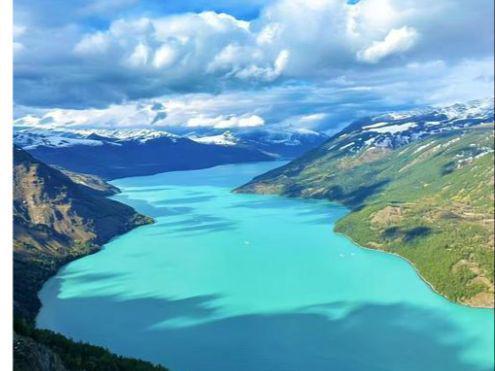
The highlight was Kanas Lake on day four. I paid 230 yuan for the two-day scenic pass that includes the shuttle buses, and I rode the boat out to the middle of the lake for an extra 120 yuan. The fog lifted around 10:00 and the forest on the far shore turned gold. The next morning in Hemu Village I watched the sunrise from the wooden platform above the river, then walked the empty paths before the tour buses arrived at 11:00.
We closed the loop through Karamay and the northern stretch of the Duku Highway, reaching Urumqi by day seven with time to visit the Regional Museum and its well-known Tarim mummy exhibit before my evening flight home.
How to Get There
Most travelers start from Urumqi because it has the main international airport and the fastest train connections. From Beijing, direct flights run about five hours and cost 1,800 to 2,600 yuan depending on season. From Shanghai, plan on six hours and 2,200 to 3,000 yuan. From Chengdu, the flight is roughly four hours and usually 1,400 to 2,100 yuan. If you prefer the train, the high-speed line from Lanzhou reaches Urumqi in about 11 hours, and a second-class seat runs 750 yuan.
Once in Urumqi you have two choices. You can self-drive using the tips in our Xinjiang Self-Driving Guide, or hire a driver by the day. I hired Mr. Wang through a Urumqi agency and paid 900 yuan daily plus fuel, which for a 7-day loop came to about 6,300 yuan before gas. A small car with a driver is the lower-stress option if you are not used to long desert highways.
Best Time to Visit
Spring (April to May) is windy and dusty in the north, and some mountain passes are still closed. I would skip it for this route. Summer (June to August) brings long daylight, wildflowers on the grasslands, and the busiest crowds; hotel prices in Kanas climb to 600 yuan or more a night. Autumn (mid-September to early October) is the clear winner: the poplar and birch forests turn gold, the air is dry, and the light is flat and easy to shoot. Winter (November to March) is silent and very cold, with the Kanas road often closed by snow.
My recommendation is the first two weeks of October. I went in late September and caught the start of the color; early October would have been even better. For a 7-Day Xinjiang Itinerary Xinjiang first-timer can follow without stress, the autumn window beats the crowded summer on every count. If you travel then, book the Hemu and Kanas stays at least three weeks ahead, because the autumn window is short and popular. The northern Duku section is open roughly from June to early October, so check the status in our Duku Highway Travel Guide before you commit to that drive.
Where to Stay
Budget: In Urumqi and Burqin you can find clean hostels and guesthouses from 120 to 200 yuan a night. Inside the Kanas scenic area, the basic wooden cabins start around 300 yuan but fill fast in autumn. Mid-range: A solid three-star hotel in Urumqi runs 320 to 480 yuan, and the better lodges near Jiadengyu (the Kanas gate town) run 450 to 650 yuan. Upper: The top lakeside lodges in Kanas and the boutique stays in Hemu go from 800 to 1,400 yuan, and they include breakfast and heating, which matters when the night temperature drops near zero.
I split my nights as follows: two in Urumqi, one in Fuyun, one in Burqin, one inside Kanas, one in Hemu, and a final night back in Urumqi. That kept the daily drives between three and five hours, which is about right for a relaxed week.
Food
Xinjiang food on this loop leans heavily on lamb, noodles, and dairy. In Urumqi I ate hand-pulled laghman for 25 to 35 yuan and a plate of mutton skewers (chuanr) for 5 yuan a stick. The International Grand Bazaar food court has samsa (baked meat pies) for 8 yuan each and fresh pomegranate juice for 15 yuan a cup. In Burqin the night market is the star: grilled river fish 45 yuan a plate, cold beer 8 yuan, and a sweet smoked fish called kebake that runs 30 yuan.
For a wider list of dishes and regions, see our Xinjiang Food Tour Guide. One practical note: outside Urumqi, card payments work but cash helps at small village stalls, and halal signs are standard, so look for the 清真 mark before you order.
Practical Tips
- Book Kanas and Hemu stays three weeks ahead in autumn; the best cabins sell out first.
- Carry your passport. Scenic areas scan it at the gate, and the name must match your ticket.
- Pack layers. Days can hit 22 C and nights near 0 C in the mountains during October.
- Download offline maps. Signal drops for long stretches between Burqin and Kanas.
- Start drives early. Tour buses enter Kanas and Hemu after 09:00, so beat them by two hours.
- Keep small cash. Village stalls and toilets often take only notes or coins.
Sample Itinerary: Your 7-Day Xinjiang Itinerary Itinerary
Here is the day-by-day shape I used, with real drive times.
- Day 1: Land in Urumqi by midday. Visit the International Grand Bazaar, eat in the food court, sleep in Urumqi (drive time 0).
- Day 2: Urumqi to Tianchi (1.5 h), then to Fuyun (4 h). Sleep in Fuyun.
- Day 3: Koktokay gorge (3 h visit), drive to Burqin (4 h). Night market, sleep in Burqin.
- Day 4: Burqin to Kanas (3 h). Lake boat, boardwalk, sleep inside the scenic area.
- Day 5: Kanas to Hemu (1 h). Sunrise platform, village walk, sleep in Hemu.
- Day 6: Hemu to Karamay (5 h) via the northern Duku section. Sleep in Karamay.
- Day 7: Karamay to Urumqi (4 h). Museum and Red Mountain, fly out.
If you want a different pace, our 7-Day Xinjiang Itinerary Guide covers a south-leaning alternative that swaps the mountains for Turpan and Kashgar. Either way, this 7-Day Xinjiang Itinerary Itinerary gives you a real taste without the burnout of a two-week sprint.
FAQ
Do I need a visa or special permit for this loop?
Foreign visitors need a China tourist visa in advance. The north loop itself needs no extra permit, but if you extend south to Tashkurgan near the border you must arrange a separate pass in Kashgar.
Is seven days enough for Xinjiang?
It is enough for one region done well. I would not try to cover both north and south in a week; the distances are too large and you would spend the trip in the car.
Can I do this route by public bus?
You can reach Urumqi, Burqin, and Kanas by long-distance bus, but the timing is slow and the village connections are thin. A driver or rental car gives you the flexibility the route assumes.
What should I pack for October?
Warm layers, a windproof jacket, sturdy shoes, a power bank, and any medication you need. Pharmacies are sparse once you leave Urumqi.
How much cash should I carry?
I carried about 500 yuan in small notes for stalls, toilets, and tips. Cards and phone pay cover the rest in the cities.
Is the food safe for visitors with sensitivities?
Most dishes are halal and lamb-based. Vegetarians will find noodle and vegetable options in Urumqi but fewer in the villages, so plan ahead.
Disclaimer
Prices, permits, opening dates, and road status change often. The costs and times above reflect my September to October 2024 trip and are shared as planning estimates, not guarantees. Always confirm ticket prices, border-pass rules, and the Duku Highway opening schedule with official sources and your hotel before you travel.